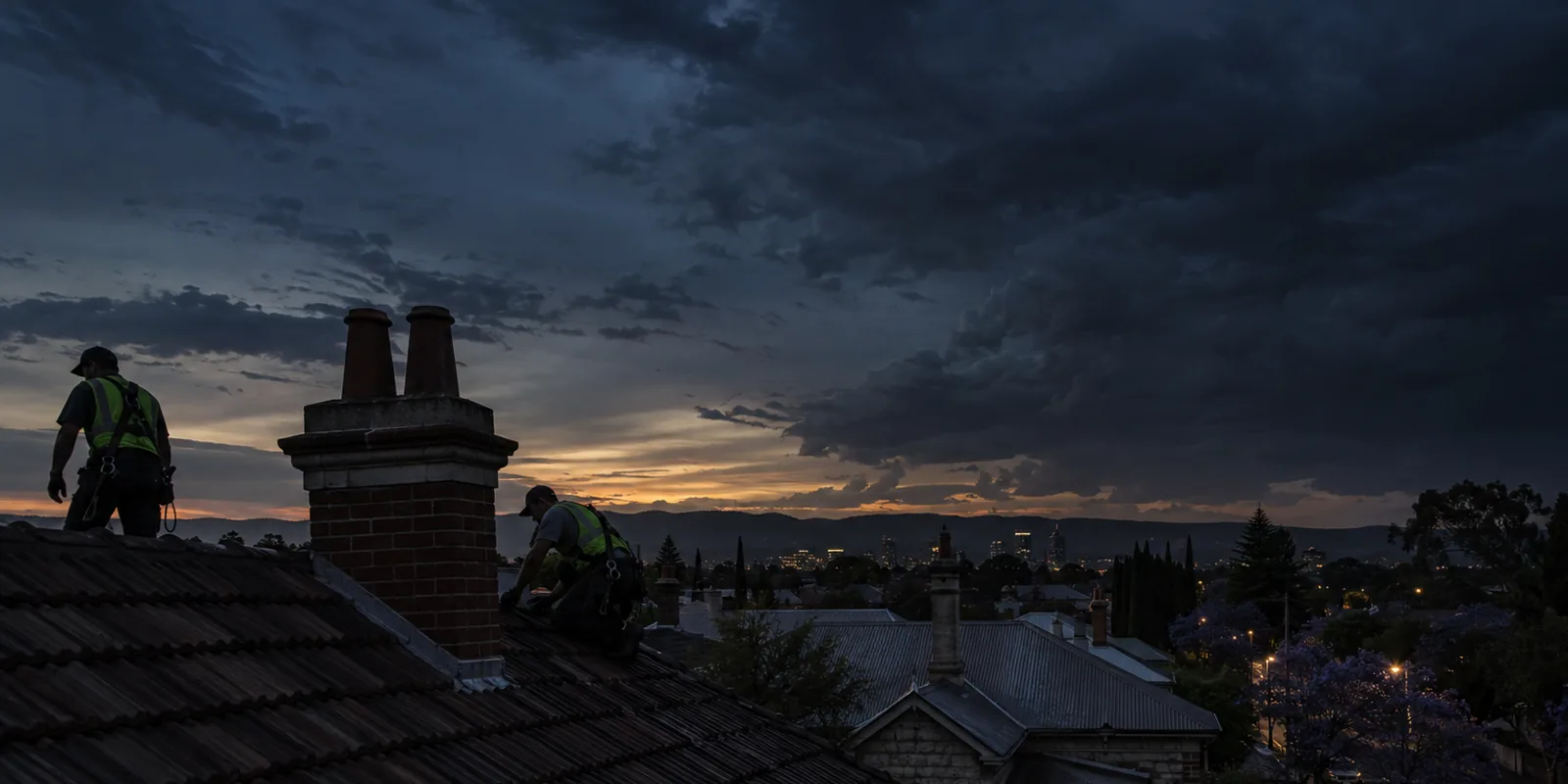
Roofers in Belair, Adelaide
Belair is a City of Mitcham suburb wrapped around Belair National Park, with steep, leafy streets, the Hills railway line and views back over the city. Its large bush blocks and split-level homes make it feel like the Hills proper despite being a short drive from Mitcham.
What usually goes wrong on Belair roofs
- Rusted valley irons and gutters fed by constant leaf litter from the surrounding bush
- Moss-covered south pitches and torn sarking on the 1950s to 80s tile roofs
- Ridge mortar cracked by summer heat and winter frost in turn
- Flashings opened by roof frames shifting on the moving clay slopes
- Cracked tiles and dented sheeting from overhanging branches, with Bushfire Attack Level rules shaping every repair
Local notes from the roofers
Belair is bush living within sight of the city, with Belair National Park on one side and steep streets of homes on the other. The housing is mainly 1950s to 80s, with a few older stone properties and interwar homes near the railway station and Sheoak Road, and a good number of 1970s architect-designed homes on large sloping blocks. Concrete tiles are the most common roof, followed by terracotta and Colorbond, and almost all of them sit under heavy tree cover that feeds leaf litter into every gutter and valley. Rusted valley irons, moss-covered south pitches and torn sarking are what turn up on inspection, along with ridge mortar cracked by both summer heat and winter frost. The bushfire risk is real, with the park and the surrounding gullies putting most properties under BAL requirements that shape the choice of roofing, gutter guard and eaves detailing. The clay soils move on the slopes and shift roof frames enough to open flashings. Roofs are often three storeys above the downhill side on split-level homes, so scaffold, harness points and careful staging are part of the plan.
Housing and roof types in Belair
Mainly 1950s to 80s homes under concrete tiles, terracotta and Colorbond on large sloping blocks, including 1970s architect-designed split-level houses, with a few older stone properties and interwar homes near the railway station and Sheoak Road, all under heavy tree cover beside Belair National Park.