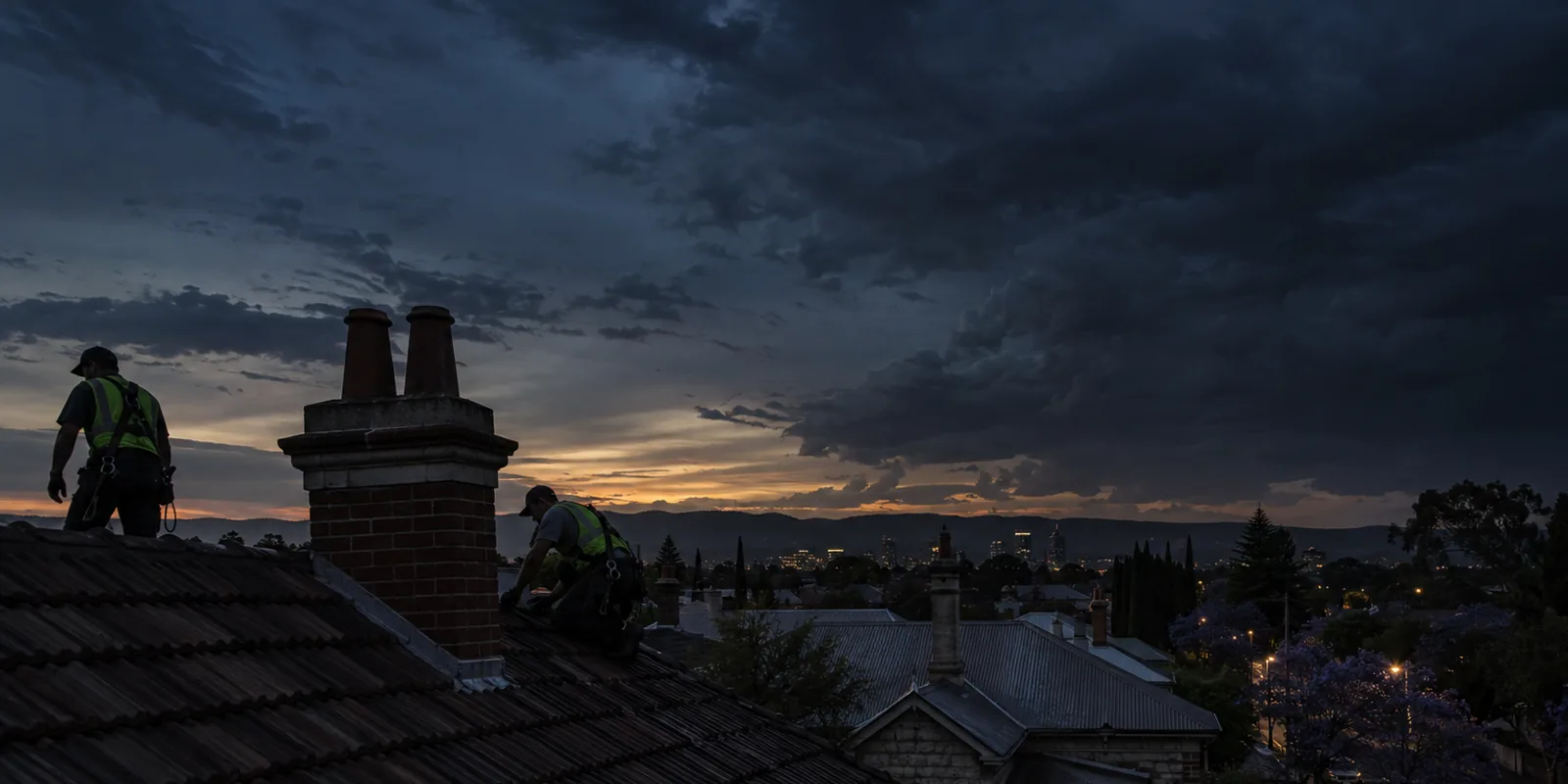
Roofers in Blackwood, Adelaide
Blackwood is a City of Mitcham suburb on the hills face, with a busy roundabout and shopping strip on Main Road and the railway line to the Hills passing through. It sits between the plains and the Hills proper and gets a share of both climates, with heavy tree cover and steep residential streets.
What usually goes wrong on Blackwood roofs
- Rusted valleys under gum leaf litter and perished sarking on the complex 1960s to 80s tile roofs
- Porous, cracked concrete tiles on the postwar streets with heavy moss on the shaded pitches
- Ridge pointing cracked and gutters shifted out of fall by seasonal clay movement on the hills face
- Bark and branches from tall stringybarks cracking tiles and blocking gutters through the year
- Bushfire Attack Level requirements for replacement roofs and gutter guards
Local notes from the roofers
Blackwood sits on the Mitcham Hills side, halfway between the plains and the Hills proper, and gets a bit of both. Its older core near the roundabout and the railway station has 1900s to 1930s cottages and bungalows under corrugated iron and terracotta tiles, with the postwar streets filling in behind under concrete tiles that are now porous and cracked. The 1960s to 80s homes along Shepherds Hill Road and toward Hawthorndene are on sloping blocks with high-pitched, complex tile roofs where the valleys rust under gum leaf litter and the sarking has perished. Moss and lichen are heavy on the shaded pitches and the tall stringybarks drop bark and branches through the year. Much of Blackwood is in a bushfire-prone area with BAL requirements for replacement roofs and gutter guards. The clay soils on the hills face move with the seasons, cracking ridge pointing and shifting gutters out of fall. Winter fronts push up the escarpment and drop more rain here than at Mitcham below. Steep driveways, retaining walls and roofs high above the downhill side make scaffold and edge protection a standard part of most jobs.
Housing and roof types in Blackwood
1900s to 1930s cottages and bungalows under corrugated iron and terracotta tiles near the roundabout and railway station, postwar streets under concrete tiles behind them, and 1960s to 80s homes with high-pitched, complex tile roofs on sloping blocks along Shepherds Hill Road and toward Hawthorndene.