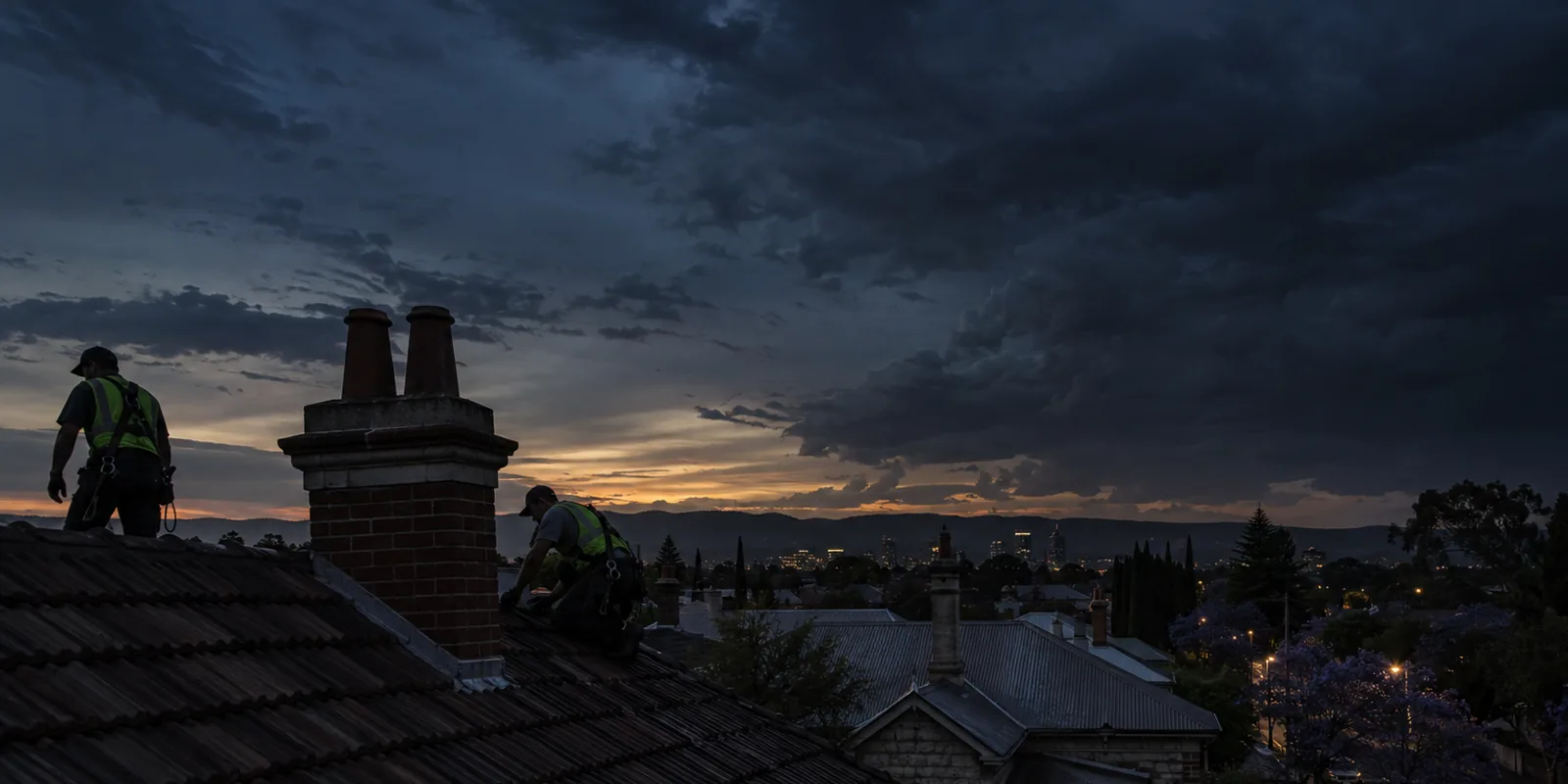
Roofers in Burnside, Adelaide
Burnside is the affluent centre of the City of Burnside, spread across the foothills between Greenhill Road and Hazelwood Park with Burnside Village at its heart. Blocks are large and heavily treed, the houses are big and often complex, and the roofs see more wind and leaf litter than the flat suburbs closer to the city.
What usually goes wrong on Burnside roofs
- Gutters and valleys choked with leaf litter from mature gums, oaks and plane trees
- Ridge and hip capping loosened by gusty foothill winds ahead of a cool change
- Terracotta tiles cracked by falling branches and by trades walking on brittle old tiles
- Early concrete tiles from the 1960s gone porous and holding moss on southern slopes
- Rusted valley irons under long, leaf-filled valleys on complex hipped roofs
Local notes from the roofers
Burnside roofs are big, complicated and surrounded by trees, and those three facts explain most of the callouts. The interwar and 1950s homes around Hazelwood Park carry hipped terracotta roofs with several gables, long valleys and a lot of ridge capping, and every metre of capping is a line of cement mortar that summer heat and winter clay movement have been working on for seventy years. The valleys fill with leaves from oaks, planes and gums, the leaf litter holds water against the valley iron, and it rusts through from underneath while looking fine from above. Foothill wind exposure is real here: northerlies ahead of a change funnel down the slopes and lift caps that have already lost their pointing, and the south-westerlies behind the front drive rain up under tiles where sarking is missing. Early concrete tiles on the 1960s houses toward Glynburn Road are porous now and grow moss on the shaded side. Access is usually good on these blocks, but two-storey homes and steep pitches mean scaffold or harness work as standard rather than the exception.
Housing and roof types in Burnside
Large 1920s to 1960s homes on big foothill blocks: interwar bungalows and Tudor-style houses under terracotta tiles, 1950s and 60s cream brick under terracotta or early concrete tiles, and a run of newer luxury rebuilds under Colorbond and slate-look tiles.