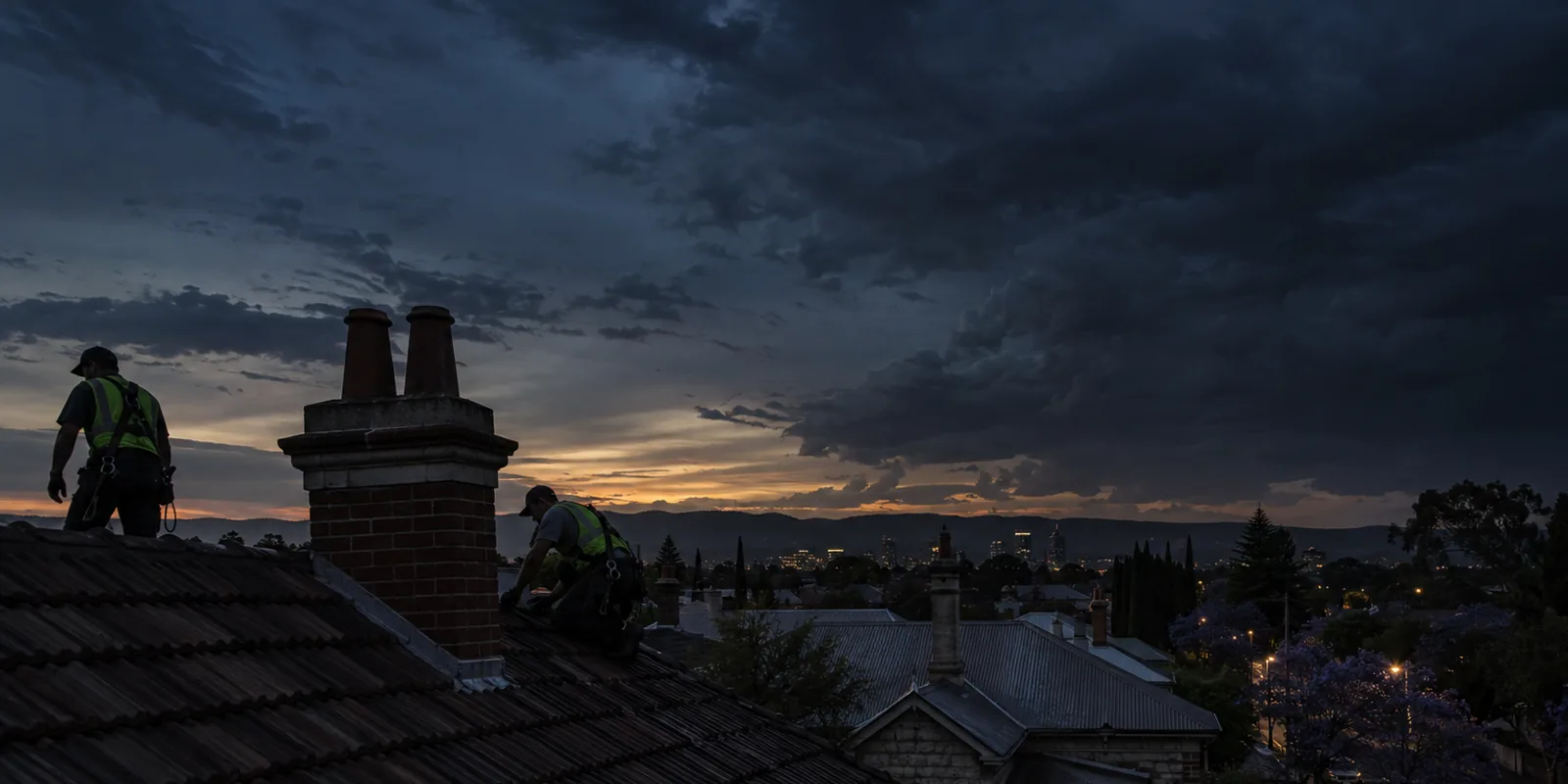
Roofers in Campbelltown, Adelaide
Campbelltown is the civic centre of its council area, sitting on the flat ground between the River Torrens and the foothills with Lower North East Road running through it. The housing is overwhelmingly post-war, and the concrete tile roof at fifty to sixty years old is the standard problem.
What usually goes wrong on Campbelltown roofs
- Original concrete tiles eroded, chipped at the edges and slipping where battens have sagged
- Cement ridge bedding failed and caps loose after fifty years of thermal cycling
- Gutters out of fall and pooling on homes where the reactive clay has moved the footings
- Asbestos cement roofing still present on some untouched 1960s homes awaiting replacement
- Torn or absent sarking letting wind-driven rain into ceilings during winter fronts
Local notes from the roofers
Campbelltown is one long lesson in what a concrete tile roof does after fifty or sixty years. The suburb was built out between the mid 1950s and the early 1970s, mostly brick and brick veneer on level blocks between Lower North East Road and the River Torrens, and almost every house was tiled in concrete. The tiles have done their time: the coloured surface has worn off, the edges chip, moss takes hold on southern slopes, and a tile that once shed water now soaks it up and adds weight to the frame. The cement bedding under the ridges and hips has cracked and the caps rock in the wind. On many streets the battens were never sarked, so a strong south-westerly front pushes rain between the tiles and straight into the ceiling. Thorndon Park and the Linear Park bring bigger trees than the suburb's own street plantings, and gutters near them block quickly. Some 1960s homes still carry asbestos cement roofing, which is a licensed removalist's job, not a repair. Tile-to-Colorbond conversion is common here and the frames rarely need strengthening for the lighter sheeting.
Housing and roof types in Campbelltown
Post-war family suburb along the River Torrens: 1950s to 70s brick and brick veneer homes under concrete and terracotta tiles on regular blocks, Housing Trust groups from the same era, and a growing number of hammerhead subdivisions with new Colorbond-roofed homes.