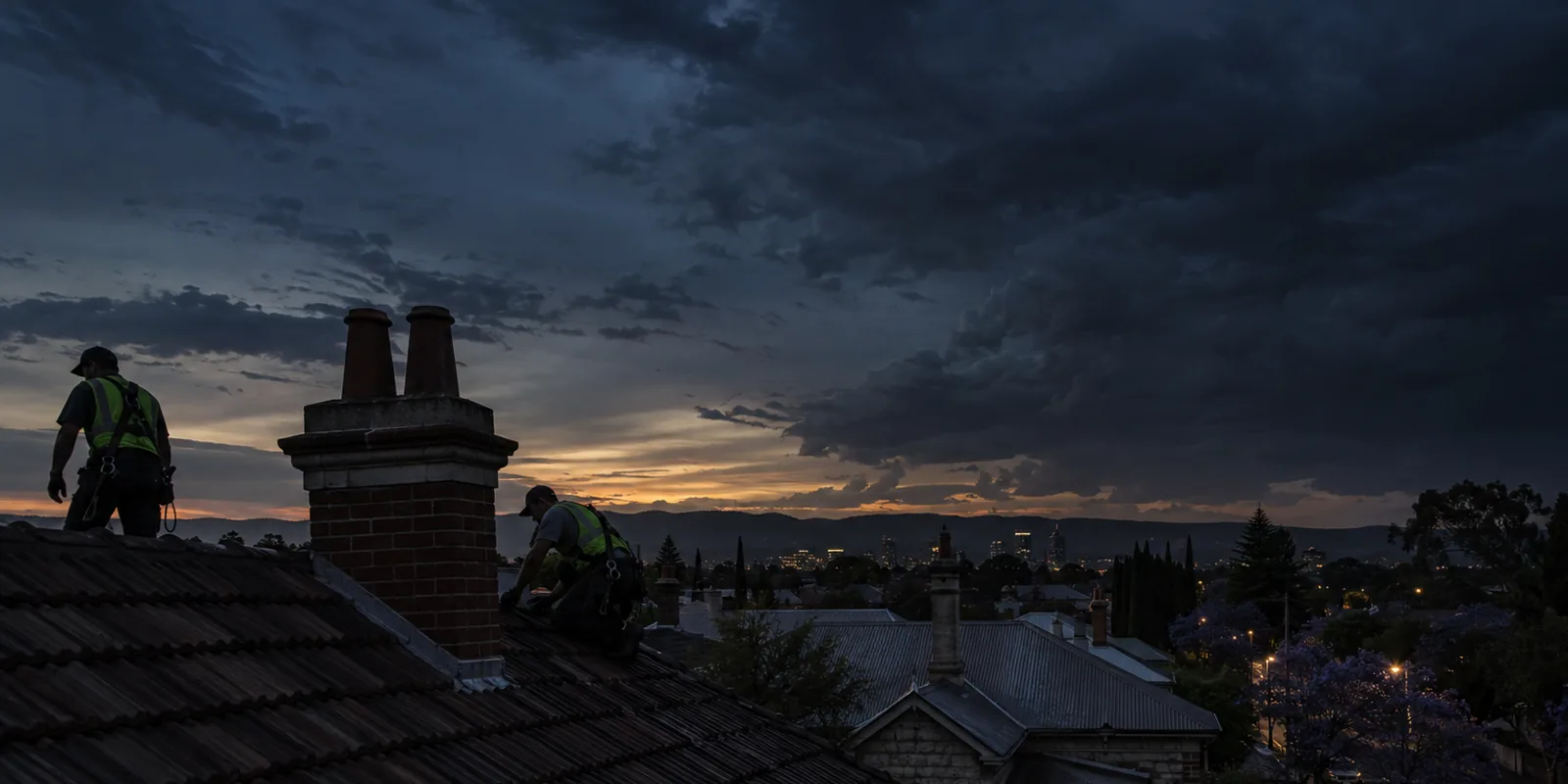
Roofers in Edwardstown, Adelaide
Edwardstown straddles South Road south of the city, a working suburb where post-war homes sit alongside factories, car yards and the Castle Plaza shopping centre. Small blocks are steadily being redeveloped into townhouses, so a single street can hold a 1955 Housing Trust roof and a brand new box-guttered roof side by side.
What usually goes wrong on Edwardstown roofs
- Concrete tiles on original post-war homes eroded, cracked and losing ridge bedding
- Rusted corrugated and metal deck roofing on older factories and warehouses along South Road
- Box gutters and membrane roofs on new townhouse groups blocking and overflowing
- Asbestos cement roofs on some untouched 1950s homes needing licensed replacement
- Gutters and downpipes on small blocks discharging against neighbouring walls and footings
Local notes from the roofers
Edwardstown has two kinds of roof problem, residential and industrial, and they sit within sight of each other. The original 1950s and 60s homes on the streets between South Road and the railway line are brick under concrete tiles, and those tiles are now at the end of their useful life: eroded surface, cracked ridges, mortar gone, and on a few Housing Trust homes an asbestos cement roof that has never been touched. Because the blocks are small and the suburb is being redeveloped, a lot of the older stock is being replaced rather than restored, and the new townhouse groups bring their own issues within a few years: box gutters between units that block, membrane roofs with blocked overflows, and downpipes discharging against a neighbour's wall. Along South Road and Daws Road the factories and warehouses carry large-span corrugated and metal deck roofs where rusted screws, corroded laps and blocked box gutters cause leaks over stock and equipment. The suburb is flat and the heavy clay underneath moves gutters out of fall on the older homes, so pooling and rust at the joints are routine finds.
Housing and roof types in Edwardstown
1950s and 60s brick and Housing Trust homes under concrete and terracotta tiles on small blocks, an industrial belt along South Road with large-span metal roofs, and a wave of townhouses and unit groups replacing the older homes since the 2000s.