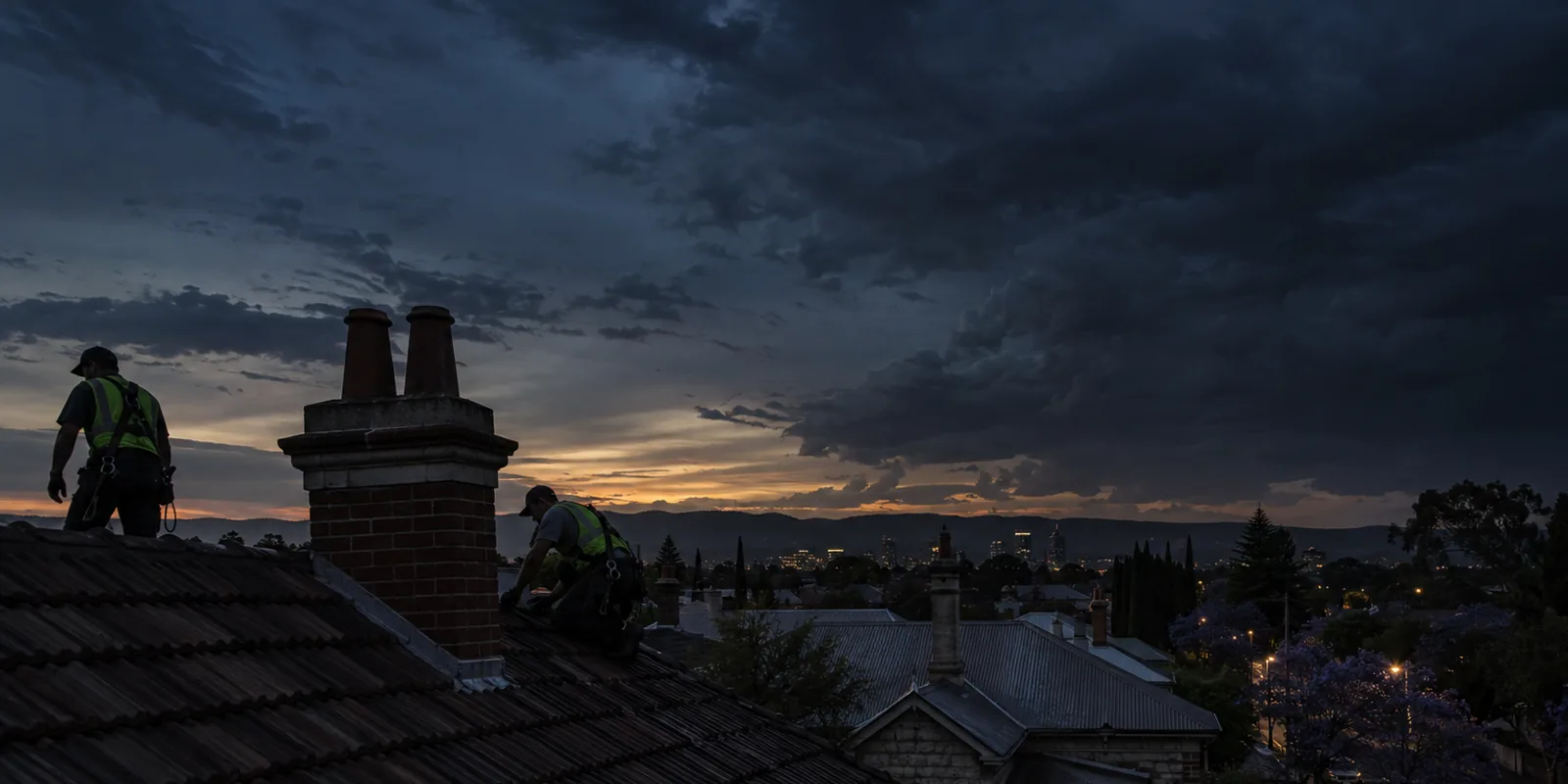
Roofers in Mount Barker, Adelaide
Mount Barker is the regional centre of the District Council of Mount Barker and the fastest-growing town in the Hills, with a historic main street, a hospital and big-box retail near the South Eastern Freeway interchange. New estates spread across former farmland to the south and east.
What usually goes wrong on Mount Barker roofs
- Rust at the gutter line and fatigued lead flashings on the heritage iron roofs of the old town
- Porous tiles, cracked pointing and rusted valleys on the 1970s to 90s homes
- Box gutters without fall and missed screws on new estate homes just past their builder's defect period
- Flashings sealed with silicone instead of lapped, and solar penetrations leaking on the first heavy rain
- Hail dents and wind damage on roofs open to the weather across the Hills
Local notes from the roofers
Mount Barker is the fastest-growing part of the Hills, and the roofs split into two clear groups. The old town around Gawler Street has stone cottages, shopfronts and villas under corrugated iron, with parapets, box gutters and verandahs that show rust at the gutter line and fatigued lead flashings around the chimneys. The 1970s to 90s homes on the surrounding streets are concrete tiles or Colorbond, ageing the usual way with porous tiles, cracked pointing and rusted valleys. Then there are the growth estates to the south and east, where thousands of new homes under Colorbond have gone up since the mid-2000s, along with large-span steel roofs on sheds, retail and light industry near the freeway interchange. On the newer homes the calls are about construction faults rather than age: box gutters without fall, missed screws, flashings sealed with silicone instead of lapped, and solar penetrations that leak on the first heavy rain. Mount Barker gets more rain than the plains and sits open to the wind across the Hills, with occasional hail. Frost is regular in winter.
Housing and roof types in Mount Barker
Stone cottages, shopfronts and villas under corrugated iron in the old town around Gawler Street, 1970s to 90s homes under concrete tiles and Colorbond on the surrounding streets, and mid-2000s onward Colorbond growth estates to the south and east with large-span steel roofs on sheds and retail near the freeway.