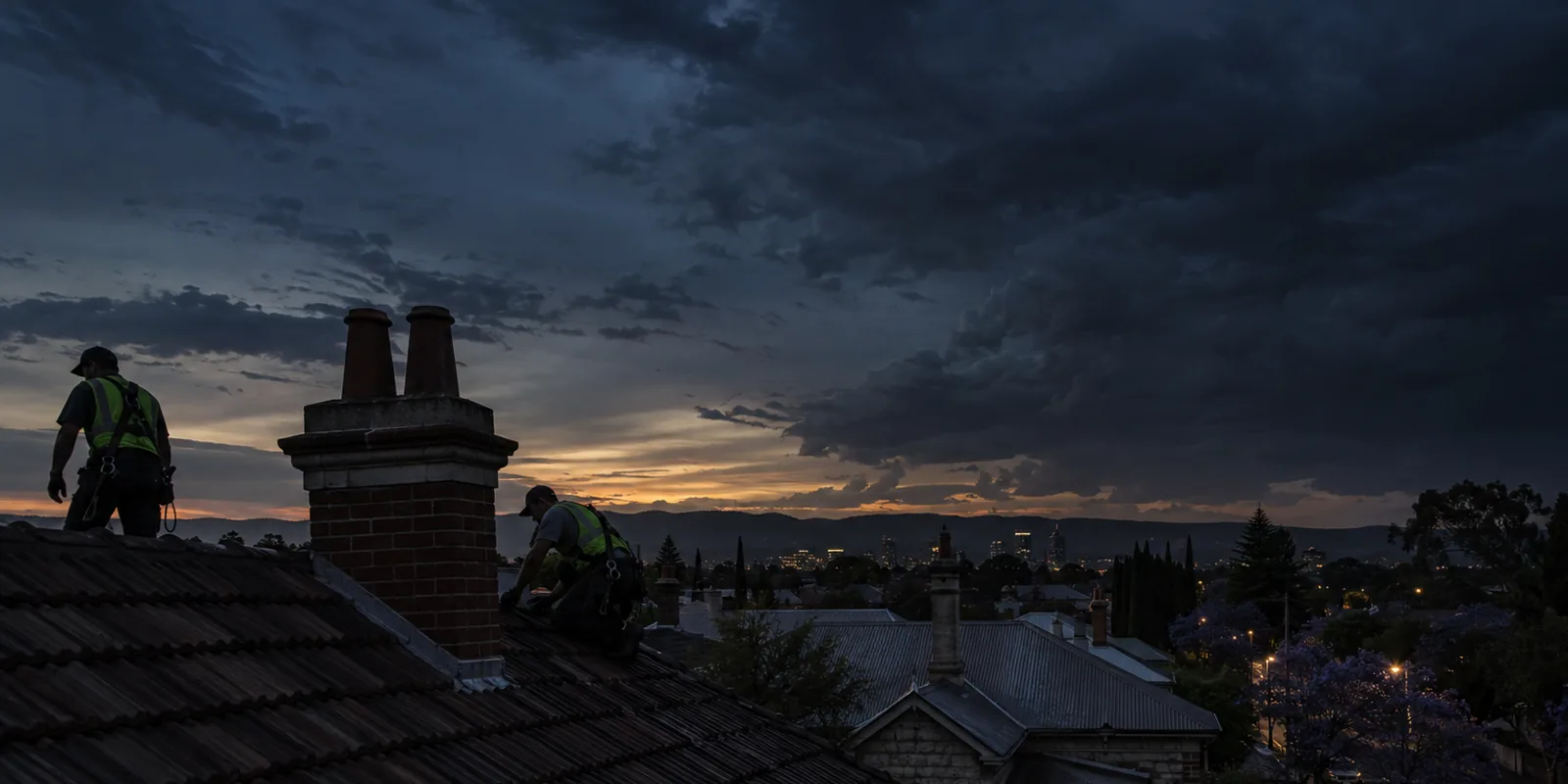
Roofers in North Adelaide, Adelaide
North Adelaide sits on the rise north of the River Torrens, bounded by the Parklands and connected to the city by King William Road and the Adelaide Oval footbridge. Almost the entire suburb is heritage listed or covered by a historic conservation zone, and the housing ranges from small workers' cottages near the Oval to mansions on Brougham Place.
What usually goes wrong on North Adelaide roofs
- Box gutters between parapets on terraces and townhouses overflowing into plaster ceilings
- Rusted corrugated iron and fatigued lead flashings on villa roofs that have never been re-sheeted
- Slipped and broken slates on the oldest stone buildings where the fixings have corroded
- Chimney flashings and cappings failing on homes with four or more chimneys
- Ornate bullnose verandah roofs rusting through at the gutter edge
Local notes from the roofers
North Adelaide has more heritage roofing per street than anywhere else in South Australia, and the work reflects that. The bluestone villas and terraces around Wellington Square and along Lefevre Terrace carry hipped corrugated iron roofs with multiple chimneys, so every flashing is a possible leak and every chimney capping needs checking after a hot summer. Terraces and townhouses toward O'Connell Street share parapet walls with box gutters between them, and the older ones drain through a single outlet that a handful of plane tree leaves can close. A number of the earliest stone buildings still carry slate; when the fixings corrode the slates slip and the repair means sourcing matching slate, not a substitute. The bullnose verandah roofs on the villa fronts rust from the gutter edge inward and are the first thing heritage advisers ask about when a re-sheet is planned. Council heritage rules mean iron profile, colour and detailing on the street frontage are matched, and scaffolding on narrow cottage frontages near the Oval takes coordination with neighbours and parking.
Housing and roof types in North Adelaide
Adelaide's grandest heritage precinct: 1850s to 1910s bluestone and sandstone mansions, villas and terraces around Wellington Square, Melbourne Street and the Lefevre Terrace ridge, mostly under corrugated iron with slate on some of the earliest buildings, plus a scattering of 1960s and 70s flats.