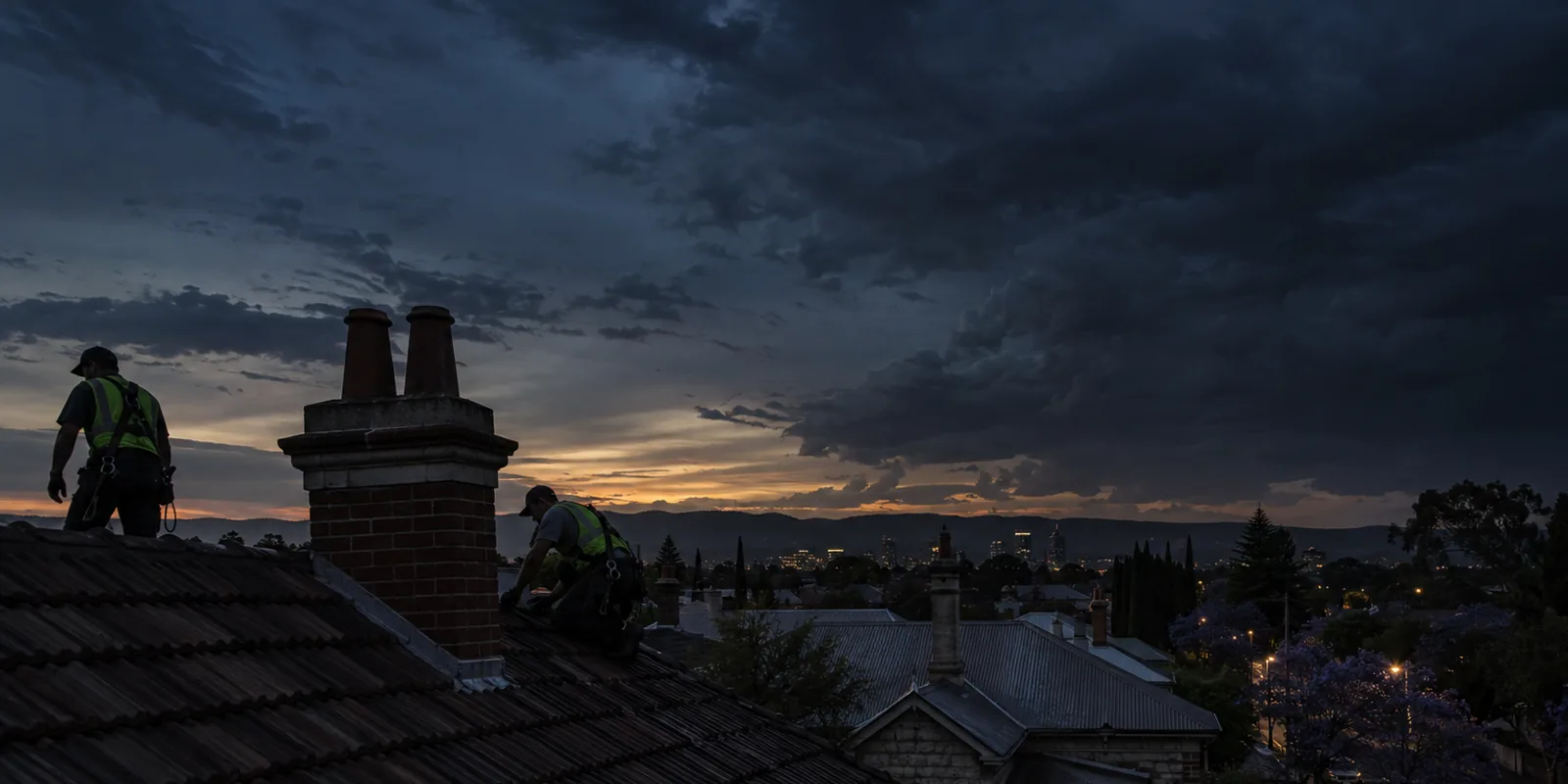
Roofers in Norwood, Adelaide
Norwood is the heart of the City of Norwood Payneham and St Peters, a walkable inner-eastern suburb where The Parade's shops and cafes sit among tree-lined streets of villas and bungalows. Historic conservation zones cover much of the residential area, and the mix of iron and tile is roughly half and half.
What usually goes wrong on Norwood roofs
- Cement bedding and pointing crumbling on the ridges of interwar terracotta-tiled bungalows
- Original galvanised iron on cottage roofs rusting at the laps and around old chimney flashings
- Verandah roofs and gutters on villa frontages rusted through at the low edge
- Box gutters on parapet-fronted shops along The Parade blocking and overflowing into tenancies
- Flashings cracked around new skylights and solar mounts on old roofs
Local notes from the roofers
Norwood splits neatly by era. The streets between The Parade and Kensington Road are full of 1890s and 1900s villas and cottages under corrugated iron, many re-sheeted in Zincalume or Colorbond in the last thirty years but still carrying original chimney flashings and rusted verandah roofs. South toward Beulah Road and the Parkside border the interwar bungalows take over, and here it is the terracotta tiles: still sound after ninety years, but with the cement mortar on ridges and hips crumbling and letting rain under the caps. Most leak calls in Norwood come from one of three places: a verandah gutter rusted through at the front, a chimney flashing opened by heat, or a ridge that lost its pointing in the last windy front. The Parade shops have parapets and box gutters that back up into the tenancy below when the outlet blocks. Plane trees and jacarandas along the streets fill gutters twice a year. The conservation zone means street-facing replacements match the original in profile and colour; behind the ridge line there is more freedom in what can be used.
Housing and roof types in Norwood
Bluestone and sandstone villas and symmetrical cottages from the 1880s to 1910s under corrugated iron, interwar bungalows under terracotta tiles, and 1960s to 2000s flats and townhouses off The Parade and Osmond Terrace.