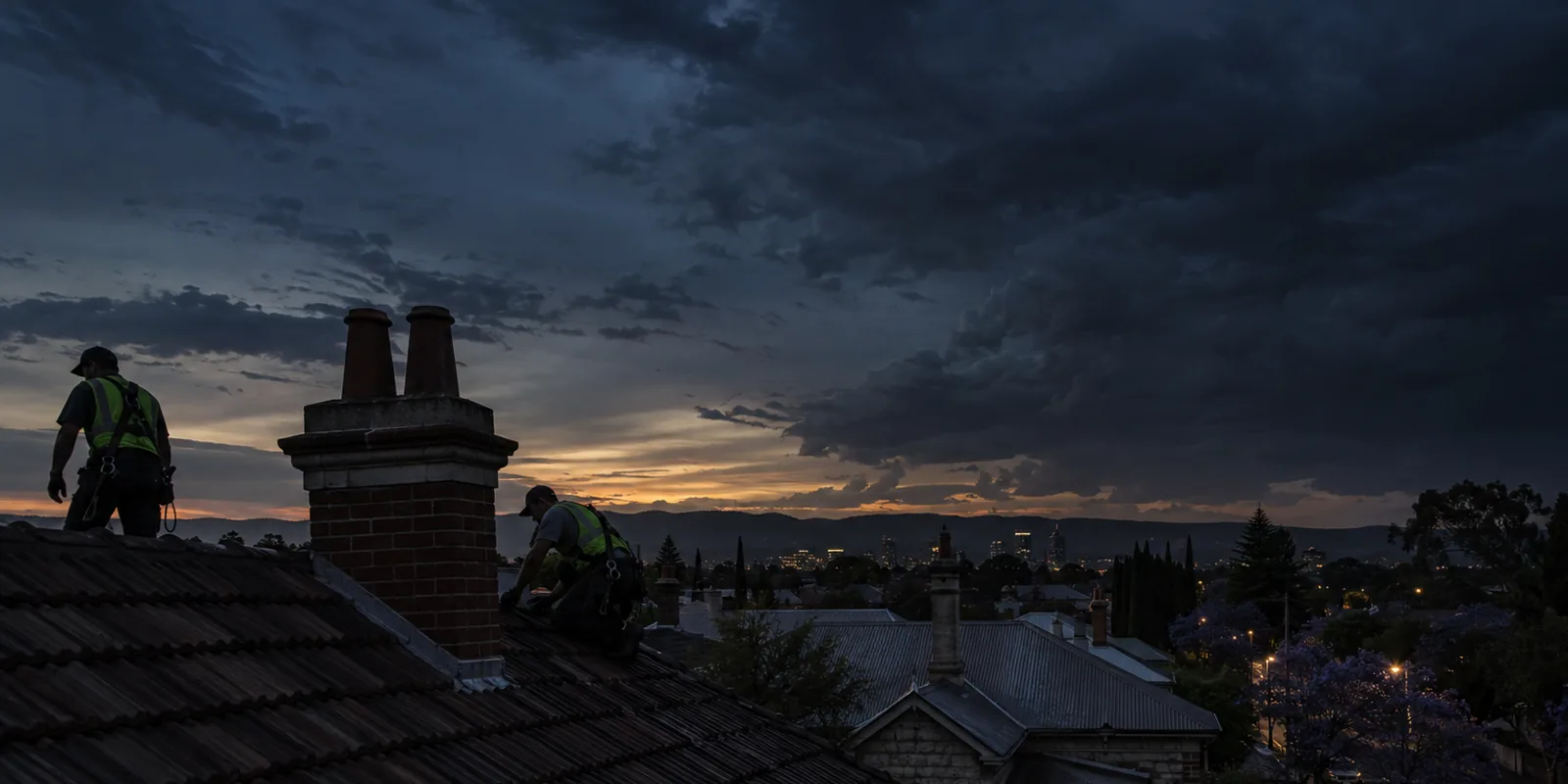
Roofers in Payneham, Adelaide
Payneham sits between Norwood and Campbelltown along Payneham Road, part of the City of Norwood Payneham and St Peters. It is a mixed suburb where the character streets near Norwood give way to post-war homes and a high proportion of unit developments from the 1970s onward.
What usually goes wrong on Payneham roofs
- Ridge and hip pointing cracked on terracotta bungalows and 1950s homes alike
- Gutters on unit groups shared between dwellings, blocking and overflowing into neighbours' ceilings
- Rusted galvanised iron on the oldest villas where chimneys and hips have never been reflashed
- Concrete tiles on 1960s homes porous and cracked under foot traffic
- Downpipes disconnected or undersized on subdivided blocks, flooding paving and undermining footings
Local notes from the roofers
Payneham is the transition between the heritage streets of Norwood and the post-war spread of Campbelltown, and its roofs cover every era in between. Close to Portrush Road the villas and bungalows are the same iron and terracotta seen further west, with old chimney flashings and cement-pointed ridges that have outlived their mortar. Move east along Payneham Road and the 1950s and 60s brick homes take over under terracotta or concrete tiles, and concrete from that era is now porous, cracked under foot traffic and losing its ridge bedding. What sets Payneham apart is the number of unit groups and townhouses built from the 1970s onward on subdivided blocks, where gutters and downpipes serve two or three dwellings and one blocked outlet becomes a neighbour's ceiling leak. Downpipes on these developments were often run into paving or a soakage pit that has long since silted up, so water sits against footings on clay that is already moving. Roof work in unit groups is usually coordinated through a strata or community corporation, and access between closely built units can be tight for ladders and materials.
Housing and roof types in Payneham
A mix of 1900s to 1920s villas and bungalows under iron and terracotta on the older streets near Portrush Road, 1950s and 60s brick homes under terracotta and concrete tiles, and 1970s to 2000s unit groups and townhouses on subdivided blocks.