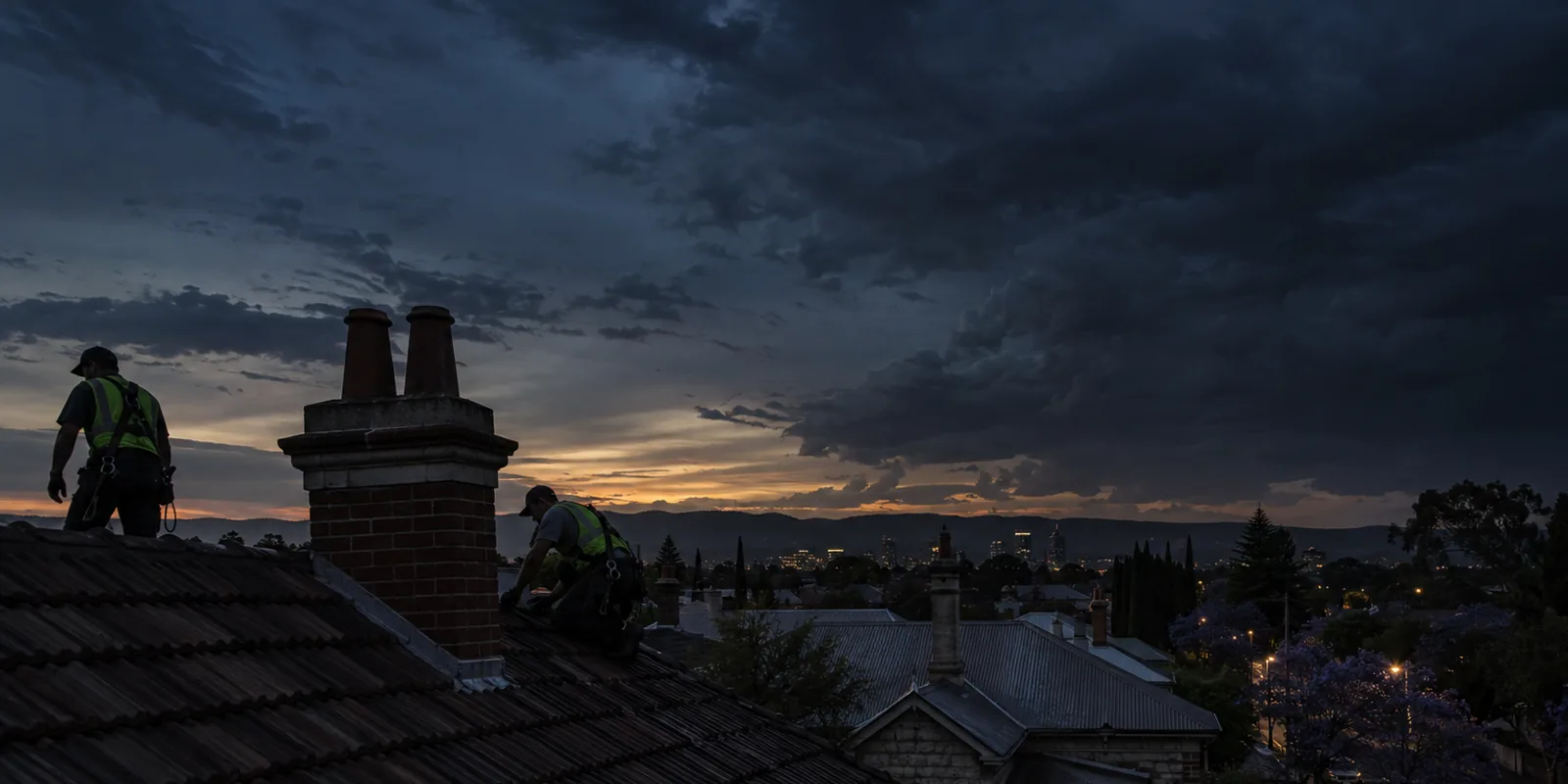
Roofers in Salisbury, Adelaide
Salisbury is the centre of the City of Salisbury, a postwar suburb on the hot northern plains built around the Interchange, Parabanks and John Street. Its Housing Trust core has been privately renovated and re-roofed piece by piece over sixty years, so no two roofs in a street are guaranteed to be the same.
What usually goes wrong on Salisbury roofs
- Cracked, porous terracotta tiles and ridge capping with no mortar left on the original Trust roofs
- Rusted screws, lifted laps and gutters rusting through at the joins on 1980s and 90s Colorbond re-roofs
- Cheaper roof sheeting without proper coatings aged badly by summer surface temperatures over 40 degrees
- Gutters out of fall and cracked rigid pointing from reactive clay movement
- Asbestos cement eaves and remnant sheeting from before the late 1980s needing identification before a re-roof
Local notes from the roofers
Salisbury grew fast after the war, and its core is 1950s and 60s SA Housing Trust housing, both the double-unit brick pairs and the freestanding homes on flat blocks around the Salisbury Interchange and Parabanks. Many were originally under asbestos cement or terracotta tiles; a great many have been re-roofed with Colorbond or concrete tiles since, and the quality of that second roof varies. Where the original tiles survive they are cracked and porous, and the ridge capping has lost its mortar. Older Colorbond re-roofs from the 1980s and 90s show rusted screws, lifted laps and gutters rusting through at the joins. The plains here are hot and dry through summer, with roof surfaces baking well above 40 degrees, and cheaper roof sheeting without proper coatings has aged badly. Reactive clay under the suburb moves with the seasons, so gutters lose their fall and rigid pointing cracks. Newer subdivisions and townhouses near the Little Para River use Colorbond and box gutters. Any home with roofing from before the late 1980s needs the eaves and any remaining sheeting checked for asbestos cement before a re-roof is planned.
Housing and roof types in Salisbury
1950s and 60s SA Housing Trust double units and freestanding homes on flat blocks, originally under asbestos cement or terracotta tiles and mostly re-roofed since with Colorbond or concrete tiles, plus newer townhouses and subdivisions under Colorbond near the Little Para River.