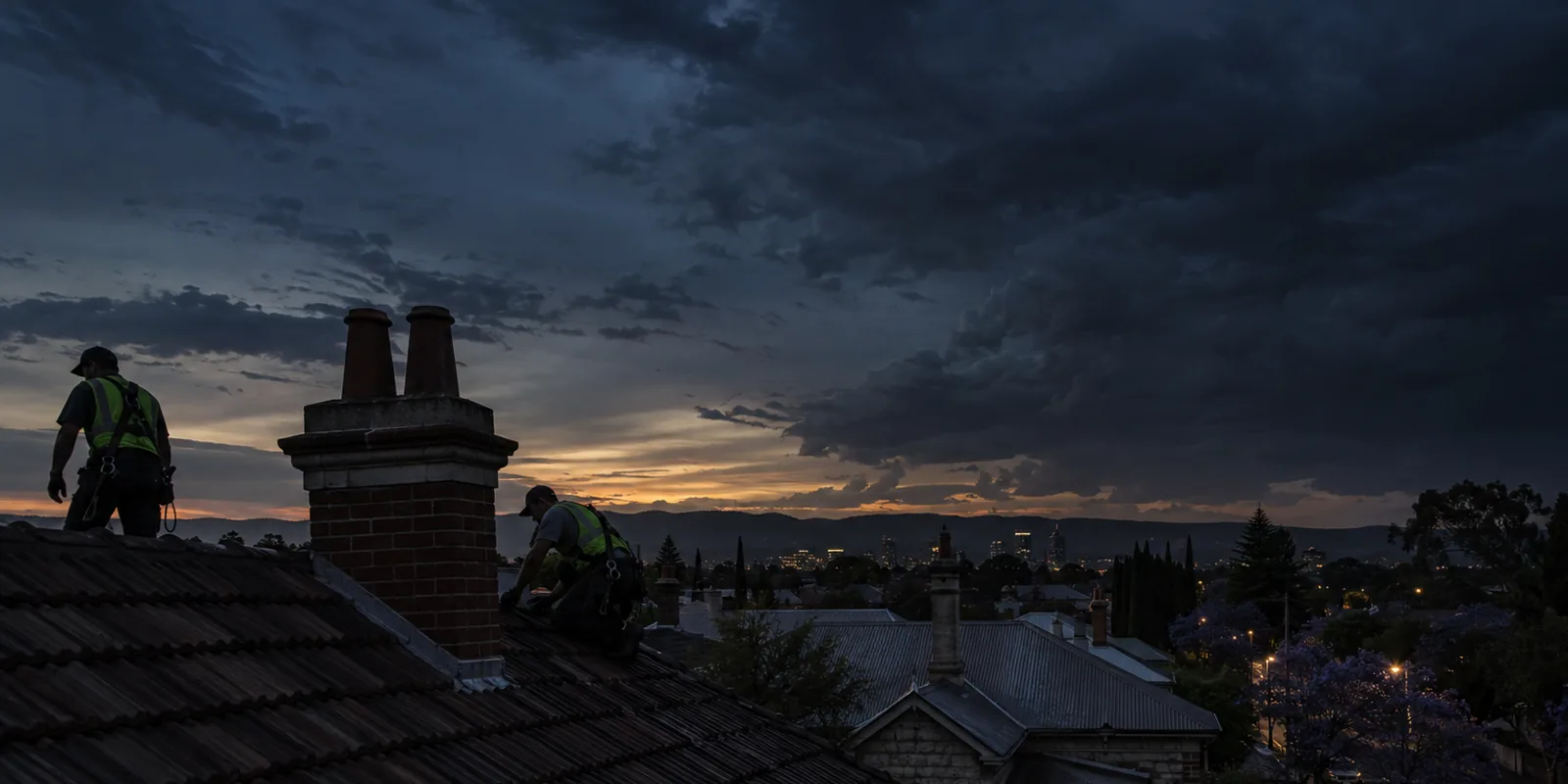
Roofers in Stirling, Adelaide
Stirling is the main village of the Adelaide Hills Council, just off the South Eastern Freeway below Mount Lofty, known for its deciduous trees, large old gardens and cool, wet winters. Its properties range from heritage stone houses on big blocks to family homes tucked into the bush on steep sites.
What usually goes wrong on Stirling roofs
- Gutters and valleys blocked with leaf litter from stringybarks, oaks, elms and liquidambars within weeks of a clean
- Thick moss and lichen on south-facing tiles and older Colorbond holding water through the wet winter
- Rusted valley irons on the complex tile roofs of the 1970s to 90s homes
- Porous tiles cracked by freeze-thaw cycles on frosty mornings
- Replacement roofs and gutter guards that must meet the property's Bushfire Attack Level
Local notes from the roofers
Stirling is the wettest and coolest place on this list, and its roofs live under trees. The village along Mount Barker Road and the streets of large old properties around it carry roofs that are constantly shaded by stringybarks, oaks, elms and liquidambars, and leaf litter blocks gutters and valleys within weeks of a clean. Moss and lichen grow thick on south-facing tiles and even on older Colorbond, holding water against the surface through the long wet winter. The stone cottages and Federation houses are under corrugated iron with box gutters and lead flashings, while the 1970s to 90s homes on the sloping bush blocks are concrete tiles or Colorbond, often with complex roofs and long valleys that rust out. Frost is common here and freeze-thaw cycles crack porous tiles. Much of Stirling is bushfire-prone, so replacement roofs and gutter guards need to meet the property's Bushfire Attack Level, with ember-proof mesh and non-combustible detailing. Access is often the hardest part: steep driveways, roofs high above sloping ground and limited room for scaffold. Gutter cleaning twice a year is not optional on these properties.
Housing and roof types in Stirling
Stone cottages and Federation houses under corrugated iron with box gutters and lead flashings in and around the village, and 1970s to 90s homes on sloping bush blocks under concrete tiles or Colorbond, all beneath heavy stringybark and deciduous tree cover.