A new roof is one of the largest single jobs a house will ever need, and in Adelaide it is also one of the least predictable to price from the street. A 1960s concrete tile roof in Salisbury, a corrugated iron villa roof in North Adelaide and an asbestos cement roof on a Housing Trust home in Elizabeth are three different projects with three different cost structures. This guide does not publish figures, because a figure that ignores your roof would be a guess. Instead it explains what a replacement quote is built from, so you can read one properly and ask the right questions.
Restoration or replacement: making the decision first
Before anyone prices a new roof, the first question is whether the roof needs one. Many tiled roofs in Adelaide that look tired from the ground have a sound structure and simply need broken tiles replaced, the ridges rebedded and repointed, the valleys renewed and a coating applied. That is a restoration, and it is the right answer where the tiles still have surface left and the battens and sarking are intact.
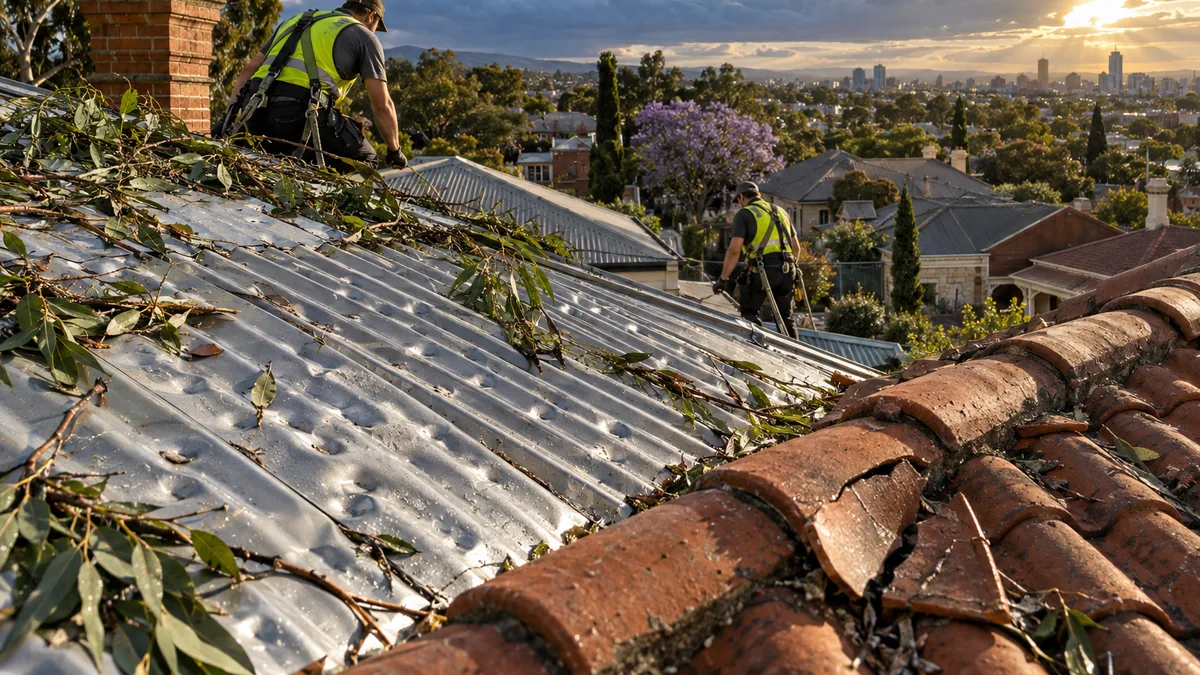
Replacement is the right answer when the tiles themselves have failed: concrete tiles gone porous through their full thickness, terracotta tiles fretting and crumbling, or an entire profile that is no longer made so broken tiles cannot be matched. It is also the answer for corroded metal roofs with rust through the sheets rather than surface rust, for asbestos cement roofs at the end of their life, and for roofs where the battens have rotted or the frame has been damaged by long-term leaks. A roofer who inspects the roof properly should tell you which side of that line you are on, and why. If the honest answer is restoration, a good roofer will say so rather than sell the bigger job.
What drives a roof replacement quote
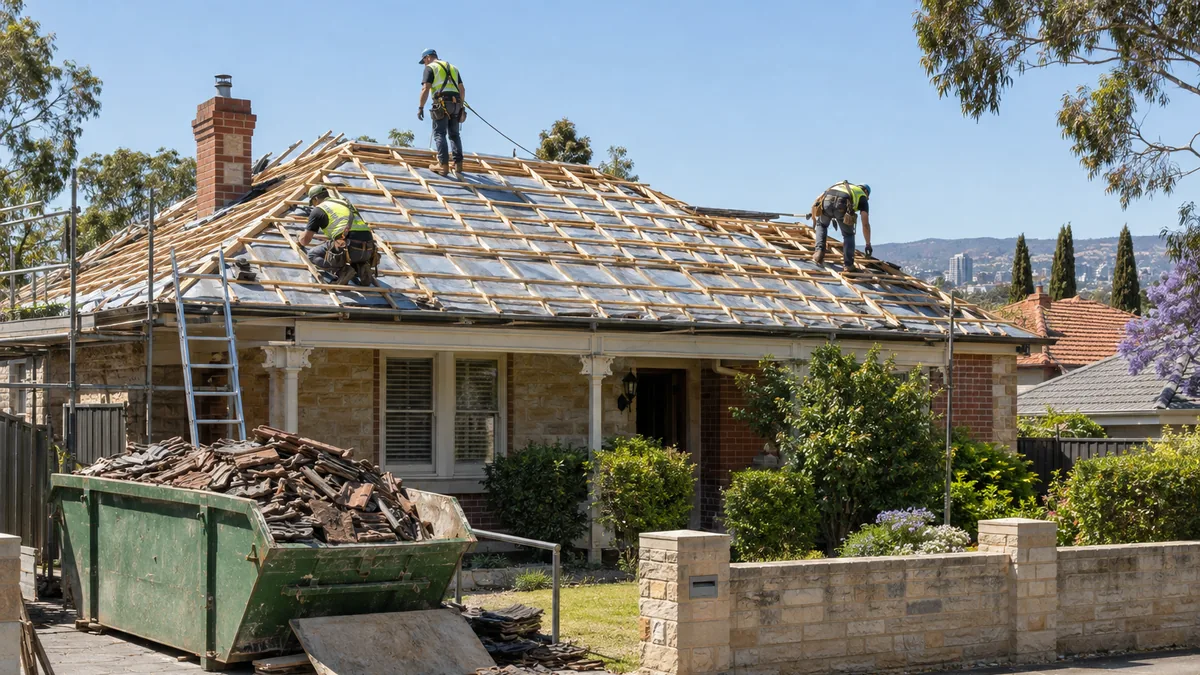
Strip and disposal. Everything on the roof comes off and goes into a skip. Concrete tiles are heavy and bulky, so disposal on a large tiled roof in Golden Grove is a bigger item than on a small iron roof in Parkside. Access for the skip and the distance the tiles have to be carried both matter.
Asbestos removal. Many Adelaide homes built before the late 1980s have asbestos cement roofing or eaves, often called Super Six. Removing more than a small area must be done by a licensed asbestos removalist regulated by SafeWork SA, with its own procedures for wetting, wrapping, transport and disposal, and its own clearance process before the roofer can start. This is quoted separately and it is never a DIY task. If your roof is asbestos cement, expect the removal to be a substantial part of the total and to be carried out by a different licence holder than the roofer.
Battens. Once the tiles are off, the battens are exposed. Old hardwood battens are often sound, but battens under long-term leaks, near valleys or along the eaves are frequently rotted, and a metal roof usually needs new battens at a different spacing anyway. The quote should say whether battens are being replaced entirely or as found, and how extras are priced if more rot is discovered.
Sarking. The foil or membrane under the roof covering is often torn, missing or never installed on older Adelaide roofs. New sarking is standard on a replacement, and in the Hills a heavier grade or an insulation blanket may be recommended. On metal roofs, the blanket under the sheets controls condensation and rain noise.
Roof covering. This is the biggest choice. New concrete or terracotta tiles keep the look of a tiled suburb and suit brick veneer homes in Modbury and Morphett Vale. Colorbond steel is lighter, sheds leaves and water faster, and is the usual choice for a tile to metal conversion. On villas and cottages in Unley and Norwood, corrugated iron in Colorbond or Zincalume returns the roof to its original look. Profile, colour, gauge and coastal grade all move the price.
Gutters, downpipes and fascia. Almost every replacement includes new gutters and downpipes, because the old ones are removed to get the roof off and are rarely worth refitting. Rotted timber fascia is replaced at the same time. Box gutters between parapets on inner-suburban villas are a specialist item and are priced as such.
Flashings. Every chimney, skylight, vent, parapet and roof-to-wall junction needs a new flashing. Heritage chimneys on bluestone villas often need lead work by hand.
Insulation. With the roof off, adding or replacing ceiling insulation is straightforward. It is optional but worth pricing, given how hard Adelaide summers work a roof space.
Access and height. Two-storey homes, steep pitches, sloping bush blocks in Aldgate and tight inner-city sites need scaffold or edge protection under South Australian work health and safety rules. This appears as its own line.
Heritage requirements. In heritage and character zones across the inner and eastern suburbs, the council may limit what can be changed on the street frontage. Corrugated profile, colour and verandah detail may need to match the original, and approval may be needed before work starts. The roofer should flag this early.
Staged work and weather
A roof replacement is rarely one day. The crew strips and re-covers in sections so that the house is never left open overnight, and each day’s work is made watertight before the crew leaves. Adelaide’s winter rain from May to September and its spring storms make timing important. Work is scheduled around forecasts, and a run of south-westerly fronts can push a job out by days. Ask how the roofer manages weather, what happens if rain arrives mid-strip, and whether tarps are on site.
Summer has its own limits. Roof surfaces on a day above thirty-five degrees are dangerous to work on, and coatings and sealants behave differently, so crews start early and finish early. None of this is a reason to delay, but it is a reason to be realistic about the timeline you are given.
Written contract requirements in South Australia
Roofing is building work under the Building Work Contractors Act. Above a certain contract value, the work must be covered by a written contract that sets out the parties, the scope, the price, the payment schedule and the timeframe, and a full roof replacement is almost always above that threshold. The contractor must hold a Building Work Contractors Licence from Consumer and Business Services, and the roof plumbing components, including sheeting, gutters, downpipes, flashings and box gutters, are licensed plumbing work.
Ask for the licence number and check it on the CBS public register before you sign. Ask for the contract in writing, read the variations clause, and make sure the deposit and progress payments are tied to stages of work. A contractor who wants to work without a written contract on a full replacement is asking you to take on risk that the law says you should not have to.
What to ask before you sign
- Is this roof a candidate for restoration instead, and if not, why not?
- Is there asbestos cement anywhere on the roof or eaves, and who is removing it?
- Are battens being fully replaced, and how are extras priced if rot is found?
- What sarking or blanket is included?
- Which roof covering, profile, colour and grade is quoted, and is it suited to a coastal site if I am near the gulf?
- Are gutters, downpipes and fascia included, and are they the right size and fall for the roof area?
- How many flashings are listed, and are any heritage lead details included?
- What scaffold or edge protection is included?
- How is the work staged, and how is the house kept watertight between days?
- What is the workmanship warranty, in writing, and which manufacturer warranties apply to the products?
- What is the licence number, and can I see current insurance?
- Is there a written contract, and what does the variations clause say?
Reading the total
A replacement quote should read like a list of jobs, each with its own cost, adding up to a total you can understand. If two quotes differ, look for the difference in the lines rather than the bottom figure: one may include asbestos removal and new fascia, the other may not. The roof replacement service page describes the full process from inspection to final check, and the re-roofing page covers the metal-over-frame option in more detail. Whichever way you go, the roof is inspected first, the quote is written and itemised, and nothing starts until you approve it.
Questions on this topic
Q. How do I know if my roof needs replacing rather than restoring?
Restoration works when the tiles still have surface left and the battens and sarking are sound. Replacement is the answer when concrete tiles have gone porous through their full thickness, terracotta tiles are fretting and crumbling, the profile is discontinued so broken tiles cannot be matched, metal sheets have rusted through, or the battens have rotted. A roofer who inspects the roof properly should tell you which side of that line you are on and why.
Q. What happens if my Adelaide roof is asbestos cement?
Many homes built before the late 1980s have asbestos cement roofing or eaves. Removal of more than a small area must be done by a licensed asbestos removalist regulated by SafeWork SA, with its own wetting, wrapping, transport and disposal procedures and a clearance before the roofer starts. It is quoted separately from the new roof and it is never a DIY task. Expect it to be a substantial part of the total.
Q. Do I need a written contract for a roof replacement in South Australia?
Building work above a certain contract value must be covered by a written contract under the Building Work Contractors Act, and a full roof replacement is almost always above that threshold. The contract sets out the parties, the scope, the price, the payment schedule and the timeframe. The contractor must hold a Building Work Contractors Licence from Consumer and Business Services, which you can check on the CBS public register.
Q. Will the house be left open to the weather during a roof replacement?
It should not be. A roof is stripped and re-covered in sections so that the house is never left exposed overnight, and each day's work is made watertight before the crew leaves. Work is scheduled around Adelaide's winter fronts and spring storms, and tarps are kept on site for a change in the weather. Ask the roofer how the job is staged and what happens if rain arrives mid-strip.
Q. Should I replace the gutters and downpipes at the same time as the roof?
Almost always. The old gutters are removed to get the roof off and are rarely worth refitting, and rotted timber fascia is replaced before new gutters go on. New gutters are sized to the roof area and set to fall so that water runs to the downpipes rather than pooling. On a metal roof the run-off arrives faster in a downpour, so the downpipe count and positions are checked rather than copied from the old layout.
- roof replacement
- new roof
- asbestos
- Colorbond
- sarking
- written contract