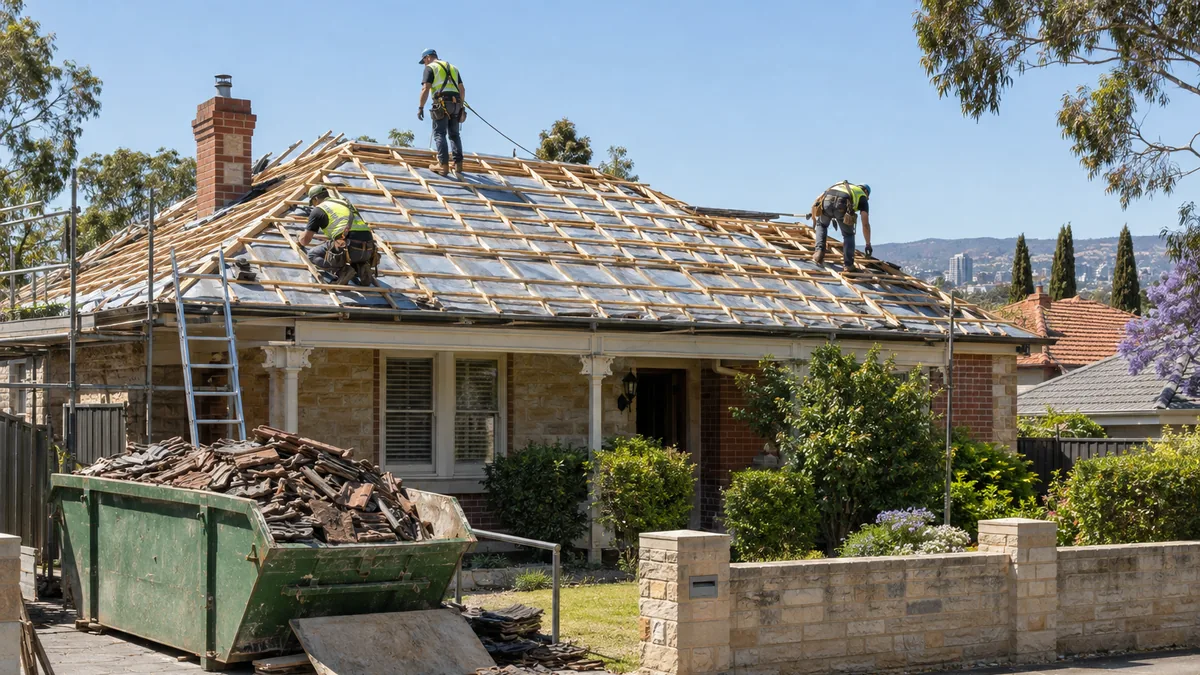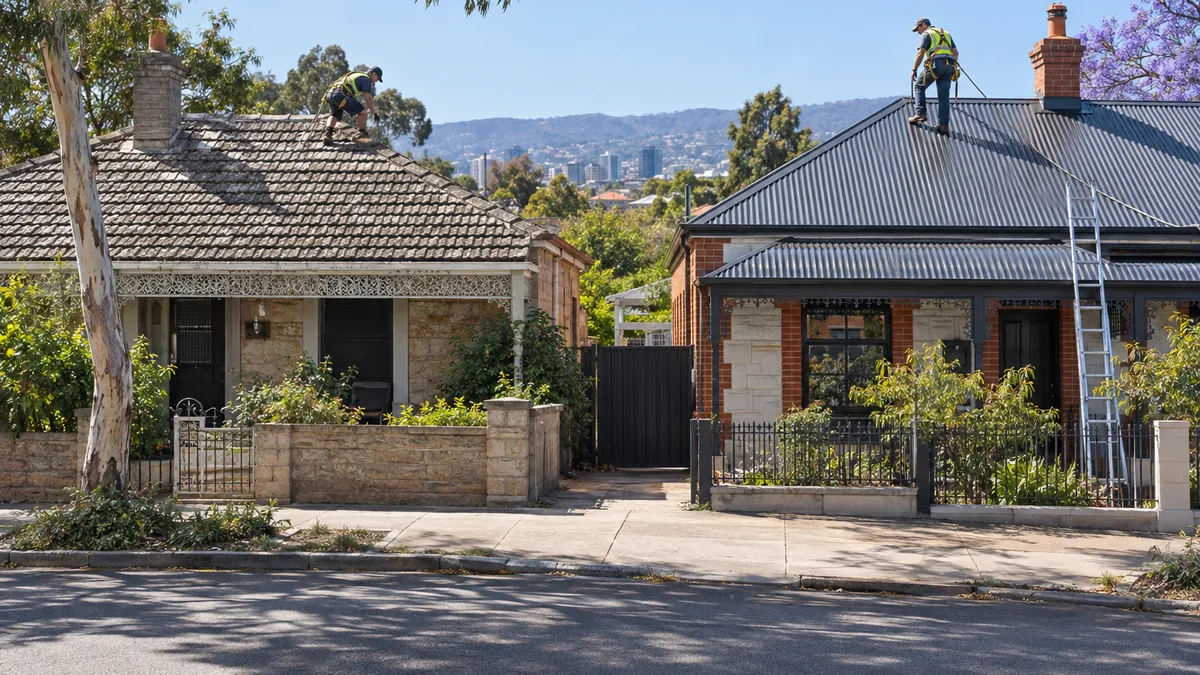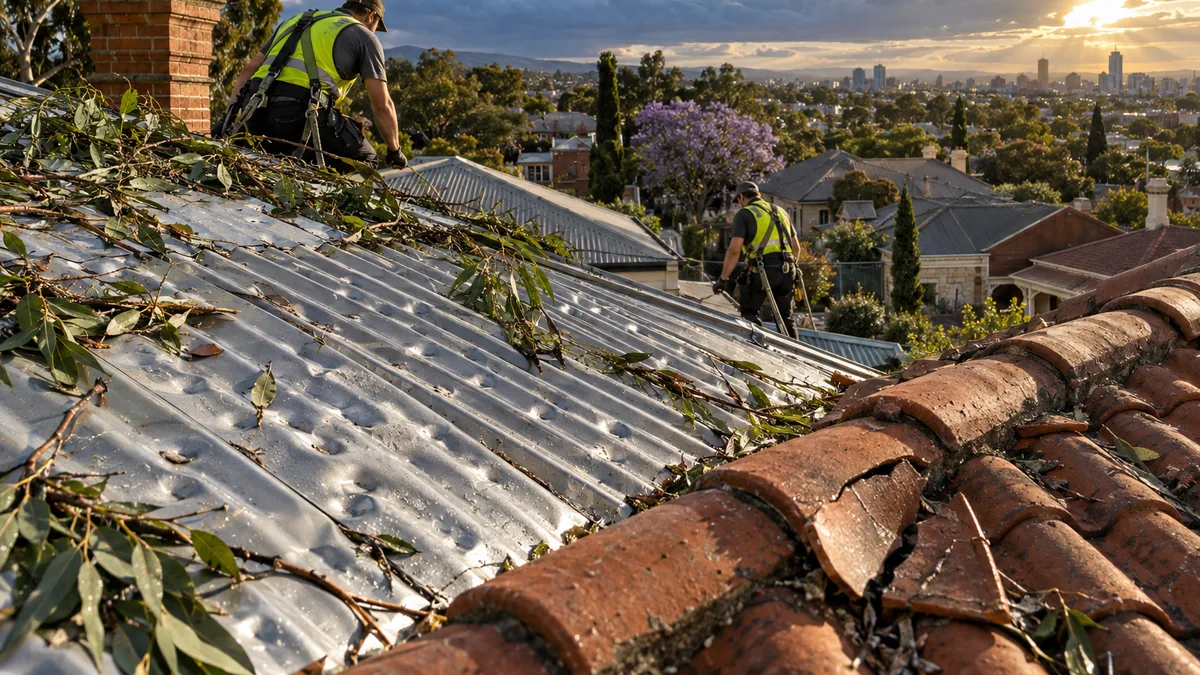
Two 1970s concrete tile roofs in Marion and Modbury can look the same from the footpath and come back with restoration quotes that sit a long way apart. More often than not, the two quotes describe two different jobs. This guide explains what a restoration quote is built from, why the numbers move, what a cheap restoration usually leaves out, and how to compare quotes before you sign.
What a restoration quote is made of
A proper restoration is a sequence of trades on one roof: cleaning, tile repairs, rebedding and repointing, sheet metal work on valleys and flashings, then priming and coating. Each part has its own cost.
Roof size and pitch. Restoration is priced largely on area, and a roof’s area is bigger than the house footprint because of the pitch and the eaves. A steep 1920s bungalow roof in Prospect has more surface than a low-pitched 1980s home in Happy Valley on the same block, takes longer to walk, and needs more fall protection.
Tile type and condition. Terracotta tiles clean up well and rarely need coating, so a terracotta job is often a repair and repoint rather than a full restoration. Concrete tiles are the roofs most often restored in Adelaide because the surface erodes after thirty to forty years, goes porous, and grows moss, and porous tiles take more primer and more coating. A roof where the tiles are too far gone for a coating to bond is a replacement, and an honest roofer will say so.
Number of broken tiles. Every quote should say how many tiles will be replaced and whether matching tiles are available; discontinued profiles have to be sourced second-hand. Roofs that have had solar, antenna and aircon installers walking on them usually have more cracked tiles than the owner expects.
Metres of ridge and hip capping. This is the line that separates a restoration from a paint job. The cement mortar under the caps on any pre-2000s Adelaide roof has been through decades of summer expansion and winter rain, and it cracks and crumbles. Rebedding means lifting the caps, removing the old mortar, laying fresh bedding and resetting them. Repointing means finishing the joint with a flexible pointing compound that moves with the roof. The quote should give the lineal metres and say whether the capping is rebedded and repointed or only repointed over the old bed.
Valleys and flashings. Valley irons on older roofs rust through from the underside, and the only fix is to lift the tiles either side and replace the tray. Lead flashings on chimneys on villas in Norwood and Unley fatigue in the heat, and flashings around skylights, whirlybirds and solar mounts are a common leak source. Each should appear as its own item.
Moss, lichen and cleaning. High-pressure cleaning is standard, but roofs on the shaded southern side of a Hills block in Stirling or Belair carry moss and lichen that need treatment before and after the clean, which adds labour and product.
Coating system. The coating is usually a primer or sealer followed by two coats of a roof membrane. The quote should name the number of coats and the product type and state whether a primer is included. One coat over bare porous concrete does not last.
Access, height and scaffolding. A single-storey roof with clear access is the simplest case. Two-storey homes, roofs over pools or decks, steep pitches and tight blocks in North Adelaide need edge protection, harness points or scaffold under South Australian work health and safety rules. That is a real cost and it belongs on the quote as its own line.
Coastal and Hills factors. Near the coast at Glenelg, Henley Beach and Semaphore, salt air corrodes valley irons, fasteners and gutters faster, so more metal is usually replaced. In the Hills, higher rainfall, leaf litter and moss mean more cleaning and more attention to gutters and valleys, and bushfire-prone areas add requirements for gutter guards and ember protection.
Why quotes for the same roof vary
Once you see the list above, the variation makes sense. One roofer has priced a clean, a few tiles and two coats. Another has walked the roof, counted the cracked tiles, measured the ridge, found a rusted valley and priced the lot. A third has quoted from an aerial image without climbing up, and that quote will change once they do.
Other honest reasons for variation: the coating system chosen, whether scaffold is included, whether gutters are cleaned or replaced, and how much waste removal is allowed for. None of these is a trick. They are different scopes, and your job is to make the scopes match before you compare the totals.
What cheap roof restoration usually leaves out
Search for affordable or cheap roof restoration in Adelaide and you will find plenty of offers. The low number is usually reached by leaving out the things that keep water out of the ceiling.
- Skipping the rebedding. Repointing over old, cracked bedding looks fine for a season, then the mortar underneath keeps breaking up and the caps loosen again. The repointing and rebedding page explains the difference.
- One coat and no primer. A single coat of membrane over unsealed concrete tiles chalks and peels within a few winters. Primer is what makes the membrane stick.
- No valley replacement. Rusted valleys are painted over so they look new from the ground, and the leak appears the next wet winter under a fresh coating that now has to be lifted to fix it.
- No flashing work. Lifted lead and cracked flashings are coated rather than resealed or replaced.
- Counting the tiles from the ground. Broken tiles are allowed for as a token number, then invoiced as extras.
- No scaffold or edge protection. Cheaper for the roofer, unsafe for the crew, and your problem if someone is injured on your property.
A roof coated over unrepaired ridges and valleys is a cosmetic job that hides the faults until the coating has to be disturbed to find them. The roof painting page covers when painting alone is a reasonable choice.
How to compare quotes line by line
Ask every roofer for a written, itemised quote after a physical inspection, then check the same lines side by side:
- Roof area and pitch as measured, not estimated.
- Number of tiles to be replaced and whether matching tiles are available.
- Lineal metres of ridge and hip capping, and whether it is rebedded and repointed or repointed only.
- Each valley to be replaced, listed.
- Each flashing to be resealed or replaced, listed.
- Cleaning method and any moss treatment.
- Coating system: primer, number of coats, product type.
- Access: scaffold, edge protection or harness, and who supplies it.
- Gutters: cleaned, repaired or replaced, or excluded.
- Waste removal and site clean-up.
- Workmanship warranty stated in writing, with manufacturer warranties applying to the products used.
- Licence number and insurance details.
If a quote is missing a line, ask for it in writing. If the answer is that the item is not needed, ask why, and check that answer against what the other roofers found on the same roof.
Red flags on a restoration quote
Watch for a quote produced without anyone climbing the roof; a price given on the phone; a discount that expires today; pressure to pay a large deposit before a written quote exists; no itemised scope; a promise that crumbling ridges can be fixed by painting alone; no mention of the coating product or the number of coats; no licence number; and a contractor who says a written contract is not needed. South Australian law requires a written contract for building work above a certain value, and a full restoration is often in that territory. Be careful with door-knockers after a storm as well: genuine storm damage is a matter for your insurer and a written roofer’s report, not a same-day cash deal.
Ask for the licence number
Roofing is building work in South Australia, regulated by Consumer and Business Services. The contractor needs a Building Work Contractors Licence, and roof plumbing such as valleys, flashings, gutters and downpipes is licensed plumbing work. You are entitled to ask for the licence number before work starts and to check it on the CBS public register. A licensed roofer will give it without hesitation; if the person quoting hesitates, that tells you what you need to know.
The honest answer on cost
There is no reliable published price for roof restoration in Adelaide because every roof is different. What you can insist on is the process: the roof is inspected, the quote is written and itemised, and nothing starts until you approve it. The roof restoration service page sets out what a full restoration includes, and if the inspection finds tiles beyond saving, the roof replacement cost guide explains what happens next.
Questions on this topic
Q. Why do roof restoration quotes in Adelaide vary so much?
Because the quotes usually describe different amounts of work. One roofer has priced a clean, a handful of tiles and two coats of membrane. Another has walked the roof, counted the cracked tiles, measured the ridge and hip capping, found a rusted valley and priced all of it. A third may have quoted from an aerial image without climbing up at all. Before you compare totals, line the quotes up item by item and make the scopes match.
Q. Is a cheap roof restoration ever worth it?
Only if the low price still covers the work that keeps water out: rebedding and repointing the ridge capping, replacing rusted valleys and lifted flashings, replacing every broken tile, and a primer plus two coats of membrane. A cheap quote usually reaches its number by leaving one or more of those out. A clean and a single coat over unrepaired ridges is a cosmetic job that hides the faults until the next wet winter.
Q. Does a restoration quote include rebedding the ridge capping?
It should, and it should say so in writing. Rebedding lifts the caps, removes the old cracked cement mortar, lays fresh bedding and resets the caps. Repointing finishes the joint with a flexible pointing compound. Some quotes only repoint over the old bedding, which is cheaper and does not last. Ask for the lineal metres of capping and whether it is being rebedded and repointed or repointed only.
Q. Do I need scaffolding for a roof restoration?
It depends on the height, the pitch and the access around the house. South Australian work health and safety rules require roofers to manage the risk of falls with edge protection, harness systems or scaffold as the job requires. Two-storey homes, steep pitches and tight blocks usually need more than a single-storey roof with clear access. Whatever is needed should appear as its own line on the quote rather than being hidden in the coating price.
Q. How do I check a roofer's licence in South Australia?
Ask for the Building Work Contractors Licence number before any work starts and check it on the Consumer and Business Services public register. Roof plumbing work such as valleys, flashings, gutters and downpipes is licensed plumbing work as well. A licensed roofer will give the number without hesitation. If the person quoting your roof avoids the question, treat that as a reason to look elsewhere.
- roof restoration
- quotes
- concrete tiles
- rebedding
- repointing
- cheap roof restoration