Adelaide storms do not creep up. A cold front crosses Gulf St Vincent from the south-west, the wind swings and strengthens, and in the space of half an hour a roof that was fine at lunchtime has a lifted ridge cap in Henley Beach or a branch through the tiles in Belair. This guide walks through what to do in the first hour, how make-safe work and the roofer’s report fit into an insurance claim, what policies generally cover, and how to avoid the people who turn up uninvited afterwards.
Adelaide’s storm patterns
Most of Adelaide’s rain arrives between May and September on south-westerly fronts that come in off the gulf with strong winds. The western and coastal suburbs from Semaphore down to Glenelg take the first and hardest hit, and roofs facing the gulf carry more wind load than roofs a few kilometres inland. Spring and autumn bring the sharpest storms: warm, gusty northerlies build ahead of a change, then the front arrives with squalls, hail in some years, and a sudden drop in temperature. Those northerlies are what lift loose sheets on old iron roofs and flick dislodged ridge caps off tiled roofs before the rain even starts.
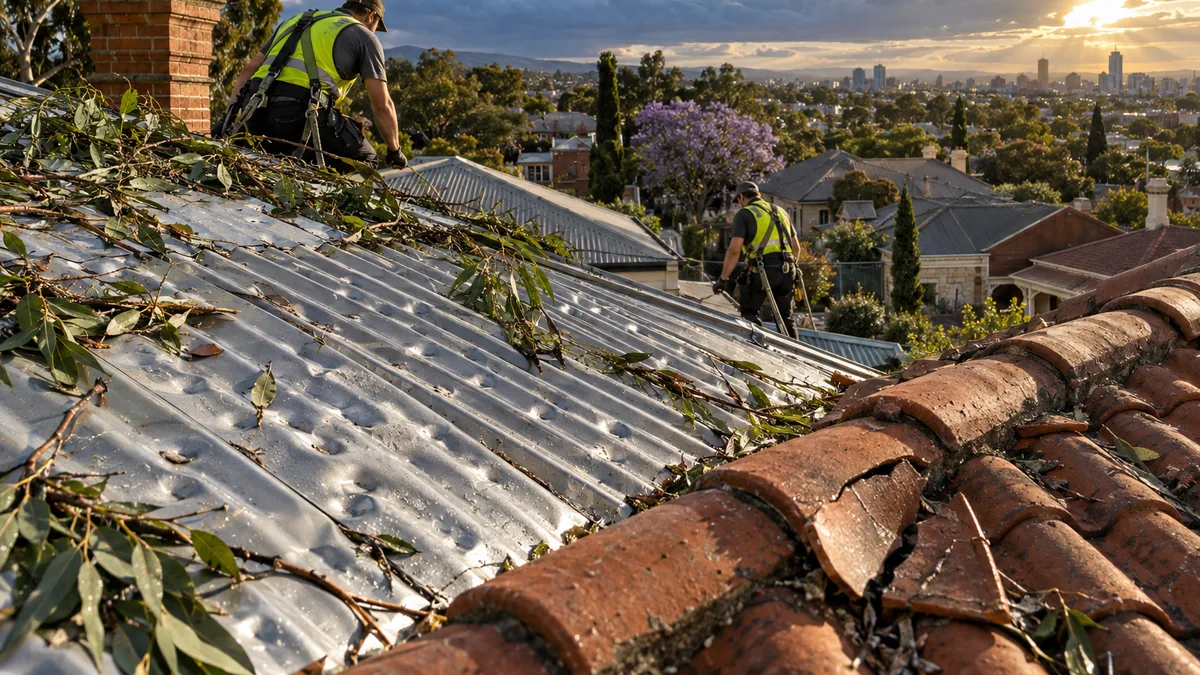
Hail is not an every-year event, but when it comes it cracks brittle old concrete and terracotta tiles, dents Colorbond, and clogs gutters with ice and stripped leaves so that water backs up under the eaves. In the Hills, the same fronts bring heavier rain, more leaf litter, and falling limbs from stringybarks and mature deciduous trees.
The first hour
Safety first. Stay off the roof. Wet tiles and wet metal are slippery, storm-damaged roofs have loose parts, and the edge is closer than it looks in the rain. Plenty of storm injuries happen afterwards, to people climbing up for a look. Roofers work with edge protection and harnesses for a reason.
Inside, put buckets under drips and move furniture, rugs and electronics out of the wet area. If water is coming through or near a light fitting, a ceiling fan, a power point or the switchboard, turn the power off at the main switch before touching anything in that room. A sagging, water-filled ceiling is a hazard; keep people out from underneath it.
Photograph everything. Take photos of the ceiling stains, the water on the floor, the damaged contents, and, from the ground only, whatever you can see of the roof: missing tiles, lifted sheets, a displaced ridge cap, a branch, gutters torn off. Note the date and time of the storm. If hail fell, photograph the hailstones next to something for scale before they melt. These photos are the beginning of your claim.
Then call a roofer for a make-safe. The emergency roof repairs page explains what to say on the phone. You will be given an honest arrival window; nobody can promise a fixed time when the same front has hit every suburb from Gawler to Aldgate on the same afternoon.
Make-safe tarping
The first visit after a storm is a make-safe, not a repair. The roofer secures the damaged area so that no more water gets in and nothing else blows off. That usually means a tarp fixed over the opening, a loose sheet screwed down, a displaced ridge cap set back and temporarily sealed, or a branch removed and the hole covered. Make-safe work is done with edge protection or a harness and is priced as its own small job.
Two things matter here. First, keep the invoice: insurers generally treat reasonable make-safe costs as part of the claim. Second, the tarp is temporary. A tarp left through a winter of fronts will flap, tear and let water in, and it is not a substitute for the permanent repair that follows.
The roofer’s report and itemised quote
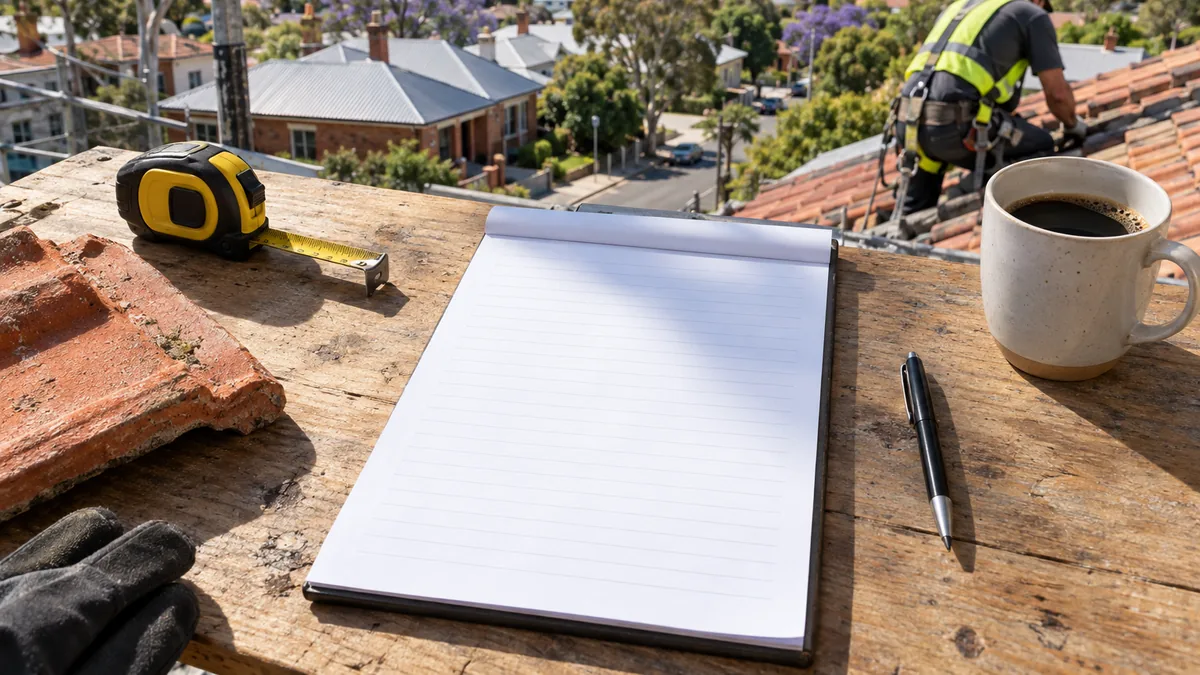
Insurers ask for two documents from a roofer. The first is a written report that describes the damage, states the likely cause, and includes photos taken on the roof. The second is an itemised quote for the permanent repair: number of tiles or sheets to be replaced, metres of ridge capping, valleys, flashings, gutters, and the labour and access involved. A quote that says storm damage repair and gives a single figure will be sent back.
The report is where the cause matters. Insurers pay for sudden events, so the report should describe the storm and the damage it caused, distinguish it from pre-existing wear, and be honest about both. If the roofer finds that the ridge mortar had crumbled long before the wind lifted the caps, the report should say so, because the assessor will find it anyway and a report that overreaches loses credibility for the whole claim.
Lodge the claim as soon as you can and send the photos, the make-safe invoice, the report and the quote together. Keep a copy of everything.
What policies usually cover, and what they do not
Home insurance in Australia generally covers sudden, unexpected damage from storm, wind and hail: tiles cracked by hail, sheets lifted by wind, a branch through the roof, and the resulting water damage to ceilings, walls and contents. It generally does not cover wear and tear, rust, corrosion, rotted timber, cracked mortar that has been failing for years, or damage that resulted from poor maintenance, such as a gutter that overflowed because it was full of leaves.
That line is where most disputes sit. A storm that lifts ridge caps off a roof where the bedding had already crumbled is both a storm event and a maintenance issue, and different insurers treat it differently. Read your policy’s storm section and its exclusions. Do not assume, and do not let anyone on your roof promise you what your insurer will pay; no roofer can.
Roofs with known pre-existing problems are the ones most likely to have a claim reduced. A roof that has been restored and maintained is a much easier claim than one with years of deferred repairs.
Cash settlement or insurer repair
Once the claim is accepted, the insurer will usually offer one of two paths. A cash settlement pays you an agreed amount and you arrange the repair with the roofer of your choice. An insurer-managed repair uses the insurer’s panel builder or roofer, who is paid by the insurer directly.
Each has trade-offs. A cash settlement gives you control of who does the work and when, but you need to be sure the amount covers the itemised quote, including access and make-safe, and that the scope has not been trimmed. An insurer repair removes the admin and the payment risk, but you may wait longer after a widespread event, and you should still check the scope of works the panel roofer is given against your own roofer’s report. In either case, get the scope in writing before work starts.
Dealing with assessors
An assessor or a builder appointed by the insurer will usually inspect the roof. Be there if you can. Have your photos, the make-safe invoice, the report and the quote to hand. Point out what you saw and when. If the assessor’s scope differs from your roofer’s, ask for the difference in writing and give your roofer a chance to respond. Assessors work from what they can see and what you can document, so the more organised your file, the faster it moves.
Avoiding storm chasers
After every major front, people knock on doors in the worst-hit streets offering to fix the roof today, often for cash and often claiming to work for the insurer. Some are legitimate. Many are not. The warning signs are the same every time: no local address, no licence number, pressure to sign now, a request for a large deposit, an offer to handle the insurance for you that involves signing the claim over, and no written, itemised quote.
In South Australia, roofing contractors need a Building Work Contractors Licence from Consumer and Business Services, and roof plumbing on metal roofs, gutters and flashings is licensed plumbing work. Ask for the licence number and check it on the CBS public register before anyone starts. A licensed local roofer will give it immediately.
The permanent repair
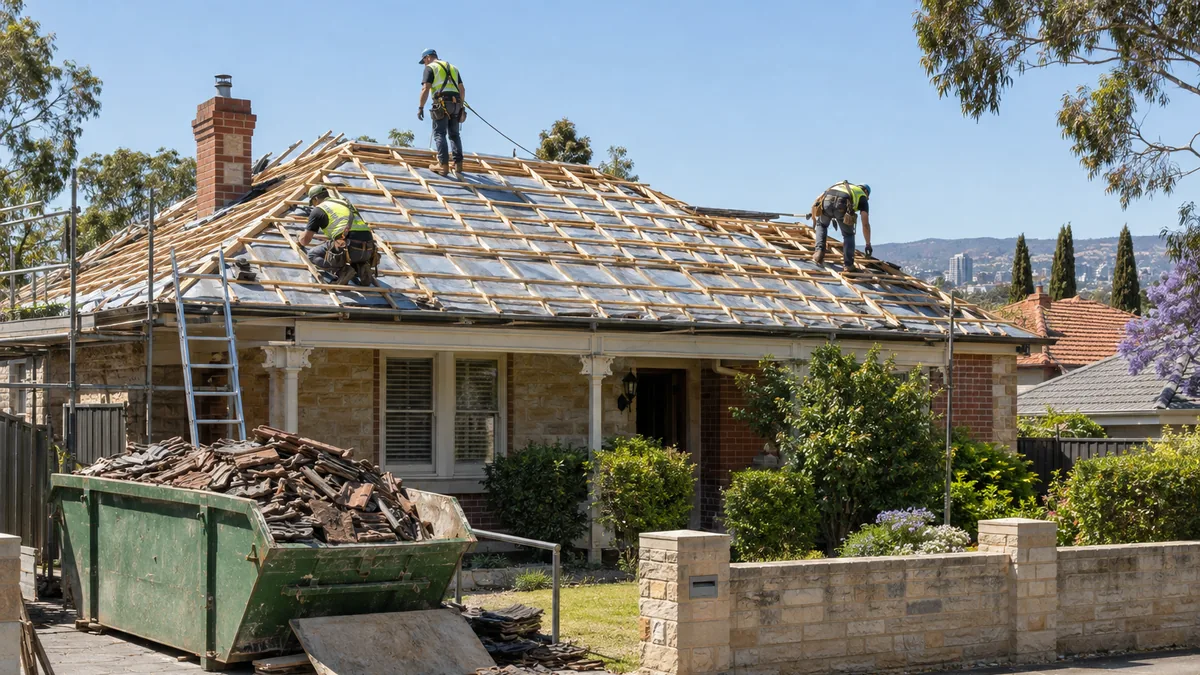
Once the make-safe is done and the claim is moving, the permanent repair follows: replacing cracked tiles with matching profiles, refixing or replacing lifted sheets with new cyclone-rated screws, rebedding and repointing displaced ridge capping, replacing torn gutters and setting them to fall, and reflashing any penetrations the wind opened up. The roof leak repairs page and the metal roof repairs page describe what those repairs involve on tiled and metal roofs.
The roof is inspected, the quote is written and itemised, and nothing starts until you approve it. That is true whether the insurer is paying or you are, and it is the only reliable protection against a storm being followed by a second, slower kind of damage.
Questions on this topic
Q. Should I get on the roof to check the damage after a storm?
No. Wet tiles and wet metal are slippery, storm-damaged roofs have loose parts, and the edge is closer than it looks. Plenty of storm injuries happen afterwards, to people climbing up for a look. Photograph what you can see from the ground, put buckets under drips inside, and call a roofer for a make-safe. Roofers work with edge protection and harnesses because the risk is real.
Q. Does home insurance cover storm damage to a roof in Adelaide?
Most home policies cover sudden damage from storm, wind and hail and the resulting water damage inside. They generally do not cover wear and tear, rust, rotted timber, cracked ridge mortar that has been failing for years, or damage caused by poor maintenance such as a blocked gutter overflowing. Read the storm section and the exclusions of your own policy, and do not let anyone on your roof promise what the insurer will pay.
Q. What does the insurer need from the roofer?
Two documents. A written report that describes the damage, states the likely cause and includes photos taken on the roof, and an itemised quote for the permanent repair listing tiles or sheets, metres of ridge capping, valleys, flashings, gutters, labour and access. Send both with your own photos and the make-safe invoice when you lodge the claim. A single figure labelled storm damage repair will be sent back.
Q. What is a make-safe and is it covered?
A make-safe is the first visit after a storm: tarping an opening, screwing down a lifted sheet, resetting a displaced ridge cap or clearing a branch so that no more water gets in. It is temporary and is priced as its own small job. Insurers generally treat reasonable make-safe costs as part of the claim, so keep the invoice. A tarp is not a repair and should not be left through a winter of fronts.
Q. How do I avoid storm chasers after a big front?
Be wary of anyone who knocks on the door offering to fix the roof today, wants cash or a large deposit, has no local address, cannot give a licence number, or asks you to sign the claim over to them. Roofing contractors in South Australia need a Building Work Contractors Licence from Consumer and Business Services, and you can check the number on the CBS public register before anyone starts.
Q. Should I take a cash settlement or let the insurer arrange the repair?
A cash settlement gives you control over who does the work and when, but you need to check the amount against your roofer's itemised quote, including make-safe and access. An insurer-managed repair removes the payment risk and the admin, but you may wait longer after a widespread event and you should still compare the panel roofer's scope with your own roofer's report. Either way, get the scope in writing before work starts.
- storm damage
- hail
- insurance claims
- make-safe
- emergency roof repairs
- storm chasers