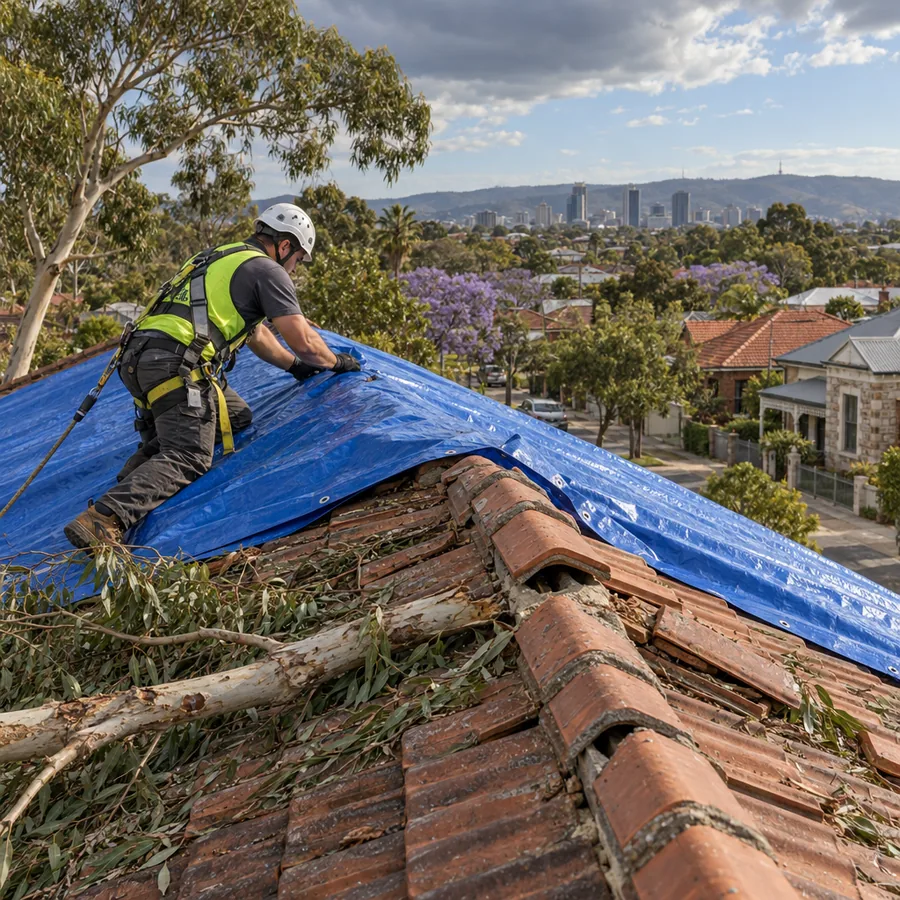
A roof emergency in Adelaide usually arrives with the weather. A south-westerly front crosses Gulf St Vincent on a winter night, a northerly gusts ahead of a change in spring, or a hailstorm sweeps the eastern suburbs in autumn, and by morning there is water on the ceiling, a sheet flapping, or a branch through the tiles. This page explains what counts as an emergency, what to do in the first hour, how make-safe work is handled before the permanent repair is quoted, what your insurer will ask for, and what you can honestly expect about timing.
What counts as a roof emergency
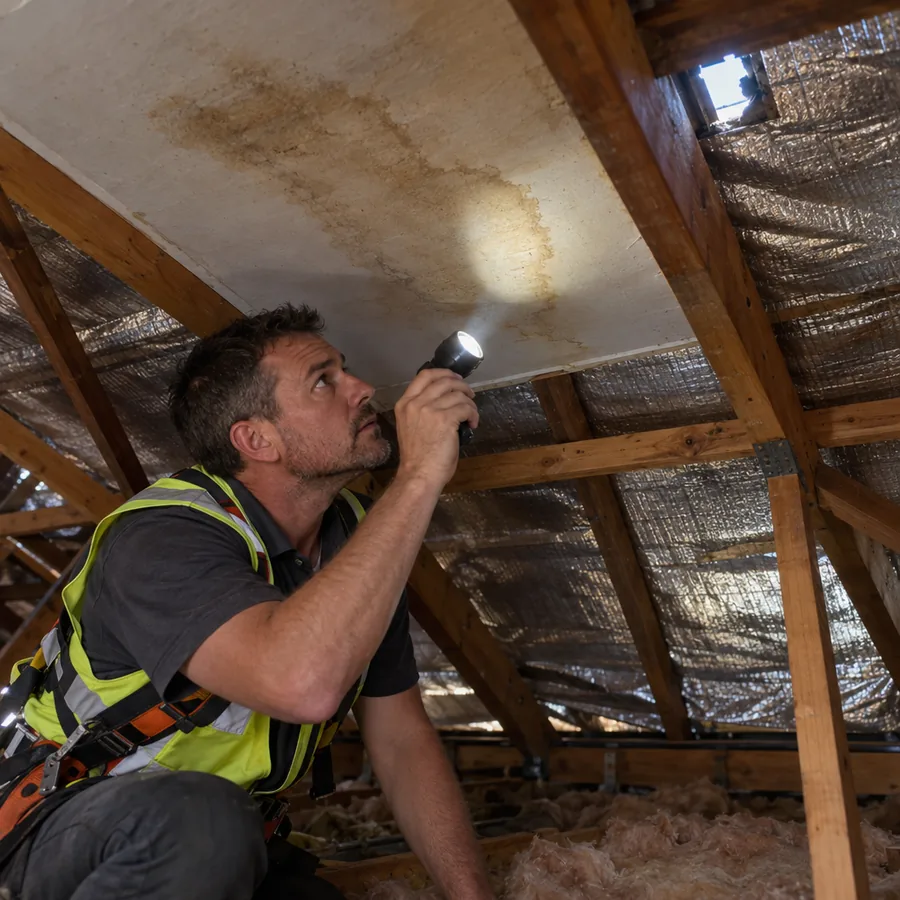
Water coming through a ceiling, a light fitting or a downlight during rain is an emergency. So is a ceiling that is bulging or sagging, which means plasterboard is holding water and can come down. Roof sheets, ridge caps or tiles that have lifted or gone, leaving the roof space open, are an emergency because the next shower goes straight in. A branch or tree on the roof, or a chimney, antenna or solar panel that has shifted, is an emergency because of what it might do next. Hail that has broken tiles through or taken out a skylight is an emergency; hail that has dented Colorbond and cracked a handful of tiles is urgent but not immediate.
A slow drip that has been there since last winter is not an emergency. It is still a leak, and the roof leak repairs page explains how it is found and fixed before it becomes one.
What to do while you wait
Put buckets, bins or a tarp on the floor under the drips and move furniture, rugs and anything electrical out of the way. If water is coming through anywhere near a light fitting, downlight, fan or smoke alarm, switch off that lighting circuit at the switchboard before you do anything else. If the ceiling is bulging, keep everyone out of the room; do not poke it to let the water out unless you are prepared for the whole panel to follow.
Do not climb on the roof. Do not climb into the roof space over a wet ceiling. A wet tiled roof is slippery, a roof with lifted sheets has nothing safe to stand on, and a fallen branch can shift under your weight. The roofer has the equipment and the training to work on a damaged roof; you do not need to.
Photograph everything before you clean up: the ceiling, the water, the debris in the yard, the damage from the ground. Keep broken tiles, torn sheet and any other damaged material until the roofer and the insurer have seen them.
Make-safe first
The first job on arrival is to stop the water and remove the danger, not to fix the roof. That means a heavy tarp secured over the opening in a way that will hold in the next gust, a temporary flashing over a failed junction, loose sheets or ridge caps refixed enough to hold, a branch cut back and cleared from the roof, and cracked tiles or torn sheeting that could fall removed. On a tiled roof a few tiles may be swapped from an out-of-the-way spot to close the gap. On a metal roof a lifted sheet is screwed back down if it is sound and covered if it is not.
Make-safe work is temporary by design. It buys the time to inspect the roof properly, write the report and quote the permanent repair without a bucket filling in the lounge room. It is described on the phone before the roofer sets out, and it is kept separate from the permanent work.
Adelaide storm patterns
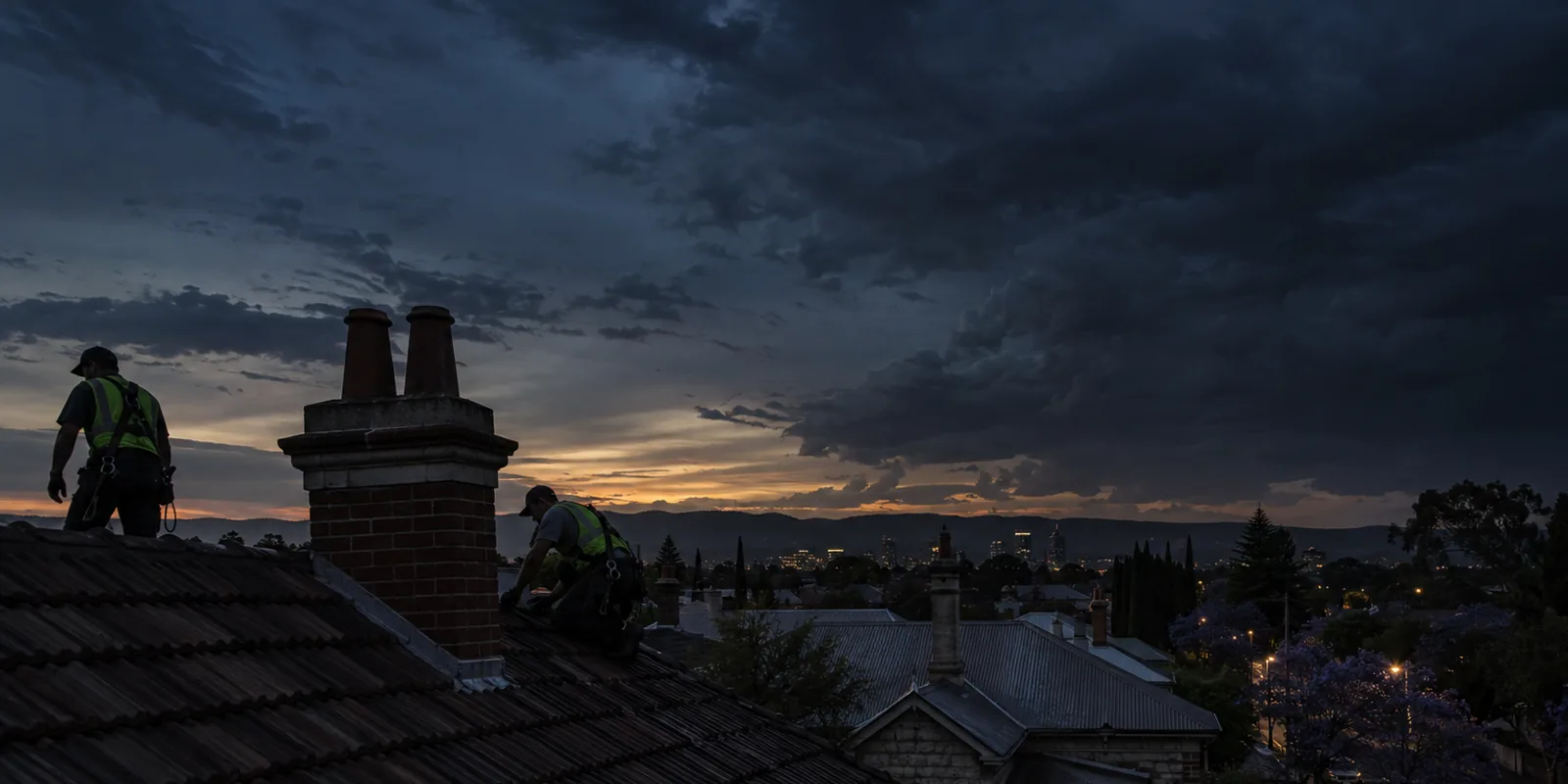
Adelaide’s roof emergencies follow its weather. Most rain falls from May to September, arriving in cold fronts from the south-west across Gulf St Vincent with strong winds, and the first big front of winter finds every gutter that is blocked and every ridge cap that has lost its mortar. Spring and autumn bring the worst storms: unstable air, thunderstorms, occasional hail, and the gusty northerlies that blow ahead of a cool change and lift loose sheets and tiles. Homes on the coast in Glenelg, Henley Beach and Semaphore take the wind first; the Hills take more rain and more falling branches; and the eastern suburbs from Burnside to Athelstone seem to collect more than their share of hail.
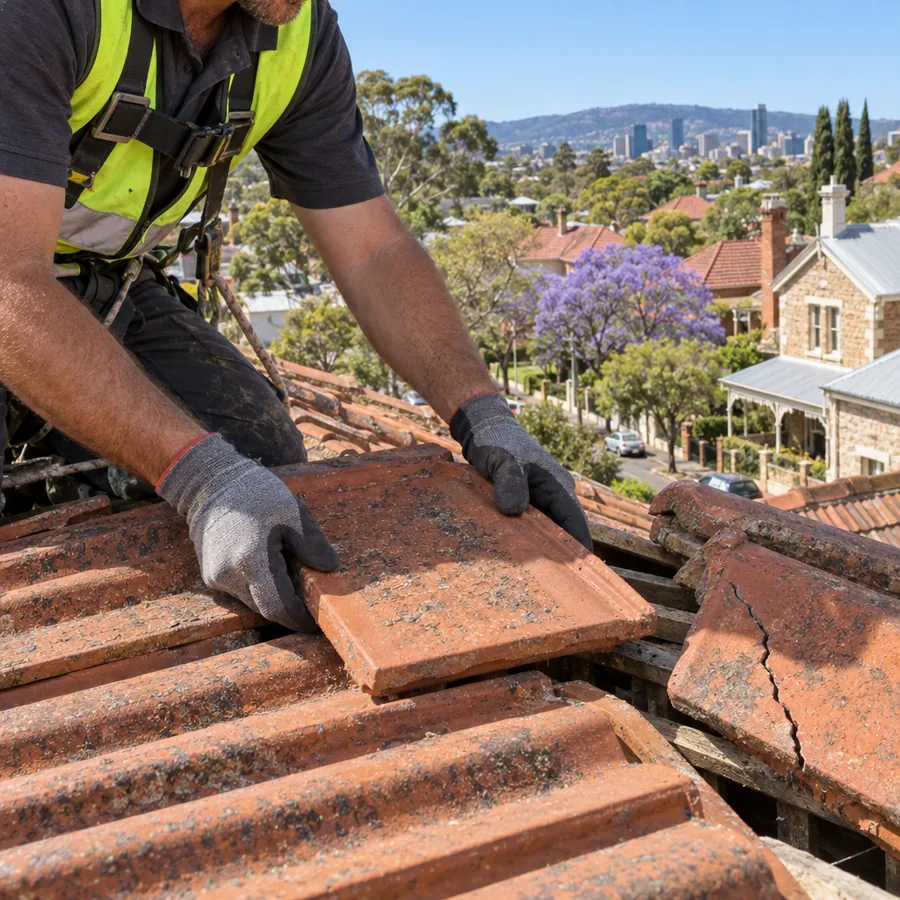
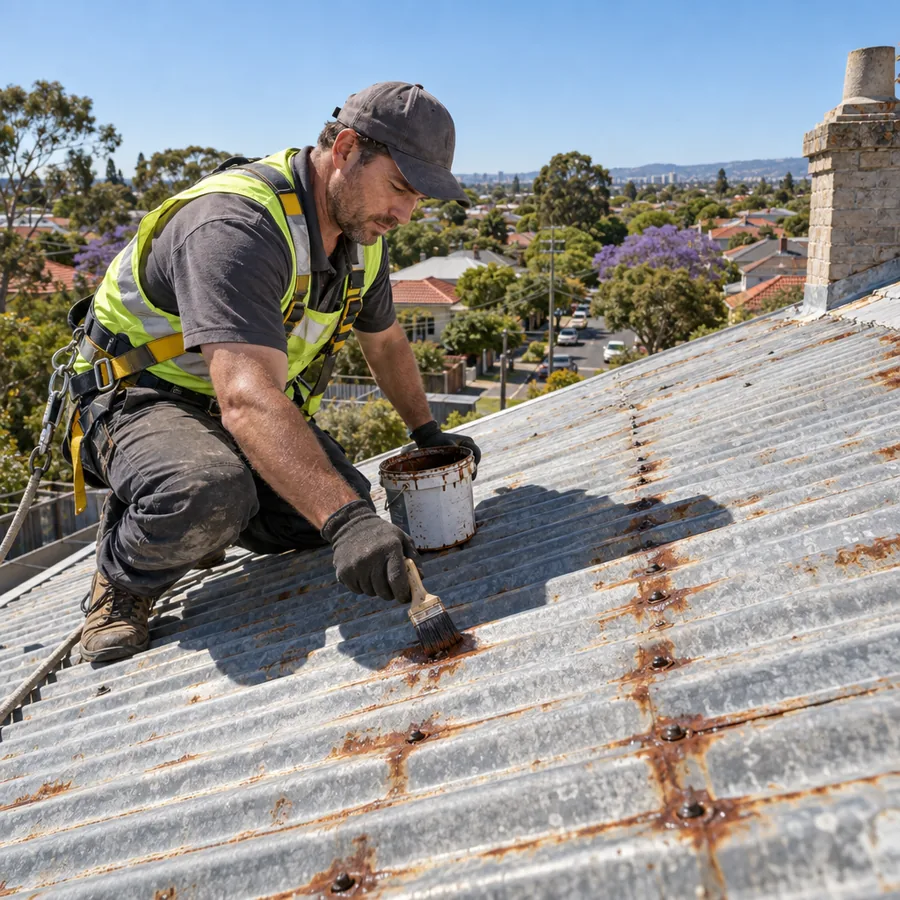
The damage is predictable too. Ridge caps sitting on crumbled cement mortar are lifted by wind. Metal sheets that have lost their screws to years of thermal cycling flap and go. Old lead flashings tear. Brittle terracotta tiles crack under hail and under the branches that come down with it. Gutters and downpipes are torn off. A roof that was already tired is the roof that fails.
Hail damage
Hail in Adelaide is occasional but it does real damage when it comes. Terracotta and concrete tiles crack, sometimes clean through and sometimes in hairline fractures that only show as a leak weeks later. Colorbond dents, which is usually cosmetic but can crack the coating and start corrosion. Skylights, whirlybirds and solar panels are the most vulnerable things on the roof. After a hailstorm the whole roof is inspected and every cracked tile is counted and photographed, because an insurer will want to know the extent of the damage, not a guess. The blog post on storm and hail damage and insurance walks through the claim.
The inspection, the report and the photos
Once the roof is safe the whole of it is inspected, not just the point that failed. Storms rarely damage a single spot, and a roofer who tarps the obvious hole and leaves finds the second leak on the next call-out. Every fault is photographed from the roof and, where possible, from the roof space.
The report describes the cause of the damage, its extent, what was done to make the roof safe and what the permanent repair involves. It is written in the form insurers ask for. Home insurance generally covers sudden storm and hail damage but not rust, wear and tear or long-term poor maintenance, and the report is honest about which is which, because an inaccurate report helps no one. What your policy pays is between you and your insurer.
The written quote and the permanent repair
You receive a written, itemised quote for the permanent repair, separate from the make-safe work. That separation matters. It means you can put the report and the quote to your insurer, get another opinion if you want one, and decide without a tarp on the roof being used as leverage. Nothing beyond the make-safe starts until you approve it.
The permanent repair is whatever the roof needs: replacement tiles or sheets, ridge capping rebedded and repointed, new flashings and valleys, torn sarking replaced, gutters and downpipes renewed. On a tiled roof the tile roof repairs page covers the detail; on iron or Colorbond, the metal roof repairs page does. Where a storm has finished off a roof that was already at the end of its life, the quote will say so and explain what re-roofing or replacement would involve, and the blog post on roof replacement cost in Adelaide explains what drives that figure.
Honest about timing
Emergency calls are triaged on the phone. You will be asked what is happening, how much water is coming in, whether anyone is at risk and whether the power has been isolated, and you will be told an honest arrival window based on where you are and what else is happening. During a major storm many roofs across Adelaide fail in the same hour, and the roofer will tell you where you sit in the queue rather than promise a time that cannot be kept. A roof with water through a light fitting comes before a roof with a cracked tile and no rain forecast. If the roofer cannot get to you in a useful time, you will be told that too.
Licensing and safety
Roofing is licensed building work in South Australia, and metal sheeting, flashings, gutters and box gutters are licensed roof plumbing. The contractor should hold a Building Work Contractors Licence from Consumer and Business Services, which you can check on the CBS public register, and you are entitled to ask for the licence number. After a big storm, unlicensed operators go door to door in the damaged suburbs offering cheap repairs for cash. A licence number and a written quote sort them out quickly.
Roofers work on damaged roofs with edge protection, harnesses or scaffold as required under South Australian work health and safety rules, and will say if a roof is too dangerous to work on until the wind drops. That is not an excuse; it is why they are still around to come back the next morning.
What is included
- Triage on the phone: what is happening, how much water, whether anyone is at risk, and an honest arrival window
- Make-safe work: tarping, temporary flashing, refixing loose sheets and caps, and removing dangerous debris
- Inspection of the whole roof once it is safe, not just the spot that failed
- Photos and a written report describing the cause and the damage, in the form insurers ask for
- Written, itemised quote for the permanent repair, separate from the make-safe work
- Permanent repairs: replacement tiles, sheets, ridge capping, flashings, valleys, sarking and gutters
- Advice on what to do while you wait, including when to switch off power near a wet ceiling
Signs you should call
- Water dripping or running through a ceiling, light fitting or downlight during rain
- A ceiling that is bulging, sagging or has a dark stain that is spreading while you watch
- Roof sheets, ridge caps or tiles lifted, flapping or lying in the yard after a northerly or a south-westerly front
- A branch or tree on the roof, or a chimney, antenna or solar panel that has shifted
- Hail dents and cracked tiles after a spring or autumn storm, even if nothing is leaking yet
- Daylight visible through the roof from inside the roof space
Do not go on the roof during or after a storm
A wet roof is slippery, a roof with lifted sheets or loose tiles has nothing safe to stand on, a fallen branch can shift under you, and a sagging ceiling below can give way. If water is coming through near a light fitting, downlight or ceiling fan, switch that circuit off at the switchboard before you do anything else. Roofers work with edge protection, harnesses or scaffold as required under South Australian work health and safety rules, and know which parts of a damaged roof will still hold a person.
Frequently asked questions
Q. What counts as a roof emergency?
Water coming through a ceiling, a light fitting or a downlight; a ceiling that is sagging or bulging; roof sheets, ridge caps or tiles lifted or gone so the roof space is open to the weather; a branch or tree on the roof; a chimney, antenna or solar array that has shifted; and any damage that will get much worse if the next front arrives before it is covered. A slow drip you have watched for a month is not an emergency, but it is still worth a call before winter.
Q. How quickly can someone get there?
Emergency calls are triaged on the phone. You will be asked what is happening, how much water is coming in, whether anyone is at risk and whether the power has been isolated, and you will be told an honest arrival window based on where you are and what else is happening that day. During a major storm many roofs fail at once, and you will be told where you sit in the queue rather than promised a time that cannot be kept.
Q. What does make-safe work involve?
Whatever stops the water and removes the danger. That is usually a heavy tarp secured over the opening, a temporary flashing over a failed junction, loose sheets or caps refixed enough to hold, a branch cut back and removed from the roof, and damaged material that could fall cleared away. It is temporary by design. The permanent repair is inspected, reported and quoted separately, and a tarp is not left on a roof longer than it needs to be.
Q. Will my insurance cover the damage?
Home insurance generally covers sudden storm and hail damage and usually the make-safe work that limits it, but not rust, wear and tear or a roof that failed because it was not maintained. Insurers ask for a roofer's written report describing the cause and the damage, photographs, and an itemised quote for the repair, and that is what you are given. What your policy pays is between you and your insurer, so read the policy and call them early.
Q. What should I do while I wait?
Put buckets or bins under the drips and move furniture, rugs and electronics out of the way. If water is near a light fitting, downlight or fan, switch off that circuit at the switchboard. If the ceiling is bulging, keep everyone out of the room; a plasterboard ceiling holding water can come down at once. Do not climb on the roof or into the roof space over a wet ceiling. Photograph everything before you clean up. Do not throw out damaged material until the roofer and the insurer have seen it.
Q. Is hail damage to a roof an emergency?
Sometimes. Hail in a spring or autumn storm can crack terracotta and concrete tiles, dent Colorbond and damage skylights and whirlybirds, and a roof with dozens of cracked tiles will leak in the next rain even if it is dry now. If tiles are broken through or a skylight has gone, it is treated as an emergency. If it is dents and a few cracked tiles, it is inspected and reported promptly so the insurance claim can start, then repaired as a scheduled job.
Q. Is the make-safe work quoted separately from the permanent repair?
Yes. The make-safe work is described on the phone before the roofer sets out, and the permanent repair is inspected, photographed and quoted in writing afterwards. Keeping them separate means you can put the report and the quote to your insurer, get a second opinion if you want one, and decide on the permanent work without a tarp being used as leverage. Nothing beyond the make-safe starts until you approve the written quote.