Roof leaks in Adelaide have a season. The roof bakes through summer, the pointing cracks, the flashings open a little, a tile splits under a solar installer’s boot, and nothing happens because it does not rain. Then the first cold front of May comes across Gulf St Vincent with a south-westerly behind it and the ceiling in the back bedroom shows a brown ring. This page explains how a leak is traced back to its entry point, where Adelaide roofs typically fail, what make-safe work looks like, what the repair involves, and what to do about the ceiling and your insurer.
Why leaks show up with the first winter fronts
Adelaide gets most of its rain between May and September, and a dry summer hides every fault that developed during it. Cement mortar on ridge caps cracks on 40 degree days. Lead and rubber flashings fatigue and lift. Screws on metal roofs back out with thermal cycling. Debris builds up in valleys and box gutters. A cracked tile sheds the odd summer shower without any sign. The first proper front brings hours of rain driven sideways by wind, and every one of those faults lets water in at once.
Wind matters as much as rain. A leak that only shows in a south-westerly is usually water being pushed under a lap, a cap or a flashing on the windward side of the roof, and it will not appear in gentle rain at all. That is why some leaks are hard to reproduce and why a hose test is done from the direction the weather comes from.
How a roof leak is found
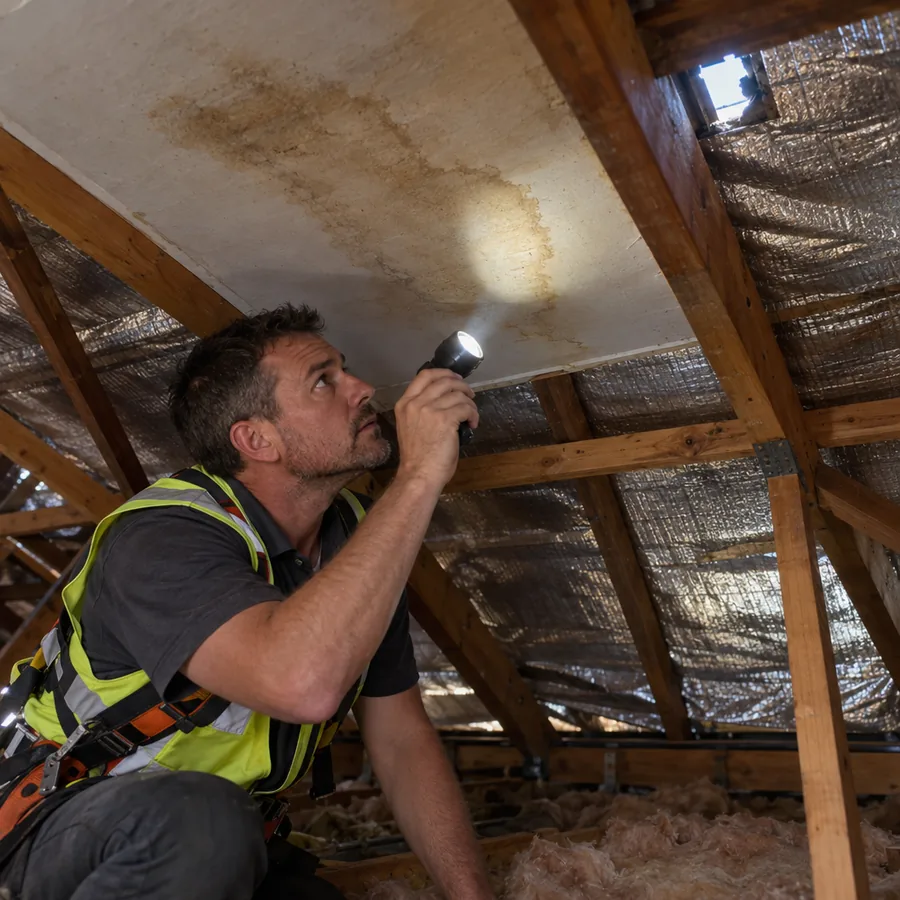
Water rarely drips where it enters. It runs down the sarking, along a batten or a rafter, and drops onto the ceiling wherever it meets an obstruction, often metres downhill from the entry point. The roofer starts in the ceiling space, if there is access, and follows the wet path back up the slope: stained sarking, a dark line on a rafter, wet insulation. That points to a section of roof, and the inspection then moves to the top side to look at every tile, cap, valley, flashing and penetration in that section.
When the leak is intermittent, a water test settles it. A hose is run on one area at a time, low on the roof first and working up, while someone watches inside. The entry point shows up within minutes. Sealing a guessed area without finding the source is how a leak ends up being repaired three times.
Where Adelaide roofs leak
Cracked and slipped tiles. On concrete and terracotta roofs across the southern and eastern suburbs, a single cracked tile lets water onto the sarking; if the sarking is torn or was never fitted, it goes straight through. Tiles crack from hail, from age, and very often from foot traffic. Slipped tiles usually mean a broken batten or a failed clip beneath them. The tile roof repairs page covers how they are matched and replaced.
Ridge and hip pointing. Cracked mortar on ridge capping is the most common source of leaks on pre-2000 roofs in Adelaide, and the reactive clay under the plain makes it worse by moving the frame a little every year. Water gets under the cap and runs down the inside of the ridge. The fix is rebedding and repointing, not a smear of sealant.
Valleys. Galvanised valley irons rust through from the underside where leaf litter holds moisture, particularly in Campbelltown, Athelstone and the Hills where trees overhang the roof. A rusted valley leaks in every rain, not just the heavy ones.
Flashings and penetrations. Chimneys on villas, skylights, whirlybirds, aircon pipe penetrations and solar panel mounts all rely on flashings. Old lead fatigues and splits, rubber boots perish, and solar mounts fitted without a proper flashing leak from the day they went in. A leak that started after solar panels were installed is nearly always at a bracket or a cracked tile under the array.
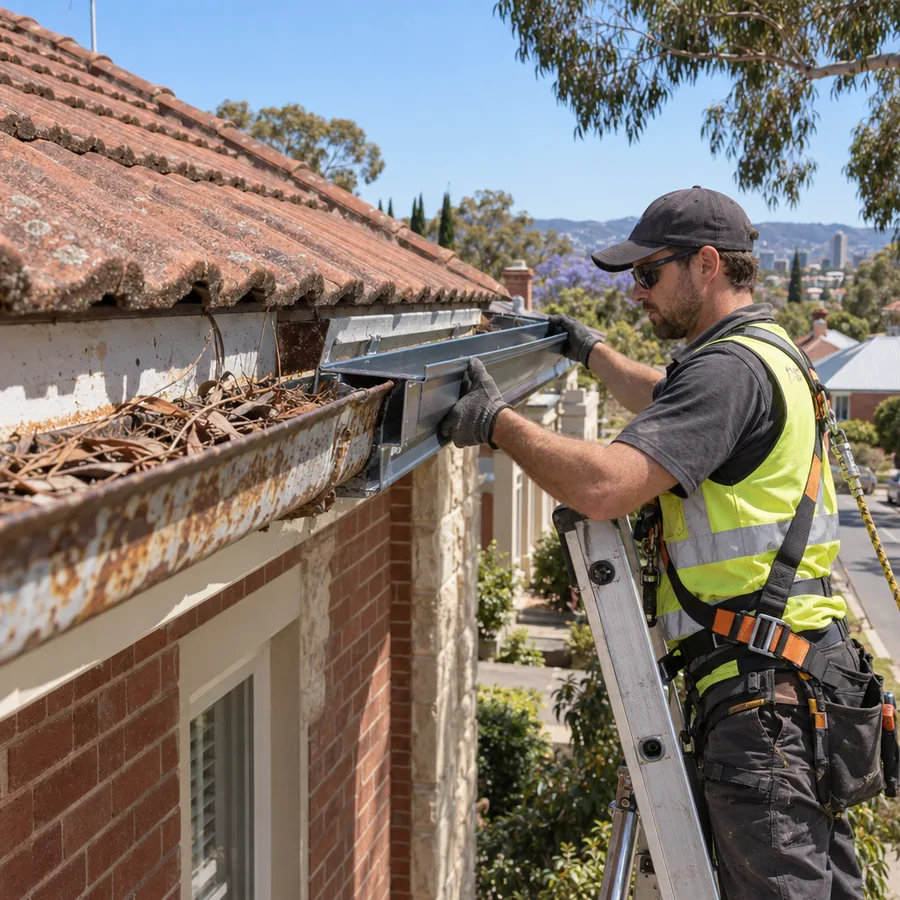
Box gutters on villas. The bluestone and sandstone villas of North Adelaide, Unley, Norwood and Prospect have box gutters running between parapet walls and behind the front verandah. They block with leaves, rust at the outlets, and overflow into the ceiling rather than over the edge. Newer townhouses in the western suburbs and Port Adelaide have the same arrangement with the same result. The gutter repairs page covers box gutter relining and outlet sizing.
Skylights and roof windows. Perimeter flashings and perished seals let water in around the frame, and the stain appears on the ceiling beside the skylight rather than under it.
Make-safe tarping and stopping the damage inside
If the ceiling is holding water it can come down. A bulging plaster ceiling should be drained by piercing it with a screwdriver over a bucket, and no one should stand under it. Move furniture, put a bucket under drips, and switch off the power to any light fitting that is dripping.
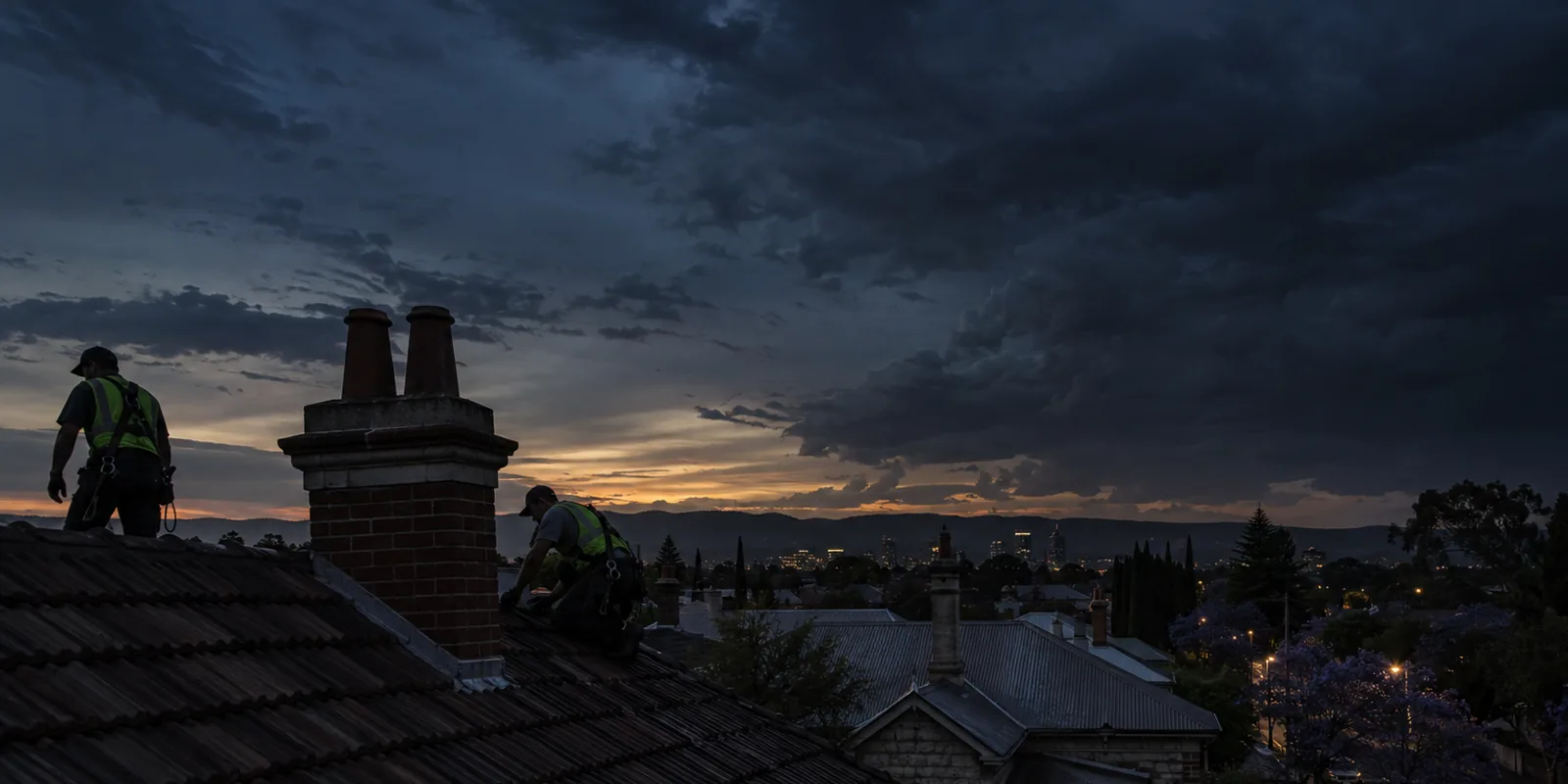
When the repair cannot be done the same day, because it is still raining, because it is dark, or because an insurer needs to see the damage first, the roofer tarps the section so no more water gets in. Make-safe tarping is standard on storm damage, and the emergency roof repairs page explains how an after-hours call is handled and what an honest arrival window looks like.
What the repair involves
The repair matches the cause. Cracked tiles are replaced and any torn sarking under them patched. Cracked pointing on the affected ridge is rebedded and repointed. A rusted valley is cut out and a new valley iron fitted under the tiles on both sides. A failed flashing is replaced, and a solar penetration is fitted with a proper flashing or a new bracket seal. A box gutter is cleared, the outlet enlarged if it is too small, and the gutter resealed or relined. Screws on a metal roof are replaced with new fasteners and seals and lifted laps are refixed.
Each repair is done so it holds for years, not until the next front. Silicone over a cracked ridge is not a repair, and a roofer who finds the ridge cracked across the whole roof will tell you that rather than seal one metre of it and leave the rest to leak in August.
Ceiling damage, mould and insurance
Water-stained plaster can often be dried, sealed and repainted, but a ceiling that has sagged or gone soft needs replacing, and wet insulation should be pulled out before it grows mould. Leave the ceiling until the roof is repaired and the space has dried, otherwise the new plaster will stain again.
Home insurance in South Australia generally covers sudden storm damage, such as a tile smashed by hail or a sheet lifted by wind, and the resulting water damage inside. It generally does not cover leaks from wear and tear, rust, cracked old pointing or blocked gutters. Insurers want a roofer’s written report with photos of the cause and an itemised quote, and they usually expect make-safe work first. The roofer provides that report as part of the job. Read your own policy, and see the post on storm and hail damage and insurance for how a claim runs from the first phone call.
After the repair
A good leak repair ends with a look at the rest of the roof. If one valley has rusted through, the others are the same age. If the ridge pointing failed in one place, it is failing everywhere. The roofer will tell you what is likely to leak next winter so you can plan a restoration or further repairs before the fronts arrive rather than after. Quotes are written and itemised, the workmanship warranty is stated on the quote, and you can check the roofer’s CBS licence on the public register before work starts.
What is included
- Inspection from inside the ceiling space and on the roof, tracing the stain uphill to the entry point
- Water testing with a hose on suspected areas when the leak only shows in wind-driven rain
- Replacement of cracked or slipped tiles and repair of torn sarking around the leak
- Repointing of cracked ridge and hip capping where water is getting under the caps
- Rusted valley irons, failed flashings, skylight and solar penetrations sealed or replaced
- Box gutters and parapet gutters on villas cleared, resealed or relined where they overflow
- Make-safe tarping when the repair has to wait for dry weather or an insurer's approval
- Written report with photos of the cause and the repair for your insurance claim
Signs you should call
- A brown stain or bubbling paint on a ceiling or cornice that grows after each rain
- Dripping from a light fitting, downlight or ceiling fan during a storm
- Water marks on the ceiling below a valley, chimney, skylight or solar panel array
- A ceiling that sags or feels soft, which can come down without much warning
- Damp or mould at the top of an internal wall or in the corner of a room
- Water pouring from a parapet or box gutter overflow when it rains hard
- A leak that appeared after a solar, antenna or aircon installer walked on the roof
If the ceiling is bulging, do not wait
A plaster ceiling holding water can come down. Keep everyone out from under it, switch off the power to any light fitting that is dripping, and pierce the bulge with a screwdriver over a bucket to drain it. Do not go onto the roof in rain or wind; the roofer will tarp it. Photograph the damage before anything is cleaned up if you intend to claim.
Frequently asked questions
Q. How do you find where a roof is leaking?
Water rarely drips where it enters. It runs down the sarking or along a rafter and drops onto the ceiling wherever it meets an obstruction, often metres downhill from the entry point. The roofer starts in the ceiling space and follows the wet path back up the slope to a section of roof, then inspects every tile, cap, valley, flashing and penetration in that section from above. When the leak only shows in certain weather, a hose test on one area at a time confirms the exact entry point before anything is repaired.
Q. Why does my roof only leak in heavy or windy rain?
Because the water is being pushed under something rather than falling through a hole. A south-westerly front drives rain sideways under tile laps, ridge caps and flashings on the windward side of the roof, and lifts water over the edge of a box gutter that copes with gentle rain. Cracked pointing and lifted flashings often leak only under those conditions. That is why the roofer water tests from the direction the weather comes from rather than simply hosing the roof.
Q. Why did my roof start leaking with the first winter rain?
A dry Adelaide summer hides every fault that develops during it. Heat cracks the cement mortar on ridge caps, fatigues lead and rubber flashings, backs screws out of metal roofs, and a tradie cracks a tile under a solar panel or antenna. None of it shows in a dry spell. The first proper front in May or June brings hours of wind-driven rain, and every one of those faults lets water in at once. Most leak calls in Adelaide come in the fortnight after the first cold front of the season.
Q. Is a leaking roof covered by home insurance in South Australia?
Home insurance generally covers sudden storm damage, such as tiles smashed by hail, a sheet lifted by wind or a branch through the roof, and the resulting water damage inside. It generally does not cover leaks from wear and tear, rust, old cracked pointing or blocked gutters. Insurers ask for a roofer's written report with photos of the cause and an itemised quote, and they usually expect make-safe work first. The roofer provides that report as part of the job. Check your own policy wording; nothing here is a promise of what a policy will pay.
Q. Can the leak be repaired while it is still raining?
A wet tiled or metal roof is dangerous to work on and most repairs, including pointing and sealants, need a dry surface. In rain the roofer makes the roof safe by tarping the affected section and, if needed, draining the ceiling, then returns to do the permanent repair when the roof is dry. Make-safe work is quoted separately from the repair so you can see both.
Q. The stain is in the middle of the ceiling. Is the leak directly above it?
Usually not. Water enters higher up the roof and travels down the sarking or a rafter until something stops it and it drops. A stain in the middle of a room often traces back to a ridge, a valley or a flashing well up the slope, and a stain near a wall often comes from the box gutter or the roof-to-wall flashing above that wall. The ceiling space inspection is what connects the stain to the source.
Q. Should I repair the ceiling before or after the roof?
After. Wait until the roof is repaired and the ceiling space has dried out, otherwise the new plaster or paint will stain again. Wet insulation should be removed before it grows mould. Lightly stained plaster can be dried, sealed and repainted; a ceiling that has sagged or gone soft needs replacing by a plasterer. The roofer's report notes the ceiling condition for your insurer.