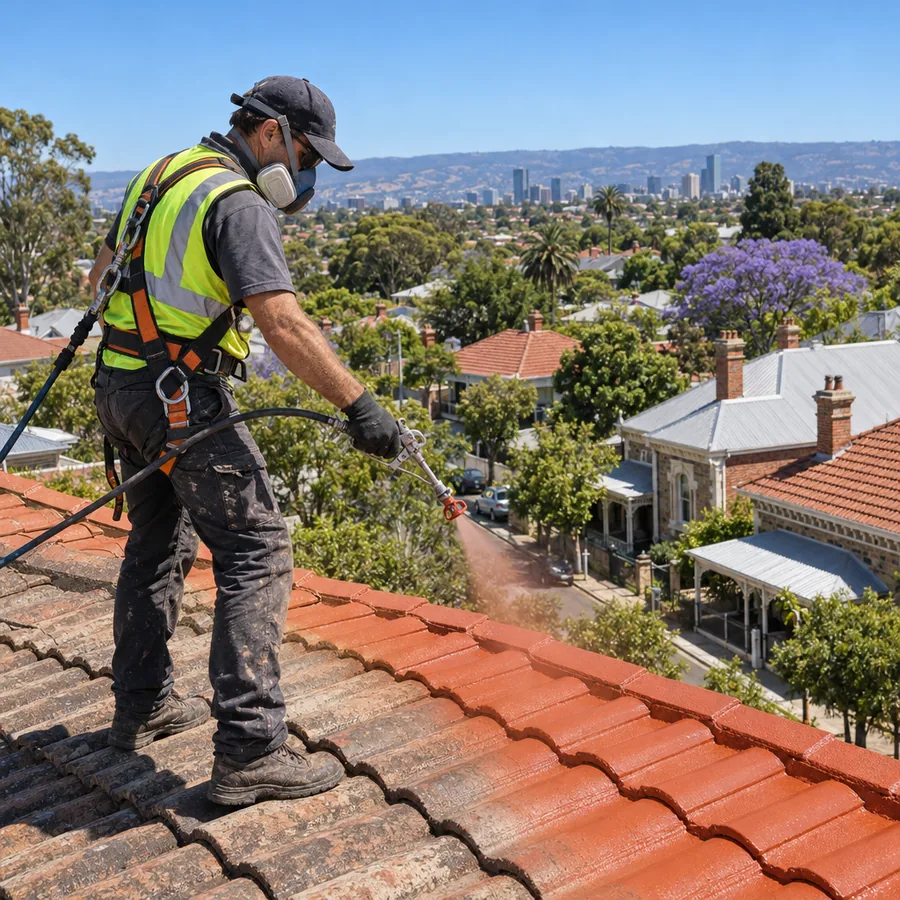
Roof painting in Adelaide is mostly a concrete tile story. The 1960s to 1990s brick and brick veneer homes of Marion, Edwardstown, Morphett Vale, Modbury, Golden Grove and Campbelltown were roofed in concrete tiles, and those tiles have now spent decades under a sun that regularly tops 35 degrees. They have gone pale, rough and porous, and on the south side they are growing moss. A properly prepared and coated roof brings back the colour, seals the tile and reflects some of the summer heat. A badly prepared one peels within a couple of years. This page explains what the job involves on tile, metal and shed roofs, why preparation and repairs matter more than the paint, and what to expect from the quote.
Painting a tile roof
The sequence on a tile roof is fixed, and the order matters.
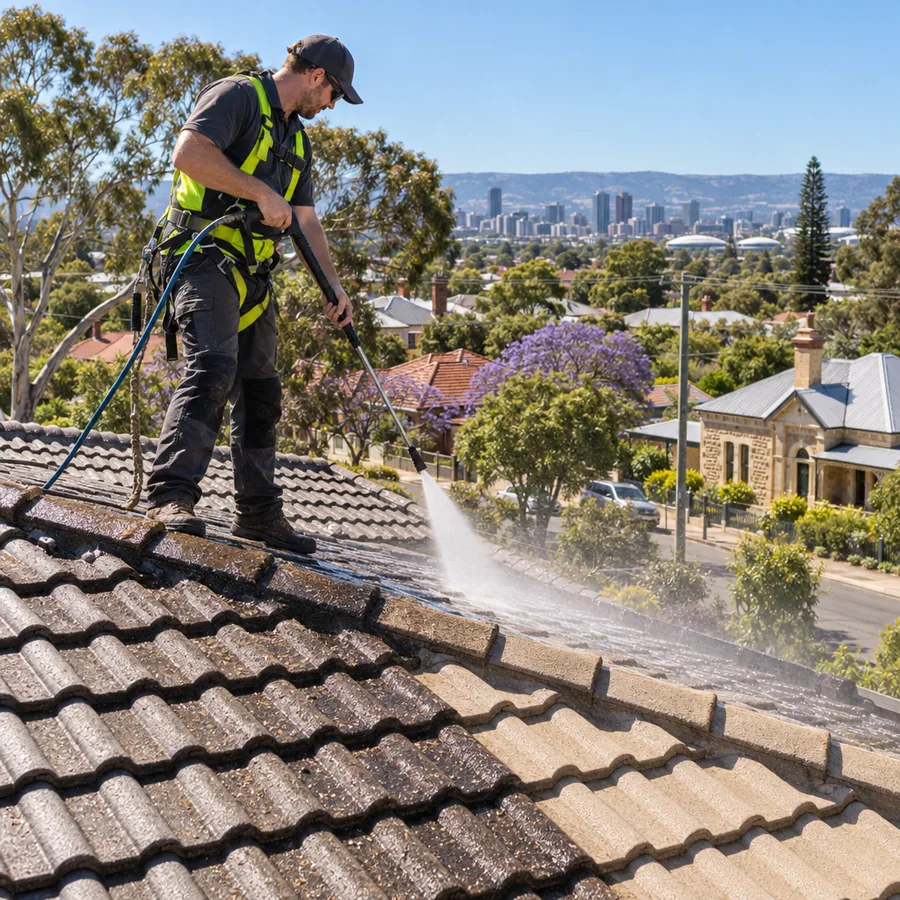
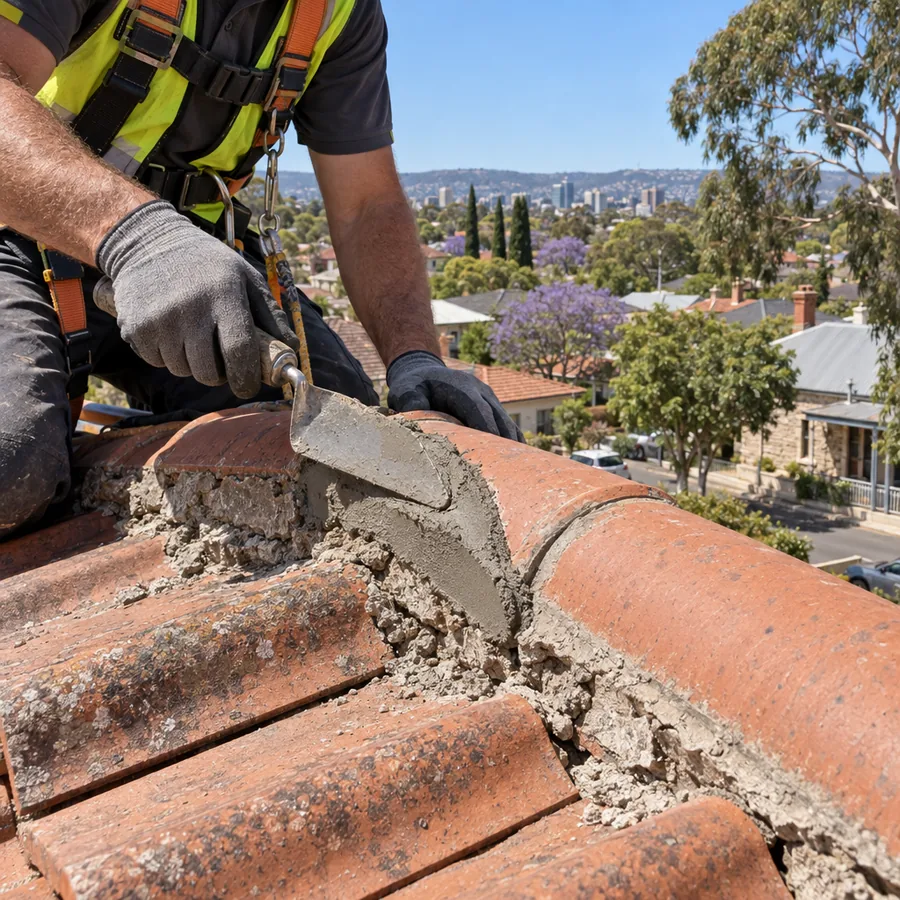
The roof is high-pressure cleaned from the ridge down to remove dirt, moss, lichen and the chalky, eroded surface of the tiles. Moss and lichen are treated with a biocide so they do not grow back under the coating. Broken and cracked tiles are replaced, ridges and hips are rebedded and repointed, and rusted valley irons and flashings are replaced. The roof is left to dry.
A primer or sealer then goes on. On porous concrete this soaks into the tile, binds the surface and gives the membrane something to grip. Two coats of roof membrane follow, applied by airless spray, with the first coat cured before the second goes on. The colour is chosen from the coating manufacturer’s range, and heat-reflective versions are available in most colours. Gutters, walls, solar panels and glass are masked throughout.
The result is a roof that looks new from the street, sheds water off a sealed surface, and has had every fault fixed under the coating. The roof restoration page describes that full sequence, and the blog post on roof restoration cost in Adelaide explains what drives the price.
Why painting without repairs is cosmetic
A membrane is a surface coating. It does not bridge a cracked tile, refix a ridge cap sitting on crumbled mortar, close a rusted-through valley or reseal a lifted flashing. Sprayed over those faults, it hides them under a fresh colour until the first heavy winter rain finds them again, and then the roof looks new and leaks.
Cracked cement pointing on the ridges is the most common fault hidden this way. Rebedding and repointing is the core of any honest roof restoration and it is done before the coating, so the new flexible pointing ends up sealed under the membrane rather than painted around. The repointing and rebedding page covers it in detail. If a painting quote for a tiled roof does not itemise ridge work, valleys and tile replacement, ask what happens to those faults.
Porous concrete tiles and sealing
Concrete tiles leave the factory with a coloured surface layer. Over thirty or forty Adelaide summers that layer erodes, and what is left is bare, porous concrete that soaks up rain like a sponge. Wet tiles are heavier, stay damp for days, grow moss and lichen that hold more moisture, and in the Hills go through frost cycles that break the surface down further.
Sealing is the fix. After the clean, a sealer or primer specified for porous concrete penetrates the tile and stabilises the surface, and the membrane coats over it. The tile stops absorbing water, dries quickly after rain, and stops feeding the moss. Tiles that have gone beyond porous, that are crumbling at the edges or delaminating, are replaced before sealing, because no coating will hold a failing tile together.
Terracotta and glazed tiles
The terracotta roofs on the interwar and 1950s homes of Unley, Burnside, Prospect and Mitcham are a different case. Glazed terracotta has a fired surface that coatings struggle to bond to, and painting it is not usually recommended. What those roofs need is a clean, moss and lichen treatment, rebedding and repointing, and replacement of cracked tiles. Unglazed or heavily weathered terracotta can sometimes be coated after the correct primer, and the inspection will say whether it is worth it on your roof.
Painting metal roofs and sheds
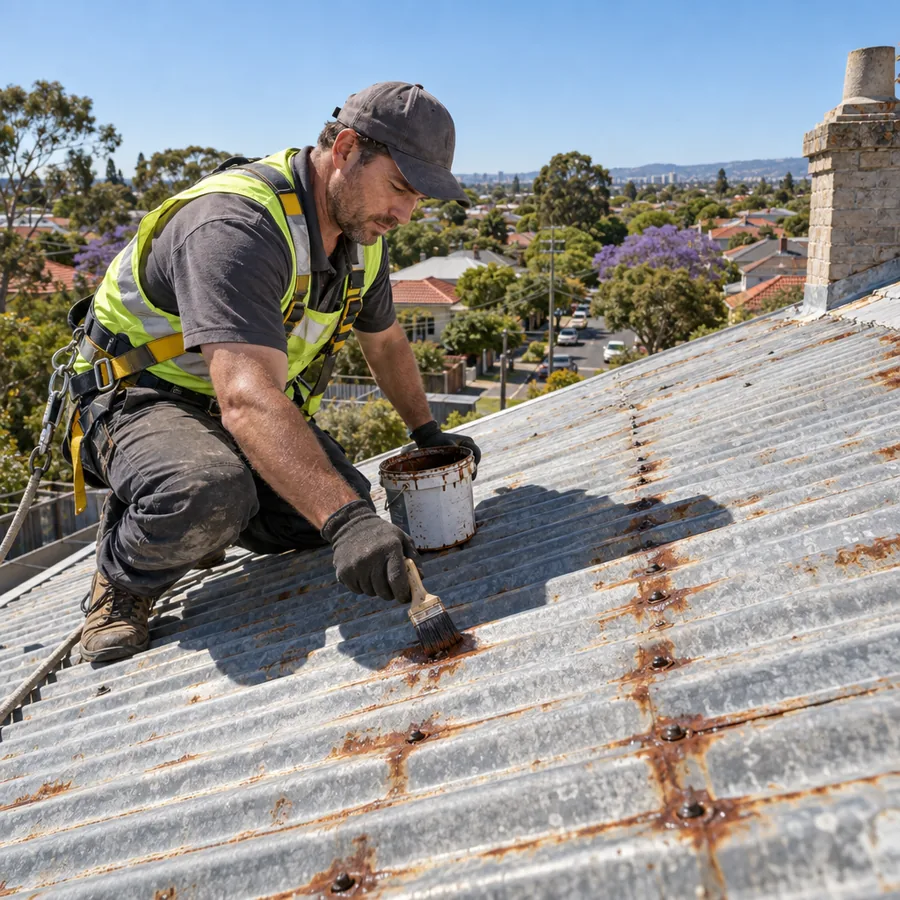
Galvanised iron, Zincalume and Colorbond roofs, sheds, carports and verandahs are painted too, and the preparation is different. The surface is cleaned, rust is treated with a converter, rusted screws are replaced, and the correct metal primer goes on. Old galvanised iron in particular needs a primer specified for that surface or the coating will lift in sheets. Two coats of membrane follow.
Shed painting in Adelaide is often about a large-span steel roof in the Hills or on the northern fringe that has faded and chalked and is starting to rust at the laps. The same rules apply: screws, rust and laps first, then primer, then coating. On a metal roof with sheets rusted through, painting is money wasted, and the metal roof repairs page explains when sheet replacement or restoration is the better spend.
Colour and heat-reflective coatings
Colour is a practical choice as much as an aesthetic one. Adelaide summers are long and hot, and a dark roof absorbs a great deal more heat than a light one. Heat-reflective membranes are formulated to reflect more of the sun’s infrared energy than a standard coating of the same colour, so the roof surface and the roof space run cooler on a 40 degree day. The effect is strongest with lighter colours, and the manufacturer’s data sheet states the measured reflectance for each one.
Most owners match the roof to the gutters, the fascia, a Colorbond fence or the render. The sample chips are worth looking at in full sun, on the roof, rather than in the kitchen.
Preparation is the job
Every failed roof coating in Adelaide comes down to preparation. A roof that was not cleaned properly, was coated while damp, was primed with the wrong product or was sprayed over moss will peel, and when it peels the whole surface has to be stripped before it can be done again. A roof that was cleaned, treated, repaired, primed and coated as the manufacturer specifies will last as the data sheet says it should.
That is why the quote lists the clean, the treatment, the repairs, the primer and the coats separately. If a quote is much cheaper than the others, the saving usually comes out of the preparation.
Drying and weather windows
Coatings need a dry surface and a curing period without rain, within the temperature range the manufacturer states. In Adelaide that rules out the wettest weeks of winter, when a roof never dries between coats, and the peak of a heatwave, when the membrane skins over before it bonds. Spring, autumn and settled summer mornings are the usual windows. A job that runs into a change in the forecast is paused rather than sprayed into weather that will spoil it.
How long the coating lasts
Each membrane manufacturer publishes an expected service life and a product warranty on the data sheet for its coating, and those figures assume the surface was prepared and primed as specified and the correct number of coats went on. This page does not invent a number. You will be told which product is being used so you can read the data sheet, manufacturer warranties apply to the products used, and the roofer’s workmanship warranty is stated in writing on the quote.
The inspection and the quote
The roofer inspects the roof surface, the ridges, the valleys, the flashings and any previous coating, and photographs what is found. You receive a written, itemised quote that lists the repairs, the cleaning and treatment, the primer, the membrane product, the number of coats and the colour. Nothing starts until you approve it. If the inspection finds that the roof is too far gone to coat, you will be told that too.
What is included
- High-pressure clean of the whole roof, with moss and lichen treated before any coating goes on
- Repairs first: broken tiles replaced, ridges rebedded and repointed, rusted valleys and flashings replaced
- Primer or sealer matched to the surface, whether porous concrete tile, glazed terracotta, galvanised iron or Colorbond
- Two coats of roof membrane applied by airless spray in a colour chosen from the manufacturer's range
- Heat-reflective coatings for homes that cook through the Adelaide summer
- Metal roof, shed and verandah painting with rust treatment and the correct metal primer
- Gutters, downpipes, solar panels and walls masked and left clean
- Written, itemised quote listing the products to be used and the number of coats
Signs you should call
- Concrete tiles that have gone pale, rough and chalky, or that soak up water and stay dark for days after rain
- Moss, lichen or black staining spreading across the south-facing side of the roof
- A metal roof or shed with faded, chalking or peeling paint and surface rust showing through
- You want the roof to match new gutters, render, a Colorbond fence or an extension
- A ceiling that runs noticeably hotter than it should through summer
- A previous coating that is peeling in sheets, which usually means poor preparation the first time
Pressure cleaning a roof is not a weekend job
A high-pressure cleaner on a wet, mossy roof is a fall waiting to happen, and pointed at old concrete tiles at the wrong angle it strips the surface and drives water under the tiles into the ceiling. Roofers clean from the ridge down, with edge protection, harnesses or scaffold as required under South Australian work health and safety rules, and know which tiles will not take the pressure. Leave the cleaning to the crew doing the coating.
Frequently asked questions
Q. Can old concrete tiles be painted?
Yes, and concrete tile roofs are the most common roof painted in Adelaide. Concrete tiles lose their factory surface after a few decades and become porous, so they soak up water, grow moss and look chalky. After a pressure clean and any repairs, a sealer or primer soaks into the tile and gives the membrane something to bond to, then two coats of roof membrane restore the colour and shed water. Tiles that are crumbling or delaminating are replaced first; paint will not hold them together.
Q. Does painting a roof stop it leaking?
No. A roof membrane sheds water off the surface of a sound roof; it does not bridge a cracked tile, a failed ridge, a rusted valley or a lifted flashing, and sprayed over those faults it hides them until the next winter. That is why the repairs are done first and itemised on the quote. If the roof is leaking now, the leak is found and fixed, then the roof is painted.
Q. How long does a roof coating last?
The honest answer is on the product data sheet, not on this page. Each membrane manufacturer states an expected service life and a product warranty for its coating, and those figures depend on the surface being prepared and primed as specified and the correct number of coats being applied. You will be told which product is being used so you can read the data sheet yourself, and the roofer's workmanship warranty is stated in writing on the quote.
Q. Can terracotta tiles be painted?
Glazed terracotta tiles have a fired surface that coatings do not bond to well, and painting them is not usually recommended. Unglazed or weathered terracotta can sometimes be coated after the right primer, but the case is weaker than for concrete. What terracotta roofs usually need is a clean, moss treatment, ridge rebedding and repointing, and replacement of cracked tiles. The inspection will tell you whether coating is worth doing on your roof.
Q. What is a heat-reflective roof coating?
A heat-reflective membrane is formulated to reflect more of the sun's infrared energy than a standard coating of the same colour, so the roof surface and the roof space run cooler on a hot day. In Adelaide, with regular summer days above 35 degrees, that matters for homes with little ceiling insulation or with living areas under the roof. The effect is strongest with lighter colours. The manufacturer's data sheet states the measured reflectance for each colour.
Q. Do you paint sheds and metal roofs as well as tiles?
Yes. Galvanised iron, Zincalume and Colorbond roofs, sheds, carports and verandahs are cleaned, rust is treated, the correct metal primer is applied and the roof is coated. Old galvanised iron needs an etch primer or a primer specified for that surface or the paint will not hold. Rusted screws are replaced before coating, because painting over a rusted screw head buys a year at most.
Q. What weather is needed to paint a roof in Adelaide?
Dry tiles or sheets, no rain forecast for the curing period, and a surface temperature within the range the coating manufacturer specifies. That rules out the heat of a 40 degree day, when the membrane skins before it bonds, and the wet weeks of winter, when the roof never dries between coats. Spring, autumn and settled summer mornings are the usual windows. A job is rescheduled rather than sprayed into weather that will spoil it.