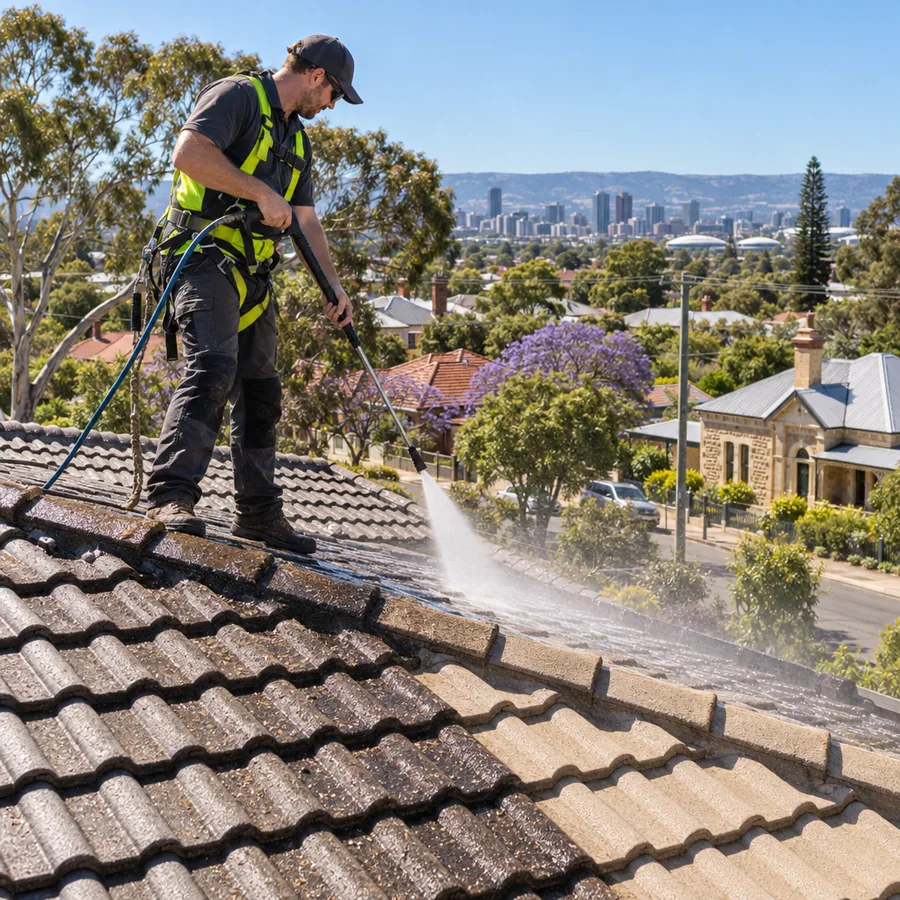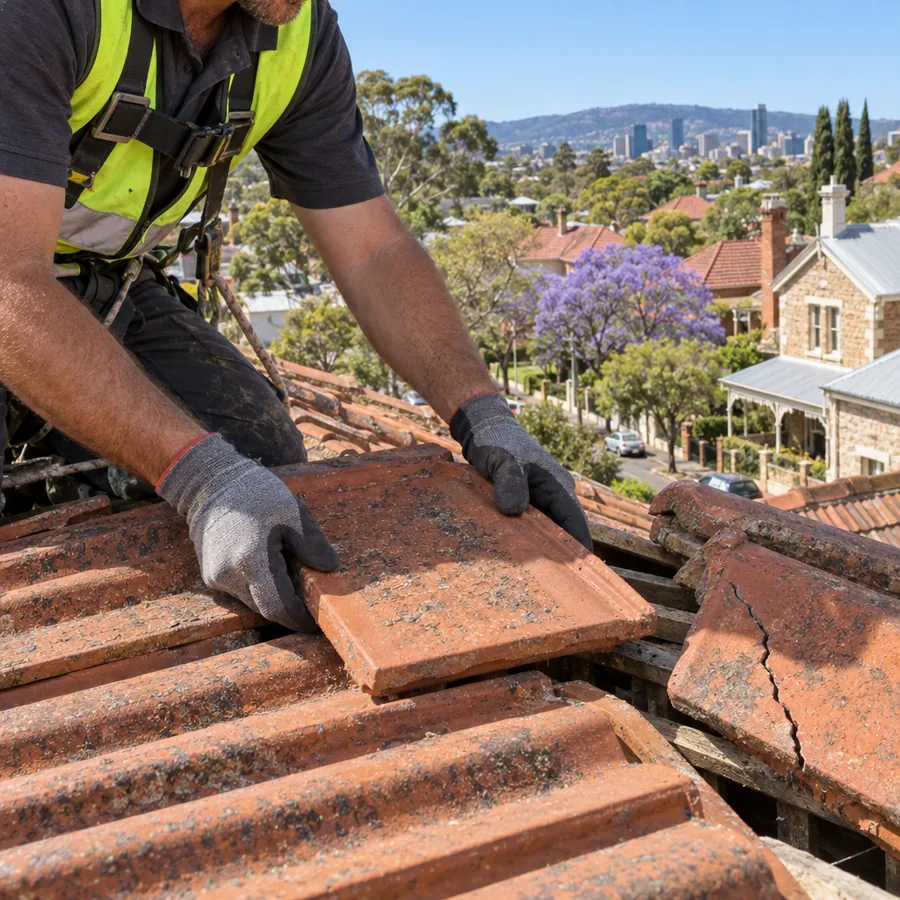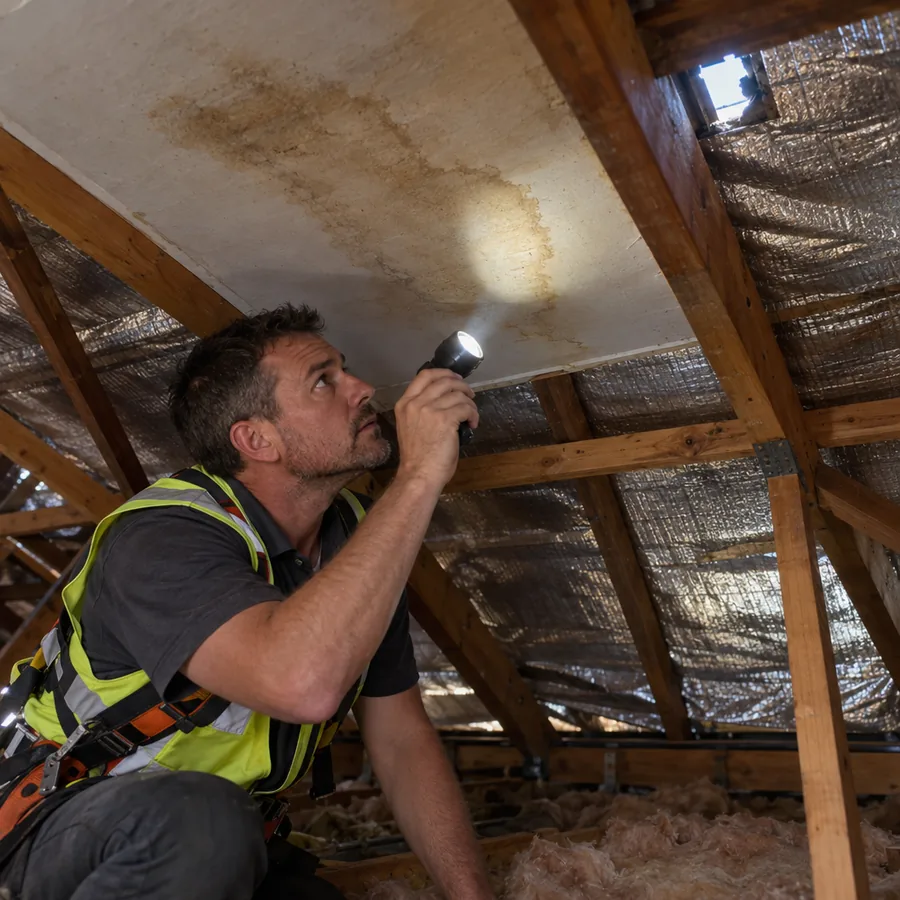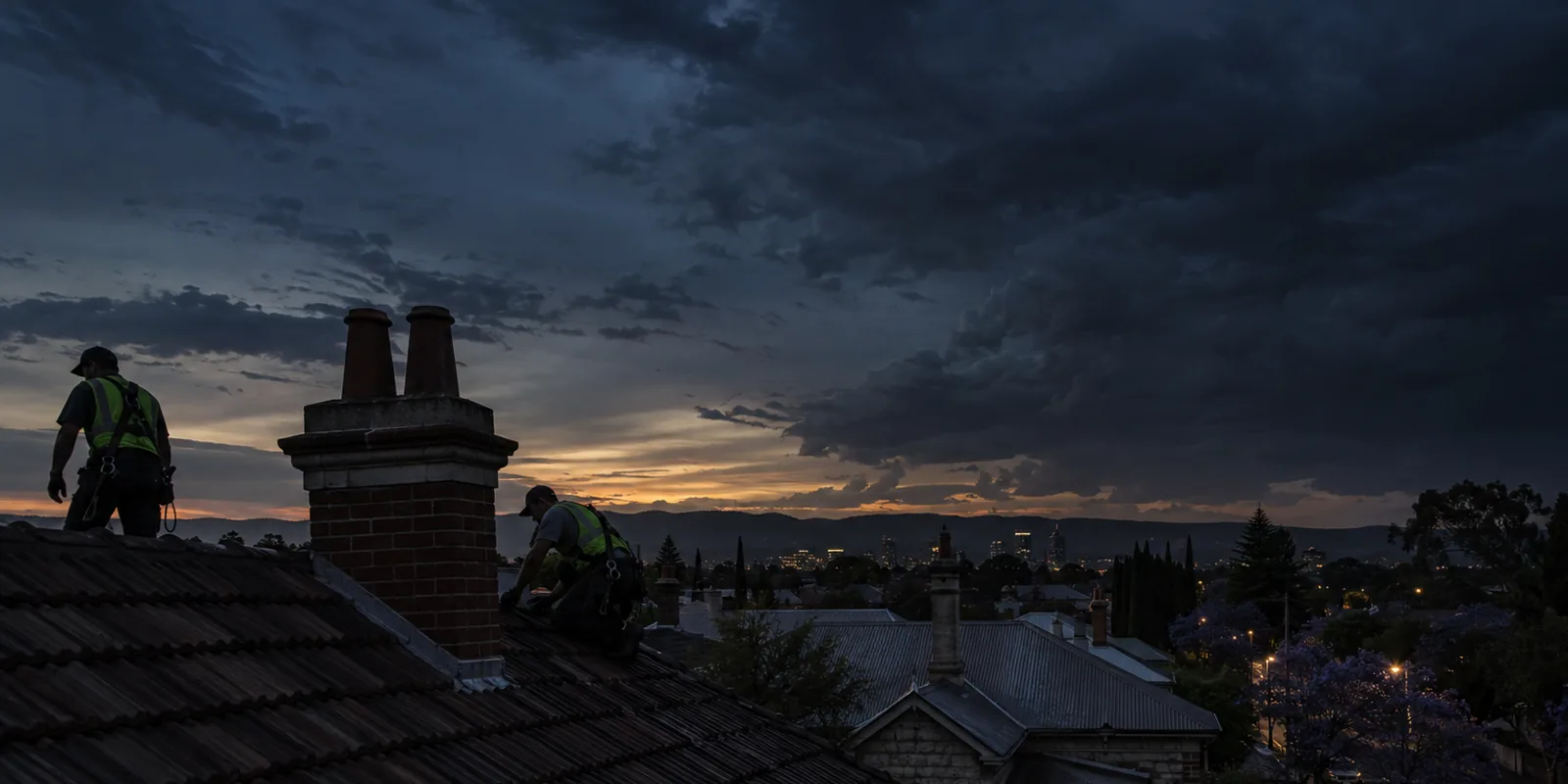
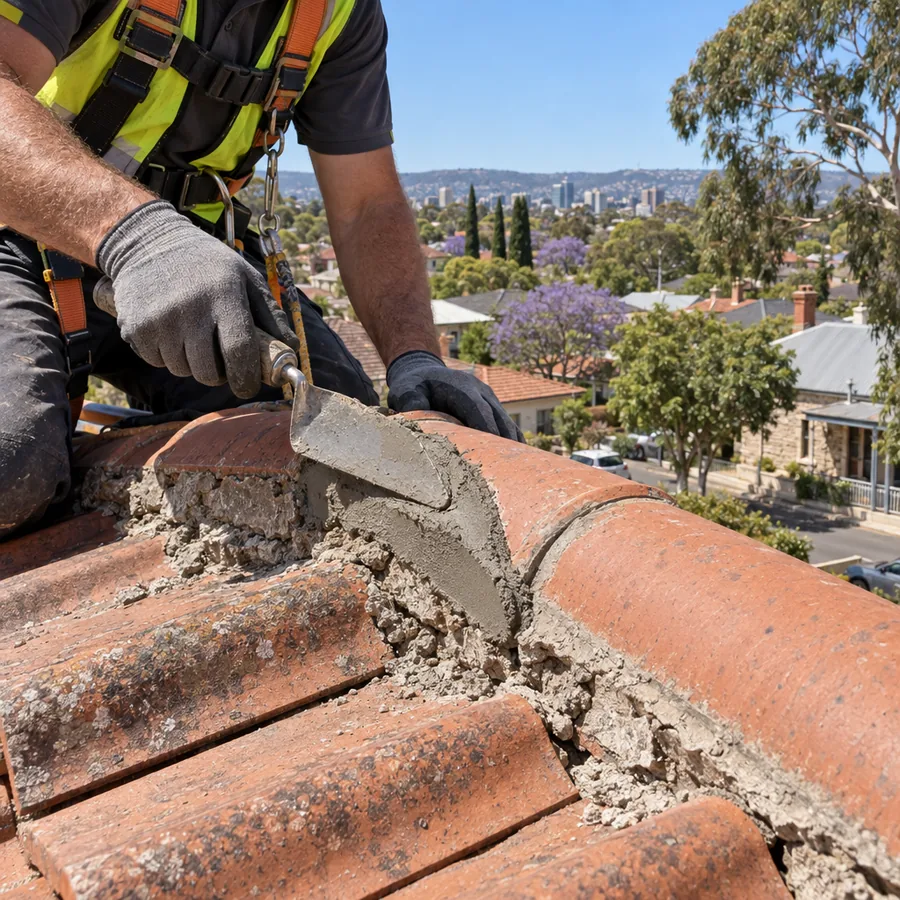
If there is grey mortar on your lawn after a windy night, the ridges on your roof are telling you something. Cracked and crumbling cement bedding and pointing on ridge and hip capping is the most common fault on tiled roofs across Adelaide, from the terracotta roofs of Unley and Burnside to the concrete tile roofs of Marion, Modbury and Morphett Vale. This page explains what bedding and pointing are, why the mortar fails here, how to tell rebedding from repointing, what flexible pointing compound does, and how the work is done safely.
What bedding and pointing are
Every tiled roof has capping along the ridges, the hips and the gable ends: the curved or angled tiles that cover the joint where two roof planes meet. The capping sits on a bed of mortar, called the bedding, which holds it in place and carries its weight. Over the bedding, along the edge where the cap meets the tiles below, is a finishing layer called the pointing. The pointing seals the joint against wind and rain and gives the line its neat finish.
On roofs built before the late 1990s both layers are cement mortar. The bedding is still mortar today, but the pointing on any roof done in the last couple of decades is a flexible compound, for reasons that become obvious once you understand why mortar fails.
Why cement mortar cracks in Adelaide
Cement mortar is rigid. Adelaide roofs move. That combination is the whole story.
Heat is the first cause. A tiled roof in Adelaide bakes through summer, with regular days above 35 degrees and heatwaves above 40, and the tiles and caps expand. Cold winter nights contract them. The mortar between cannot stretch and shrink with the tiles, so it cracks in a fine lace pattern first, then in larger cracks, then in chunks that fall out.
Soil is the second cause. Much of the Adelaide plain sits on reactive clay that swells in the wet winter months and shrinks through the dry summer. Footings move with it, brickwork cracks, and the roof frame shifts a little every year. Rigid pointing on the ridges takes the strain and lets go.
Age is the third. Mortar on a 1960s roof in Edwardstown or a 1970s roof in Golden Grove has been through fifty or more summers. Even without dramatic movement it weathers, loses its bond and turns chalky.
Once the pointing has gone the bedding is exposed to water, and once the bedding has crumbled the caps are held on by their own weight. A gusty northerly ahead of a cool change, or a south-westerly front coming in across Gulf St Vincent, is enough to shift them.
Signs the ridges have failed
The clearest sign is mortar on the ground: grey lumps on the lawn, on the driveway or in the gutters. Others are ridge caps that look uneven from the street, caps that have shifted sideways or rock in the wind, a leak or damp patch in the ceiling that runs along the line of a ridge or hip, and pointing that has gone pale and crumbly. From inside the roof space you can sometimes see daylight under the caps. If the roof has never had ridge work done and is more than a few decades old, assume the mortar is on its way even if nothing has fallen yet.
Loose ridge caps are one of the most common leak sources on tiled roofs, and water under the caps often reaches the ceiling because the sarking beneath the tiles is torn or was never there. The roof leak repairs page explains how the source of a leak is confirmed before anything is quoted.
Rebedding or repointing
The two jobs are different and the quote should say which one each line needs.
Repointing is done when the bedding is sound and the caps are firm, but the surface pointing has cracked or fallen away. The old pointing is scraped back, the joint is cleaned, and new flexible pointing is applied over the existing bedding.
Rebedding is done when the bedding itself has failed. The caps are lifted off, every trace of old mortar is removed from the caps and the tiles, and the caps are set back on a fresh mortar bed, straight and to the correct height. Once the new bedding has cured, the line is repointed with flexible compound.
Repointing over failed bedding is a shortcut that lasts a season. It looks tidy from the ground, and then the caps move again and the new pointing cracks with them. A roofer who tells you the ridges need rebedding, not just repointing, is telling you the truth about what is under the caps.
Flexible pointing compound
Flexible pointing is a polymer-modified material that cures to a finish with enough give to move with the roof through summer and winter without cracking. It bonds to terracotta, concrete and the mortar bed, sheds water, and comes in a range of colours so it can be matched to the tiles or to the coating if the roof is being restored. It is the standard finish for ridge work across Australia and it is what any competent quote in Adelaide will specify. It replaces cement pointing; it never replaces bedding.
Gable ends, valleys and apexes
Ridge and hip lines get the attention, but the same mortar fails at the gable ends where the barge capping meets the tiles, at the apex where hips meet the ridge, and along the edges of valleys where the cut tiles are bedded. These are checked and pointed in the same visit. Valleys on older roofs are often rusted as well, and a rusted valley iron is replaced before it is repointed, because pointing over rust seals in the problem. The tile roof repairs page covers valleys, broken tiles and sarking.
Why repointing is the core of roof restoration
A roof restoration in Adelaide, done properly, is a sequence: pressure clean, replace broken tiles, rebed and repoint the ridges and hips, replace rusted valleys and flashings, treat moss, then prime and apply two coats of a roof membrane. The ridge work is the part that makes the roof weathertight. The coating makes it look new and protects the tile surface, but a coating sprayed over cracked pointing is decoration on top of a leak.
That is why the ridge work is done after the clean and before the coating. The new pointing goes on, cures, and is then sealed under the membrane. If you are comparing restoration quotes and one of them does not itemise rebedding and repointing, it is not a restoration. The roof restoration page walks through the full sequence and the blog post on roof restoration cost in Adelaide explains what moves the price.
Working safely on steep terracotta roofs
The interwar and post-war terracotta roofs in Unley, Prospect, Burnside and Mitcham are often pitched steeply, and the tiles are brittle enough that a careless step cracks them. Ridge work happens at the highest point of that roof. Roofers set up edge protection, use harnesses anchored to the frame, or work from scaffold, as required under South Australian work health and safety rules. They walk on the noses of the tiles where the batten carries the load, replace any tile cracked in the process, and get the tools and mortar up and down without dragging them across the roof.
Roofing is licensed building work in South Australia. The contractor should hold a Building Work Contractors Licence from Consumer and Business Services, which you can check on the CBS public register, and you are entitled to ask for the licence number before the work starts.
The inspection and the quote
The roofer walks every ridge, hip and gable line and checks the bedding under each cap, then photographs what is found. You receive a written, itemised quote stating which lines need rebedding, which need repointing only, how many caps and tiles are to be replaced, and the pointing compound and colour. The workmanship warranty is stated in writing on the quote, manufacturer warranties apply to the products used, and nothing starts until you approve it.
What is included
- Inspection of every ridge, hip and gable line, plus the valleys and the tiles either side, with photos
- Removal of loose ridge and hip caps and all cracked or crumbling cement bedding
- Rebedding of the caps on a fresh mortar bed, set straight and to the correct height
- Repointing over the new bedding with a flexible pointing compound colour-matched to the roof
- Replacement of cracked or missing capping and of broken tiles found along the ridge lines
- Gable ends, apex caps and valley edges checked and pointed at the same time
- Old mortar cleared from gutters, valleys and the ground below
- Written, itemised quote before any work starts
Signs you should call
- Pieces of grey mortar on the lawn, in the gutters or on the driveway after wind or rain
- Ridge or hip caps that look uneven, have shifted, or rock when the wind gets under them
- A leak or damp stain in the ceiling that runs along the line of a ridge or hip
- Gaps between the caps and the tiles below that you can see daylight through from the roof space
- Pointing that has gone chalky, cracked in a lace pattern or fallen away in chunks
- A roof restoration quote that skips the ridges and goes straight to painting
Ridge work happens at the top of a steep roof
Ridge and hip lines are the highest and often the steepest part of the roof, and old terracotta tiles crack underfoot. Roofers use edge protection, harnesses or scaffold as required under South Australian work health and safety rules, and walk the roof on the tile noses where the load is carried. Do not go up to look at loose caps yourself. A pair of binoculars from the footpath will tell you plenty, and the roofer's photos will tell you the rest.
Frequently asked questions
Q. What is the difference between bedding and pointing?
Bedding is the mortar bed that the ridge and hip caps sit on. It holds the caps in place and takes the weight. Pointing is the thinner finishing layer applied over the bedding, along the edge where the cap meets the tiles, that seals the joint against water and wind. On an older Adelaide roof both are cement mortar. On a roof done in the last couple of decades the bedding is still mortar but the pointing is a flexible compound, which is the modern standard.
Q. Why does the mortar on Adelaide ridge caps crack so badly?
Cement mortar is rigid, and Adelaide roofs move. Summer heat expands the tiles and caps, winter cold contracts them, and the reactive clay under much of the plain swells and shrinks with the seasons and shifts the roof frame slightly. Rigid mortar cannot follow that movement, so it cracks, crumbles and falls out. Once the bedding has gone the caps are loose, and a gusty northerly or a south-westerly front can dislodge them. Age alone does the rest: mortar on a 1960s or 1970s roof has been through a lot of summers.
Q. Do I need rebedding, or will repointing be enough?
If the caps are still firmly bedded and only the surface pointing has cracked or fallen away, repointing over the sound bedding is enough. If the caps are loose, rocking or sitting on crumbled mortar, the old bedding has failed and the caps must be lifted, the mortar removed and the caps rebedded before they are repointed. Repointing over failed bedding looks fine for a season and then fails again. The inspection tells you which lines need which, and the quote itemises it.
Q. What is flexible pointing compound and why is it used?
It is a polymer-modified pointing material that cures to a finish that flexes with the roof instead of cracking. It bonds to the tile and the cap, comes in colours to match most terracotta and concrete tiles, and stays sealed through the thermal movement that breaks cement pointing. It is the standard finish on ridge work in Australia and is what a roof restoration should specify. It is applied over cured bedding, never as a substitute for it.
Q. Can loose ridge caps cause a leak?
Yes, and the ridges and hips are one of the most common leak points on tiled roofs in Adelaide. Once the pointing has cracked, wind-driven rain gets under the caps and runs down the underside of the tiles or into the roof space. If the sarking under the tiles is torn or missing, which is common on older roofs, the water goes straight onto the ceiling. A stain that runs along the line of a ridge or hip is a strong sign the bedding has gone. The leak repairs page covers how the source is confirmed.
Q. Should the ridges be done before the roof is painted?
Always. Painting over cracked pointing hides the problem under a fresh colour and does nothing to stop water. Rebedding and repointing is the core of a proper roof restoration and is done after the clean and before the coating, so the new pointing is sealed under the membrane. If a restoration quote does not itemise ridge work, ask why.
Q. Can repointing be done on a steep terracotta roof?
Yes. The 1920s to 1960s terracotta roofs in Unley, Burnside, Mitcham and Prospect are often steep and the tiles are brittle, so the work takes more care and more safety equipment, but the method is the same. The roofer works from the ridge with the correct fall protection, walks on the tile noses, and replaces any tiles cracked in the process. Terracotta roofs that have never been rebedded are the ones most likely to need it.