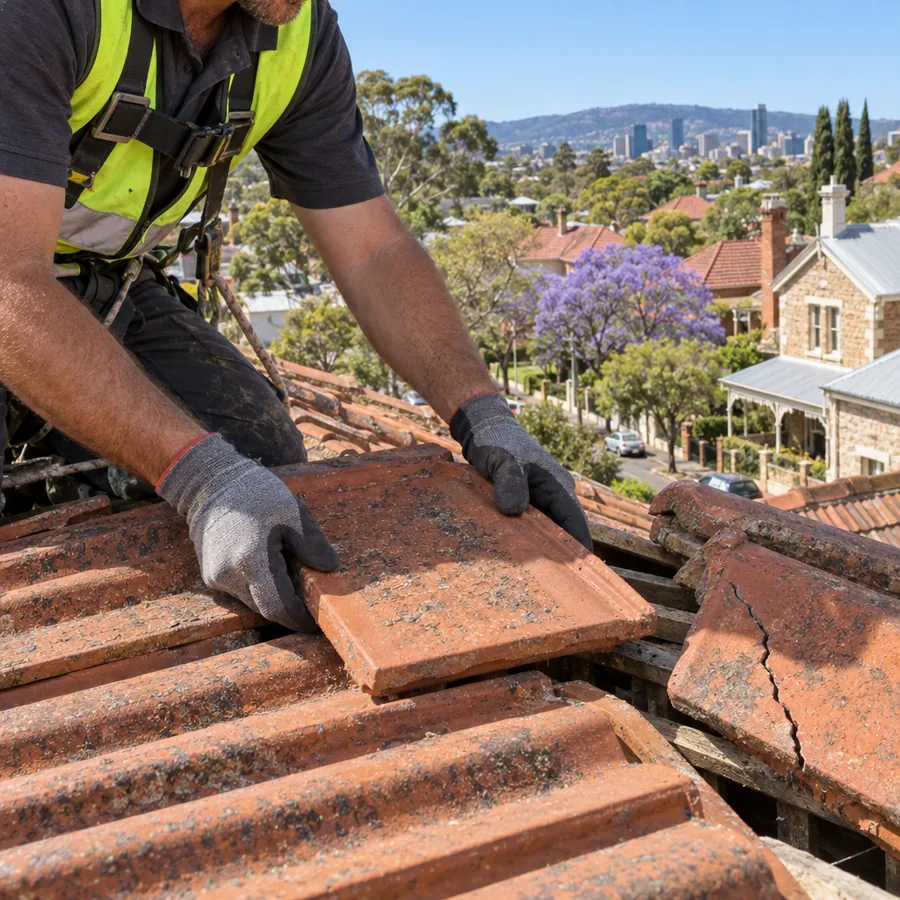
Adelaide is a tiled-roof city. From the terracotta bungalows of Unley, Prospect and Norwood to the concrete-tiled brick veneers that fill Mitcham, Marion, Modbury and Golden Grove, most homes built between the 1920s and the 1990s sit under tiles, and most of those roofs are now old enough to need work. This page covers the difference between terracotta and concrete tiles and how each fails, what is done about broken, slipped and porous tiles, how a discontinued profile is matched, the sarking and batten repairs that go with tile work, moss and lichen, the damage caused by other trades walking on the roof, and the point at which a repair becomes a repointing or restoration job.
Terracotta and concrete tiles in Adelaide
Terracotta tiles are fired clay. The Marseille pattern on interwar bungalows and 1950s homes across the inner and eastern suburbs is the classic Adelaide example. Terracotta does not go porous with age; the glaze and body last a very long time. It fails by cracking, from hail, from frost in the Hills, and above all from being walked on, and by slipping when the nails, clips or battens underneath give way. Older terracotta profiles are often discontinued, which makes matching the main challenge.
Concrete tiles arrived in the 1960s and went on almost every new home in the southern, northern and outer eastern suburbs for the next thirty years. Concrete is strong when new but its coloured surface is thin. Adelaide’s summer heat and winter rain erode it over thirty to forty years, leaving a pale, rough tile that soaks up water, grows moss, gets heavier when wet and cracks more readily underfoot. A concrete tile roof from the 1970s usually needs both individual tile repairs and, eventually, a restoration to seal the surface.
Broken, slipped and porous tiles
A cracked tile lets water onto the sarking below it. If the sarking is sound the water runs down to the gutter and the leak may not show for years. If the sarking is torn or was never fitted, the water is in the ceiling with the first proper rain. That is why a single broken tile on a 1960s roof without sarking causes a stain the same week, while a 1990s roof can carry several for a season.
A slipped tile has moved down the roof and left a gap above it. The tile itself is usually fine; what has failed is beneath it. A batten has split or rotted, a tile clip has rusted, or the nail holding a terracotta tile has corroded away. Pushing the tile back up without fixing the batten or clip is a repair that lasts until the next northerly.
Porous concrete tiles are a whole-roof condition rather than an individual fault. A few can be swapped, but if most of the roof is chalky the answer is a restoration with a sealer and membrane coating, and the roofer will say so rather than replacing tiles one by one for years.
Matching discontinued tile profiles
Every tile profile has its own shape, lap and fixing, and a replacement has to match or it will not sit and will not seal. Many of the terracotta and early concrete profiles on Adelaide roofs have not been made for decades. Roofers source them from salvage yards and from tiles taken off roofs being converted to Colorbond, and a good roofer keeps stock of the common Adelaide profiles for exactly this reason.
Where an exact match in the original colour is not available, the usual approach is to take sound tiles from an inconspicuous slope, such as the back of the house or behind a parapet, and use them on the street-facing slope, then fit the nearest available match where it cannot be seen. The roofer tells you before quoting whether your profile is available and what the match will look like.
Sarking and batten repairs
Tile repairs and sarking repairs go together. Once the tiles around a damaged area are lifted, the roofer can see the sarking and patch a tear or fit a section where there was none. Battens that have split under a slipped tile or rotted where a leak ran along them are cut out and replaced, and the tiles above are refitted with new clips. On roofs where the batten failure is widespread, usually from long-term leaks or borer, the roofer will raise re-roofing rather than patching batten after batten.
Moss and lichen
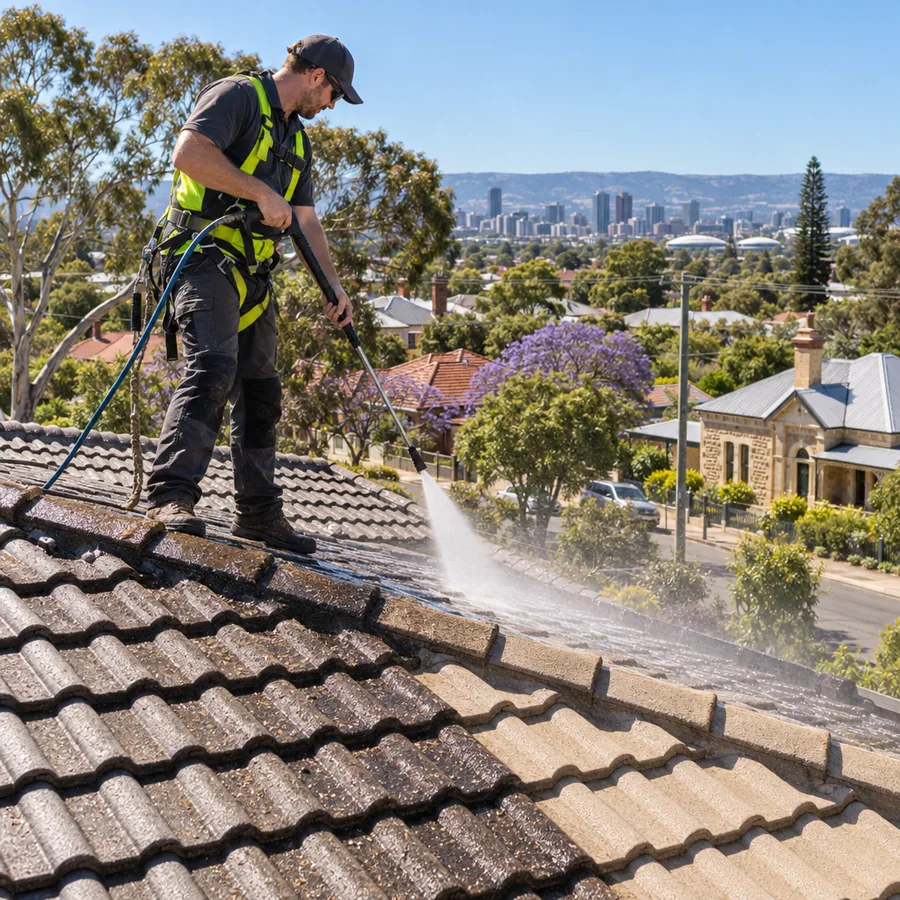
Moss and lichen grow on the shaded southern slopes of tiled roofs across the plain and thickly in the Hills from Blackwood and Belair up to Stirling and Aldgate, where leaf litter from stringybarks and deciduous trees holds moisture in the laps. Moss is not just cosmetic. It holds water against the tile, which speeds erosion on concrete, lifts the laps so wind-driven rain gets under, blocks valleys and gutters, and makes the roof dangerous to walk on. It is killed with a biocide, removed, and the gutters and valleys cleared. On concrete tiles that have gone porous, the treatment is followed by a sealer or a full restoration so the moss does not return in a year.
Solar installers, antennas and foot traffic
The most common cause of new leaks on Adelaide tile roofs is not weather. It is people. Solar installers, antenna and aircon technicians, pest controllers and painters walk on roofs that were designed to be walked on carefully, at the tile laps, by someone who knows how. Old terracotta and porous concrete both crack under a boot on the wrong part of the tile, and the crack often does not show until the first front of winter, well after the trade has left.
Solar arrays add a second problem. The panels sit over the tiles, so cracked tiles under the array are invisible from the roof and from the ground, and brackets fitted without a proper flashing, or a tile that has been ground out badly to take a bracket, leak from day one. Repairing tiles under an array means lifting panels, which the roofer coordinates with an electrician. If a leak started within a season of solar going in, that is where the roofer looks first.
When a tile roof needs repointing or restoration
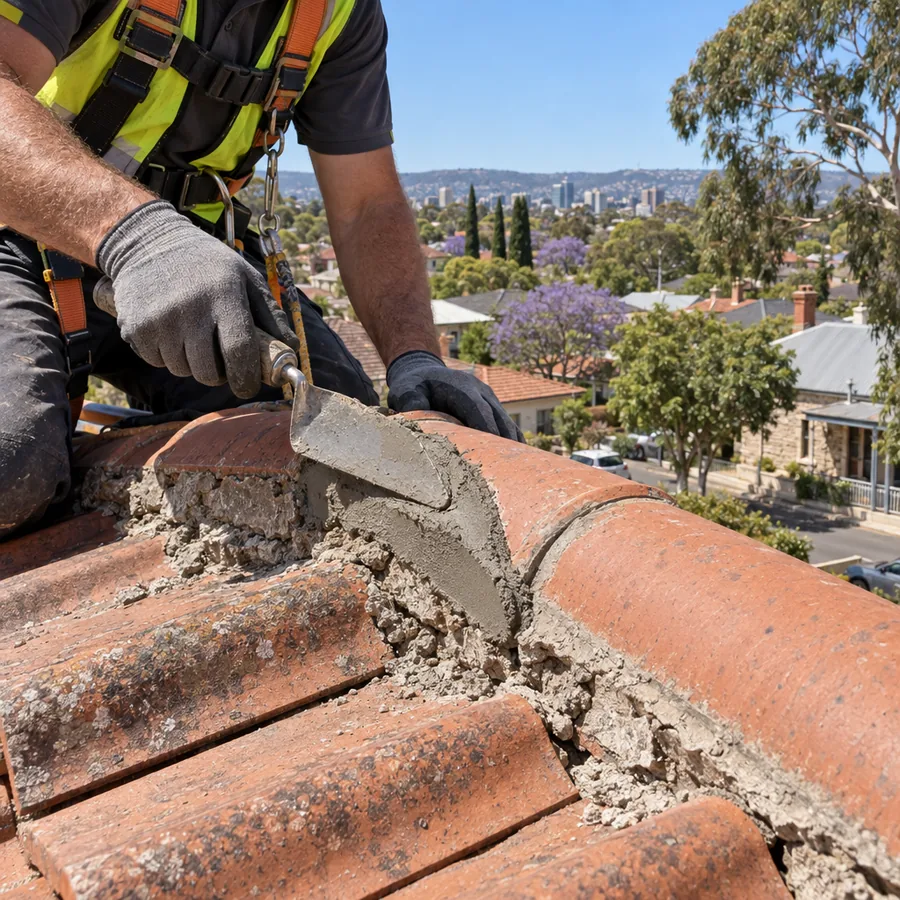
Cracked and crumbling mortar on ridge and hip capping is the most common fault on pre-2000 tiled roofs in Adelaide, driven by summer heat and by the reactive clay under the plain moving the frame each year. Replacing tiles while the ridges are leaking does not fix the roof. If the inspection finds the pointing cracked along the ridges, the roofer will quote repointing and rebedding alongside the tile work.
If the roof also has porous tiles across the surface, rusted valleys and fatigued flashings, the individual repairs add up to a restoration, and one restoration quote is better value than a series of call-outs. The post on what a roof restoration costs in Adelaide explains what goes into that quote.
Storm and hail damage
Hail cracks terracotta and old concrete tiles, and spring storms lift tiles and ridge caps. Sudden storm damage is generally covered by home insurance, whereas cracked tiles from age or foot traffic are not. The roofer makes the roof safe, photographs the damage, and provides the written report and itemised quote the insurer asks for. The post on storm and hail damage and insurance explains what the insurer will want. If water is coming in now, the roof leak repairs page explains how the leak is traced to its source.
Getting the repair quoted
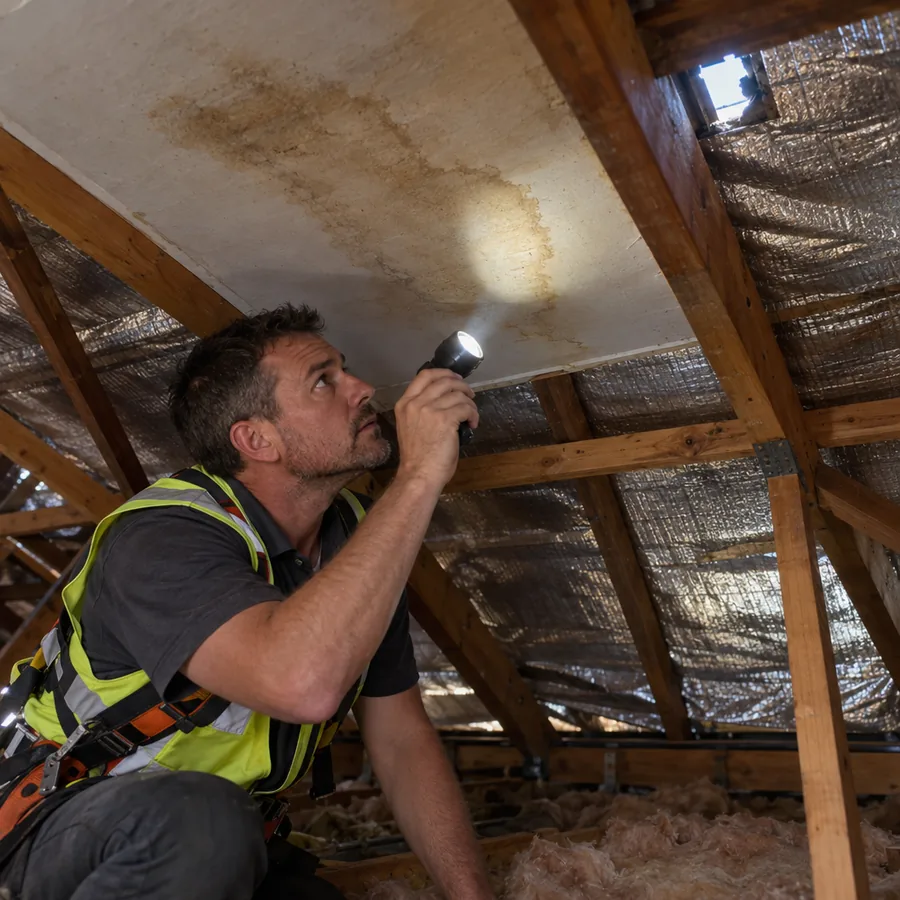
The roofer inspects from the roof and from the ceiling space, photographs every damaged tile, checks the battens, sarking, ridges and valleys, and writes an itemised quote listing the tile count, the profile to be matched and any related work. Nothing starts until you approve it, the workmanship warranty is stated on the quote, and you can check the roofer’s CBS Building Work Contractors Licence on the public register. Tiles are matched and fitted using edge protection or a harness as required, the area is checked from above and below, and fragments are cleared from the gutters and the ground.
What is included
- Roof walk-over identifying every cracked, slipped, porous or missing tile, with photos
- Replacement tiles matched to your profile and colour, sourced from salvage yards for discontinued patterns
- Slipped tiles refitted after the broken batten, clip or nail beneath them is repaired
- Torn or missing sarking patched under the affected tiles
- Moss and lichen treated and removed so tiles shed water and stop holding moisture
- Damage from solar, antenna and aircon installers found and repaired, including cracked tiles under panel arrays
- Ridge and hip capping checked and any loose caps rebedded and repointed
- Valleys and flashings inspected while the roofer is up there
Signs you should call
- A cracked or missing tile visible from the ground or from inside the ceiling space
- A tile that has slipped down the roof, leaving a gap above it
- Concrete tiles that look pale, rough and chalky, or moss growing in the laps
- A new leak that started after solar panels, an antenna or an aircon unit was installed
- Daylight visible through the roof from inside the ceiling
- Tile fragments in the gutters or on the ground after a storm or hail
- Tiles that crunch or shift underfoot when a tradie walks on them
Do not walk on an old tiled roof to check it
Terracotta and porous concrete tiles crack under a boot on the wrong part of the tile, and moss makes them slippery. Most tile damage in Adelaide is caused by people, not weather. Look from the ground, from a ladder at the gutter line or from inside the ceiling space, and leave the roof walk to a roofer using edge protection or a harness.
Frequently asked questions
Q. What is the difference between terracotta and concrete roof tiles?
Terracotta is fired clay. It keeps its colour and does not go porous with age, but it cracks under foot traffic, hail and Hills frost, and many older profiles are discontinued. Concrete tiles, common on Adelaide homes from the 1960s on, are strong when new but their coloured surface is thin; after thirty to forty years of heat, rain and UV it erodes to a pale, chalky tile that soaks up water, grows moss and cracks more easily. Repairs on terracotta are mostly matching and replacing; repairs on old concrete often lead to a restoration.
Q. Can you match my old tiles if they are no longer made?
Usually. Roofers source discontinued terracotta and concrete profiles from salvage yards and from roofs being converted to Colorbond, and keep stock of the common Adelaide patterns. Where an exact colour match is not available, sound tiles are taken from an inconspicuous slope, such as the back of the house, and used on the street-facing slope, with the nearest match fitted where it cannot be seen. The roofer tells you before quoting whether your profile is available and what the match will look like.
Q. Why do tiles slip down the roof?
The tile is usually fine; what has failed is under it. A batten has split or rotted, a tile clip has rusted through, or the nail holding a terracotta tile has corroded away, and the tile slides down to leave a gap above it. Pushing it back up without repairing the batten, clip or nail is a fix that lasts until the next northerly. The roofer lifts the surrounding tiles, replaces the batten section or clip, patches the sarking if it is torn and refits the tiles.
Q. The solar installer cracked my tiles. What can be done?
It is the most common cause of new leaks on Adelaide tiled roofs. Cracked tiles under a panel array are invisible from the roof and the ground, and brackets fitted without a proper flashing leak from day one. Repairing them means lifting panels, which the roofer coordinates with an electrician, then replacing the tiles and fitting proper flashings at each bracket. A leak that started within a season of solar going in is checked under the array first. Photograph the roof before any tradie goes up if you can.
Q. How many broken tiles before it is a restoration rather than a repair?
There is no fixed number. A handful of cracked or slipped tiles on a roof with sound pointing and valleys is a repair. When the concrete tiles are chalky across the roof, the ridge pointing is cracked along its length and the valleys are rusting, replacing tiles one by one is money spent on a roof that needs a full restoration, and the roofer will say so on the quote. The itemised quote lets you see where the line falls for your roof.
Q. Is moss on roof tiles a problem or just cosmetic?
It is a problem. Moss holds water against the tile, which speeds erosion on concrete, lifts the laps so wind-driven rain gets under, blocks valleys and gutters and makes the roof dangerous to walk on. It grows on the shaded southern slopes across the plain and thickly in the Hills from Blackwood and Belair up to Stirling and Aldgate. It is killed with a biocide and removed, and on porous concrete tiles the treatment is followed by a sealer or a full restoration so it does not return in a year.
Q. Is hail or storm damage to tiles covered by insurance?
Sudden storm and hail damage is generally covered by home insurance, whereas tiles cracked by age or foot traffic are not. Insurers ask for a roofer's written report with photos and an itemised quote, and they usually expect the roof to be made safe first. The roofer provides that report as part of the job. Read your own policy wording; nothing here is a promise of what a policy will pay.